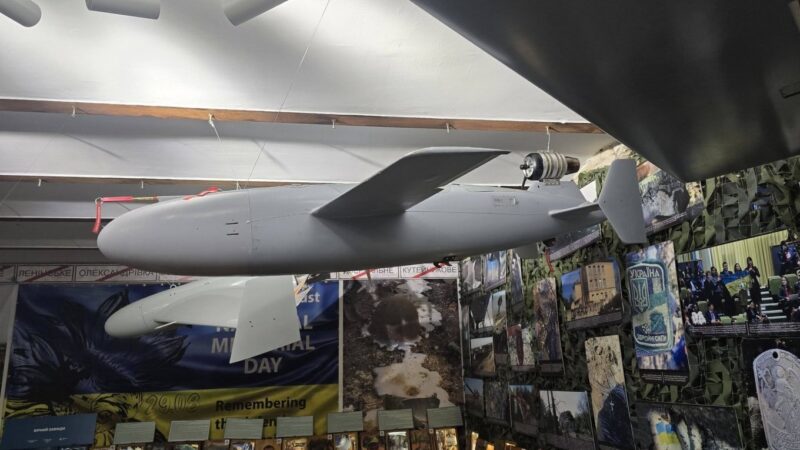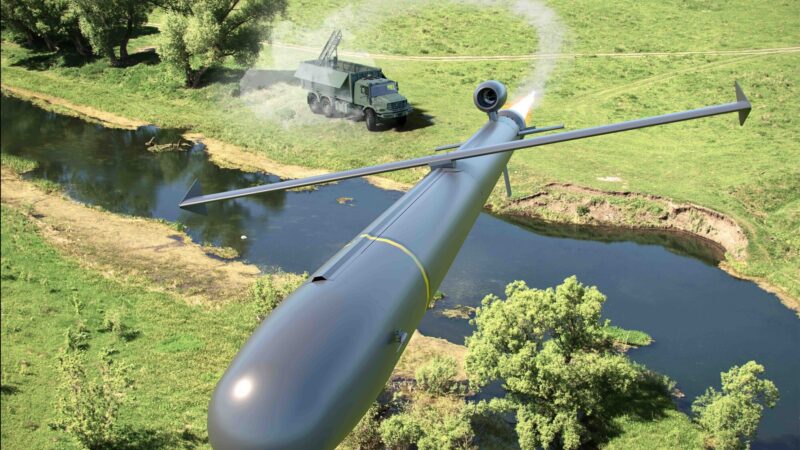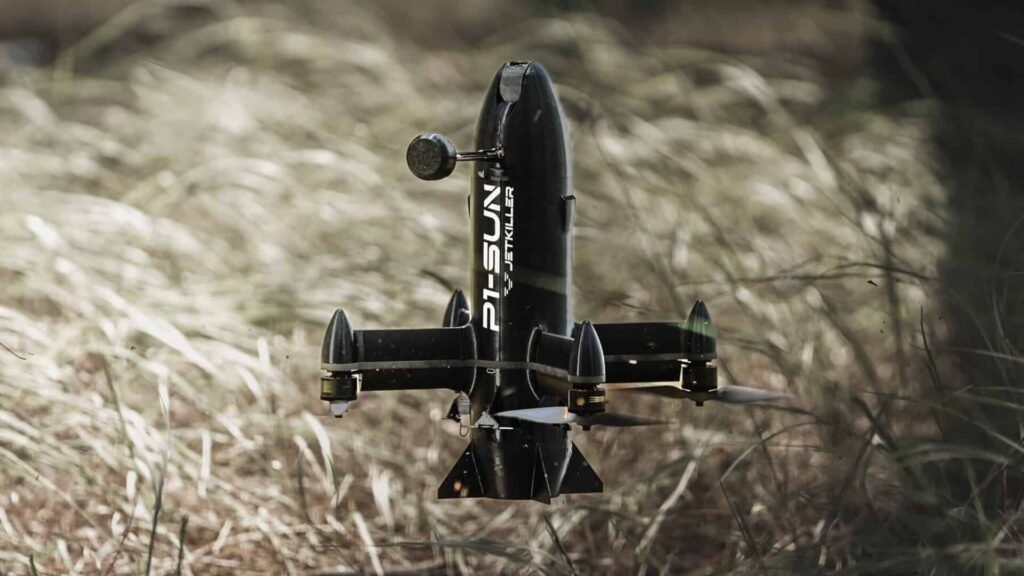
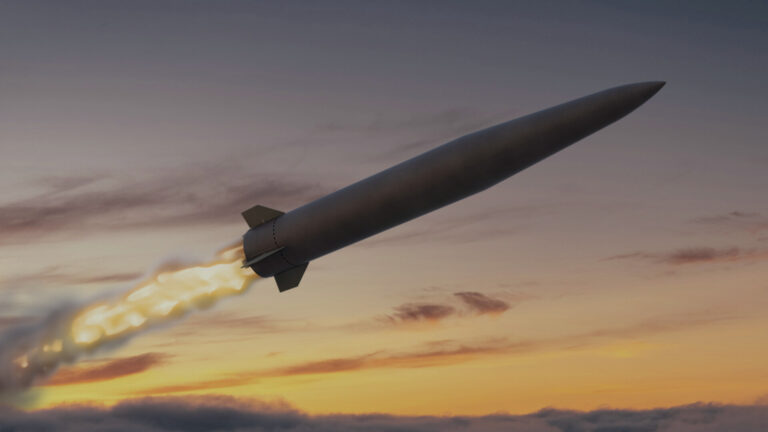
Ukrainian manufacturer SkyFall unveiled the P1-SUN JetKiller interceptor drone on 20–21 July 2026, a faster variant of its existing P1-SUN interceptor family built specifically to catch Russia’s growing fleet of jet-powered Shahed-type strike drones.
The company says JetKiller reaches 370 kilometres per hour, up from roughly 310 kilometres per hour on the baseline P1-SUN, with a range up to 30 kilometres, an altitude ceiling of 9,000 metres, and up to 15 minutes of endurance carrying a 500-gram warhead.
SkyFall says the interceptor uses AI-based terminal guidance that can “detect and lock onto hostile objects faster than the human eye can respond,” paired with an optional thermal camera and remote operation from anywhere on SkyFall’s networked control system.
The company credited JetKiller with destroying more than a dozen jet-powered Shahed drones during pre-production trials ahead of the public reveal, describing the aircraft as part of “the SkyFall strategic initiative to create a new generation of fully autonomous unmanned systems.”
Know What Defence Buyers in Will Need Next
See emerging requirements, likely suppliers, and routes to market across Pakistan, MENA, and fast-moving defence technologies, before demand becomes obvious.
Jet Engines Are Making Russian Shaheds Harder to Intercept
The interceptor answers a shift in Russian strike-drone design that Ukrainian officials have flagged as a growing problem.
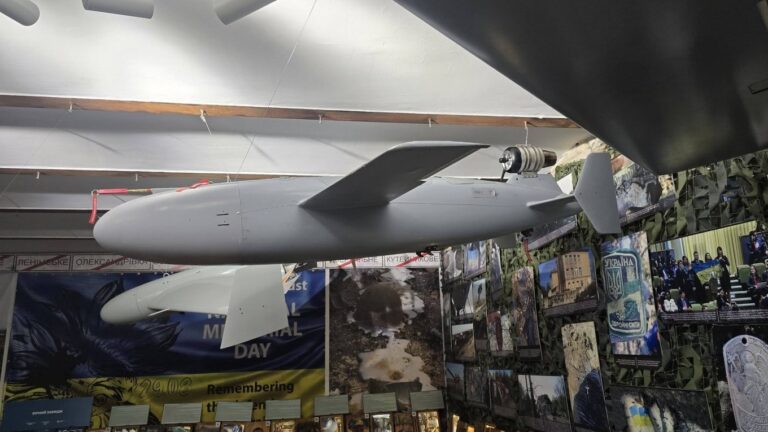
Senior Ukrainian Air Force commander Yurii Cherevashenko told Reuters that “15% to 20% of Russia’s current Shahed drones already carry jet engines,” a category that includes the Geran-3, Geran-4, and Geran-5 variants capable of 300 to 600 kilometres per hour, well above the speed of most propeller-driven interceptor drones.
Dronefall project manager Danylo Shynhelskyi explained the tactical advantage those drones carry: “the main advantage of jet-powered Shaheds is their speed, which allows them to break through the first echelons of defence and effectively avoid interception by drones.”
Russia has separately fielded the S-8000 Banderol, a jet-powered munition built by the sanctioned developer Kronshtadt around a commercially sourced Chinese turbojet, which open-source analysis has clocked cruising near 560 kilometres per hour with a roughly 114-kilogram warhead.
Ukrainian Air Force spokesperson Yuriy Ihnat has said the share of jet-powered drones in Russian strike packages “is constantly increasing,” a trend that has pushed multiple Ukrainian manufacturers, not only SkyFall, to develop faster interceptors over the past year.
Related reading
SkyFall Is Building Toward European Integration
SkyFall was founded in June 2022 and has grown into one of Ukraine’s largest drone manufacturers, employing roughly 4,000 people and training a further 20,000 pilots, technicians, and engineers through its in-house academy.
Its product range includes the Vampire heavy strike drone and the Shrike first-person-view drone alongside the P1-SUN interceptor line, which the company says has downed thousands of Russian drones since entering combat use in late 2025.
In June 2026, SkyFall signed a strategic memorandum of understanding with Airbus Defence and Space at the ILA Berlin airshow, witnessed by German Defence Minister Boris Pistorius, aimed at integrating the P1-SUN family with Airbus’s Air C2 command-and-control system in support of the European Sky Shield Initiative.
SkyFall chief executive Mykola Makovyeyev said the partners would “develop next-generation technologies for a multi-layered air shield,” while Airbus Defence and Space chief executive Michael Schollhorn framed the tie-up as combining “Airbus’s systems expertise and command and control experience with Ukraine’s combat experience and battle-tested technologies.”
SkyFall has not disclosed a unit cost specific to the JetKiller variant or confirmed serial production plans beyond the Farnborough reveal.
Quwa Pro – Defence Market Intelligence
See Where Defence Demand and Technology Are Moving Next
Track procurement priorities across Pakistan, the Gulf and wider MENA, and Central Europe. Follow emerging vendors, drones, AI, C-UAS, and affordable precision weapons, and see how lessons from today’s conflicts are reshaping military requirements and market opportunities.
Featured & Trusted By