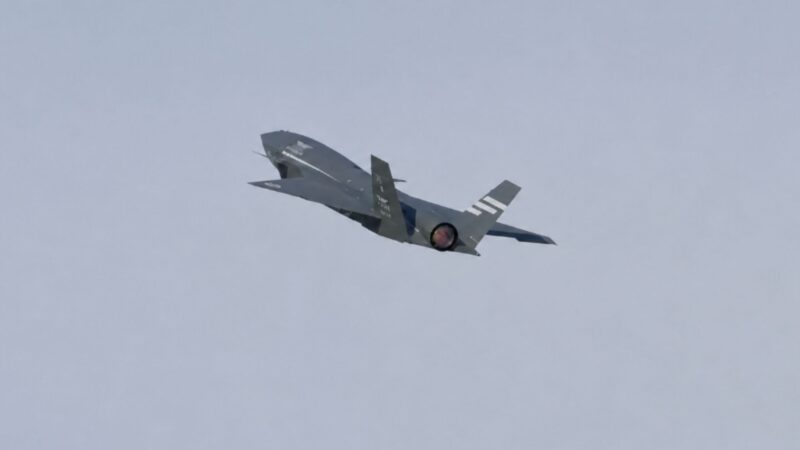

Baykar flew ten K2 Kamikaze unmanned aerial vehicles as a single autonomous swarm on 1 August 2026, doubling the five-aircraft formation the Turkish manufacturer demonstrated when it unveiled the loitering munition in March.
Selçuk Bayraktar, chairman of the board at Baykar, released footage of the sortie captioned “10 x #K2 Kamikaze İHA – Otonom Sürü ve Formasyon Uçuşu Testi”, or ten K2 kamikaze UAVs in an autonomous swarm and formation flight test.
The ten airframes took off simultaneously, held their relative positions through the sortie and landed in a coordinated sequence, with onboard algorithms rather than continuous operator input governing each aircraft’s station within the formation.
Baykar first flew the K2 in a five-ship formation over the Gulf of Saros across 13 and 14 March, executing right echelon, line, V, Turan and wall patterns during two days of sorties.
A second demonstration followed on 17 April at the Keşan test centre, where five K2s and ten Sivrisinek loitering munitions flew alongside a Bayraktar TB2, a Bayraktar TB3 and an AKINCI in a composite formation.
Baykar said that demonstration validated AI-supported swarm autonomy, GNSS-independent navigation, automatic target detection and strike capabilities.
Those are claims for the system as a whole, and they sit in the same collaborative autonomy space that loyal wingman programs have been moving toward.
What the August sortie itself establishes is station-keeping and relative navigation across a formation twice the previous size.
Independent coverage of the April event describes a human-on-the-loop employment model, in which operators supervise mission parameters while formation logic, spacing discipline and patrol geometry execute onboard.
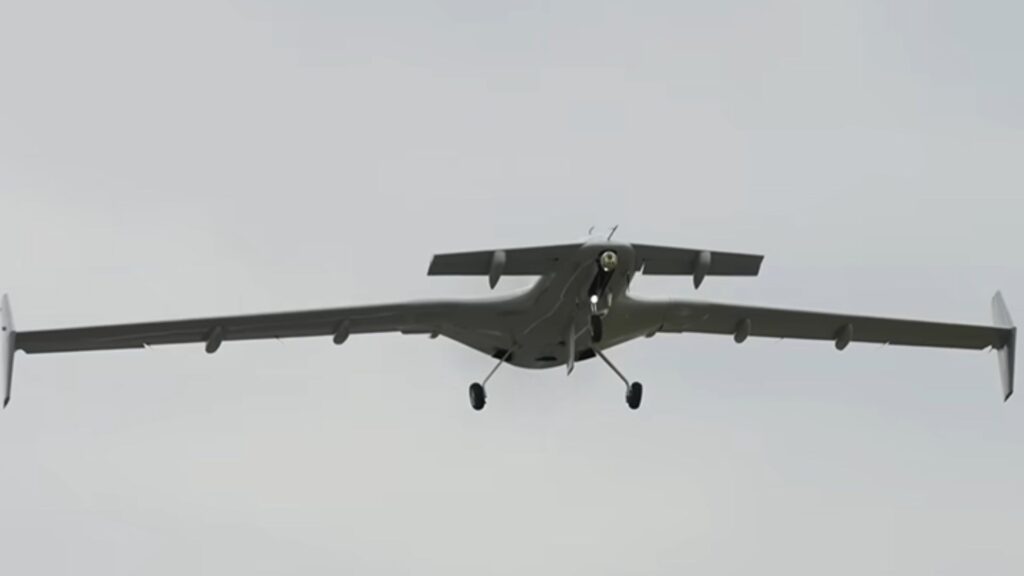
The K2 is the largest one-way attack aircraft in Baykar’s inventory, at 800 kg maximum take-off weight with a 200 kg warhead, range beyond 2,000 km, endurance exceeding 13 hours and a top speed above 200 km/h.
It carries a 10 m wingspan on a 5.1 m fuselage and is driven by a pusher propeller, an arrangement Baykar shares with the Bayraktar family and one that keeps the nose clear for the electro-optical and infrared gimbal.
Navigation runs on terrain-referenced visual matching through that same sensor, which allows the aircraft to position itself without GNSS input in jammed or spoofed airspace, with line-of-sight and beyond-line-of-sight satellite datalinks available when conditions permit.
The airframe is fitted with landing gear and takes off from short runways, and Baykar has said research is underway on recoverable variants able to release the warhead and return to base.
One cost assessment places the K2 at between US$60,000 and US$100,000 per unit against US$20,000 to US$50,000 for a Shahed-136, or roughly a fiftieth of a Tomahawk. Baykar has not published a unit price.
The K2 and Sivrisinek both went on public display at SAHA Expo in Istanbul between 5 and 9 May 2026, where Baykar showed them integrated with the Bayraktar line rather than as standalone products.
Sivrisinek, the smaller of the pair, is credited with range beyond 1,000 km and visual positioning in GNSS-denied or jammed environments.
Pairing the two with the Bayraktar line gives Baykar a route to market through an installed base that already runs to 36 countries for the TB2 and 16 for the AKINCI.
The April demonstration used that same relationship, with the TB2, TB3 and AKINCI flying intelligence, surveillance and reconnaissance support for the strike aircraft rather than participating in the swarm itself – the same bundling logic that has drawn repeat customers such as the Pakistan Air Force.
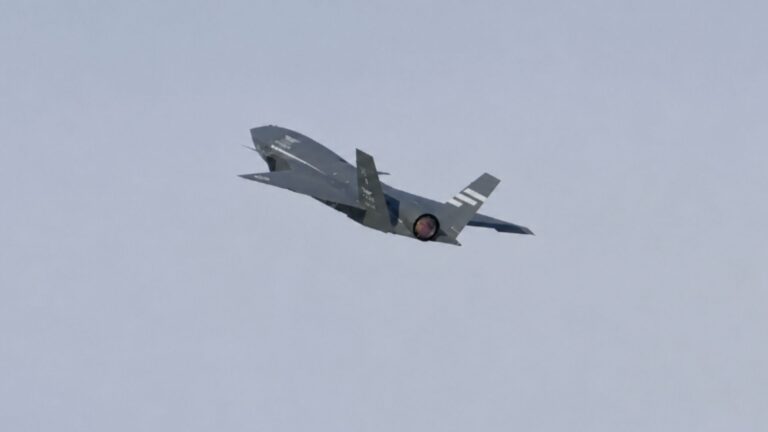
The August sortie lands in a busy month for the company, which on 30 July completed the first firing tests from KIZILELMA’s internal weapons bay, two weeks after the same aircraft fired Roketsan’s JET-230 in a supersonic air-to-ground shot.
Baykar has also moved to widen its European industrial base, with the Leonardo joint venture LBA Systems reaching full operational readiness at Farnborough in July.
Neither Baykar nor the Presidency of Defence Industries has announced a serial production contract, an order from the Turkish Armed Forces, or an export customer for the K2.