Türkiye’s 2027 Presidential Annual Program sets targets of 84% localization, $11.5 billion in exports, $28 billion in turnover and about 138,000 jobs for the defence and aerospace industry. The targets sit alongside planned 2027 defence spending of TL3.454 trillion, a level that brings Türkiye close to NATO’s 2035 spending goal.
The 2027 figures raise every headline target set for 2026, which called for 83% localization, $8 billion in exports, $20 billion in turnover and about 120,000 jobs. The turnover target rises by $8 billion and the export target by $3.5 billion, while the localization target moves up by one percentage point.
Current data from the Presidency of Defence Industries (SSB) show sector turnover rising 25-fold over 23 years to about $25 billion, while exports grew 40-fold to $10.1 billion. On those figures, the industry has already passed the 2026 turnover and export targets, and the 2027 goals require further growth of $3 billion in turnover and $1.4 billion in exports.
Localization rose from 20% in 2002 to 82.3% in 2025, with research and development (R&D) spending above $3 billion and sector employment above 100,000. SSB also manages nearly 1,500 projects with a combined volume of more than $100 billion, including projects still at the tender stage.
Turkish Exporters Assembly (TİM) figures put annualized defence and aerospace exports at $10.941 billion in September. The industry has signed $15 billion in new export contracts so far in 2026, and 56% of its 2025 exports went to European Union (EU) and NATO countries.
The program pairs the targets with deep-technology measures, including continuing eight artificial intelligence (AI) R&D projects and starting two more, alongside work under a Quantum Technology Roadmap. It also lists support for autonomous systems, hypersonic technologies and biotechnology, with three ongoing autonomous systems R&D projects set to continue.
On the supply chain, the program ties subcontractor management for the domestic ecosystem to the YETEN 2.0 project, with a focus on subcomponents. Large firms are expected to develop domestic supplier ecosystems and support start-ups developing high technology for defence.
For cybersecurity, the program introduces the Cyber Domain Competency Development and Integration Platform (SAYGEP) to raise the competence of domestic cybersecurity firms. Defence and civilian cybersecurity needs are to be met mainly with domestic solutions, with local products encouraged in defence projects.
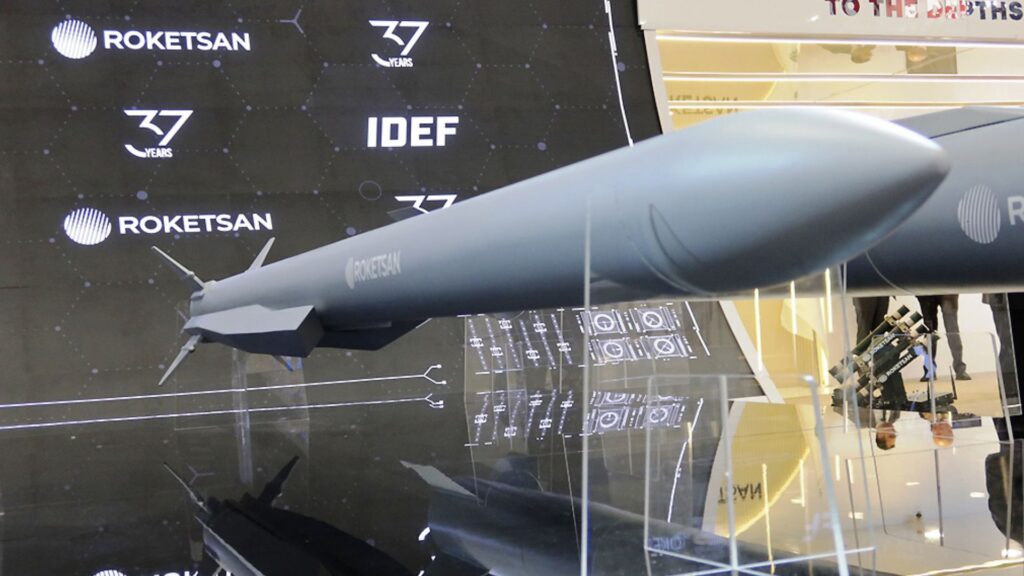
On the international side, Türkiye plans defence industry cooperation meetings with 21 countries and will host the 130th meeting of the NATO Army Armaments Group. Turkish firms are also set to take part in 15 international defence and security fairs, with the International Defence Industry Fair (IDEF) 2027 among the events named.
The jobs target sits furthest from current levels, with about 138,000 roles sought in 2027 against current sector employment of more than 100,000. The 2026 jobs target of about 120,000 sits between those two figures, and the program backs the hiring goal with competency development programs for high school students, university students and professionals.
Those talent measures also include strengthening the Savunma Kariyer defence employment portal, the Mentorus digital experience transfer program and participation in TEKNOFEST, as Türkiye works towards the 138,000-job target.