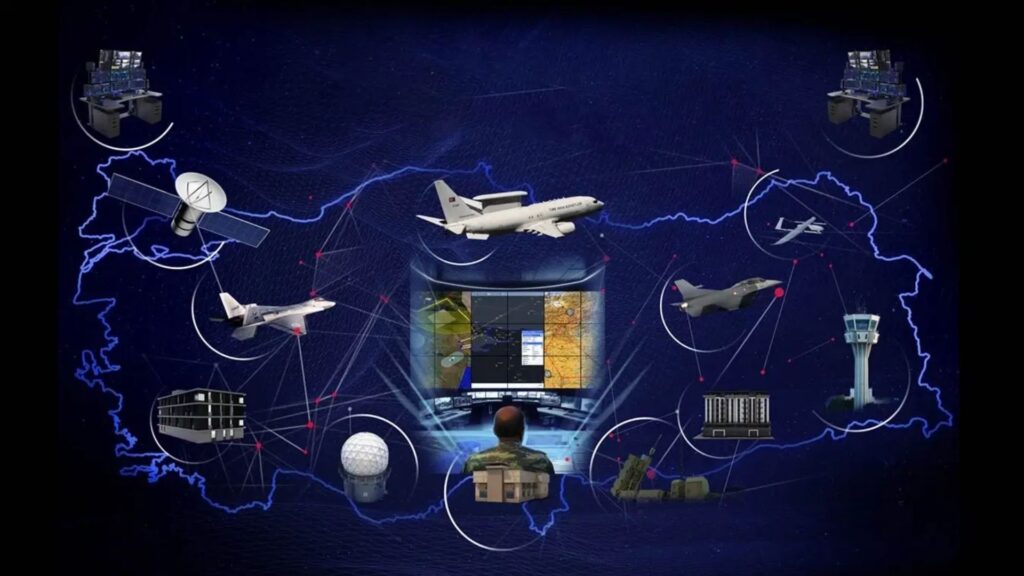
Havelsan announced on 2 August 2026 that it has delivered a portion of the critical capabilities developed under its air force information system project to Azerbaijan. The statement was carried the following day in English as an air force information system deployed by Azerbaijan. The company describes the delivered modules as providing integrated command-and-control infrastructure for the planning, execution, monitoring and assessment of air operations, letting operations centre personnel work from a shared operational picture and manage mission data in real time.
Neither the Turkish nor the Azerbaijani coverage names the system, gives a contract value, or dates the agreement. The system is HvBS, or Hava Kuvvetleri Bilgi Sistemi, and the Turkish original describes a portion of the critical capabilities rather than the system itself, indicating a subset delivery.
The contract is not new. Havelsan’s own corporate magazine stated in December 2021 that, under a contract concluded in 2021, work was continuing toward Azerbaijani Air Force use in 2022. Turkish trade coverage of this month’s announcement independently refers to work running since 2022, placing the August 2026 statement as a delivery point on a program roughly five years old.
Nor is it a first export of the system. The same Havelsan magazine states that HvBS-MYS was sold to the Pakistan Air Force in 2010 and placed into operational service, where it remained in use as of late 2021, a claim that rests on the company’s own account and has no independent confirmation. No source describes the Azerbaijan delivery as a first export, in contrast to Havelsan’s KOVAN announcement four months earlier, which Turkish media consistently labelled a first.
HvBS has two integrated halves. The Muharebe Yönetim Sistemi, or combat management system, executes air operations, intelligence and flight training processes across 63 software modules, while the Kaynaklar Yönetim Sistemi covers human resources, logistics and finance. Which half or halves Azerbaijan received has not been stated.
The system has run in Turkish service for nearly two decades, developed between 1998 and 2007 and in live use since 2007. Its architecture is distributed and high-availability with asynchronous data replication, and it ingests Link 1, Link 11B, Link 16 and JREAP tactical data links alongside NetCDF and GRIB meteorological formats. Havelsan markets it explicitly as an alternative to NATO’s Air Command and Control System for both member and non-member states.
The Azerbaijani account has been built out system by system rather than through a single platform sale. Havelsan established a local entity by September 2022, announcing at ADEX that year that Azerbaijan would use the company’s military software, and exported its KOVAN enterprise resource management platform to the Azerbaijani Ministry of Defence in April 2026 covering personnel, logistics, finance and document management on national infrastructure. General manager Mehmet Akif Nacar said in May 2026 that Havelsan plans joint production of military simulators and training systems with Azerbaijani engineers and implementation of the ADVENT combat management system in the Azerbaijani Navy.
That sequencing matches a trend Quwa has argued in its EMEA Market Intelligence reporting, which identified proprietary tactical data links a buyer can adopt nationally, together with freedom from ITAR, as features that have proven decisive in today’s market. Havelsan is establishing that layer across three Azerbaijani services ahead of the hardware competitions.
The 2021 contract year is also the Shusha Declaration year. Signed by Ilham Aliyev and Recep Tayyip Erdoğan on 15 June 2021, the declaration commits both states to cooperation between their defence industry bodies in the field of technology, military products and services in the domestic and international markets, language that extends to software and command-and-control services rather than hardware alone.
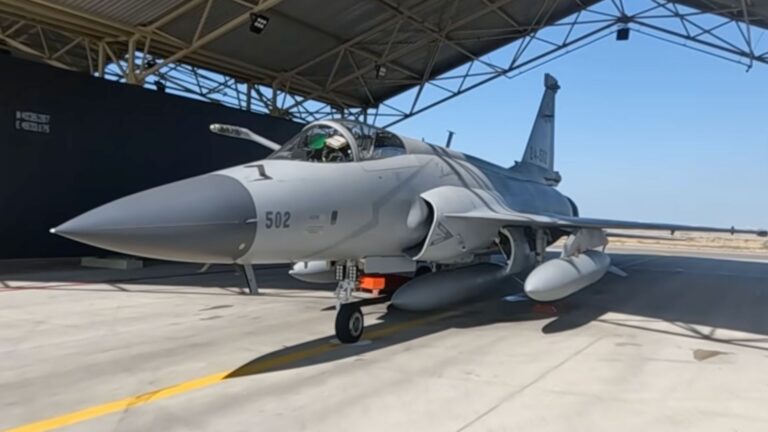
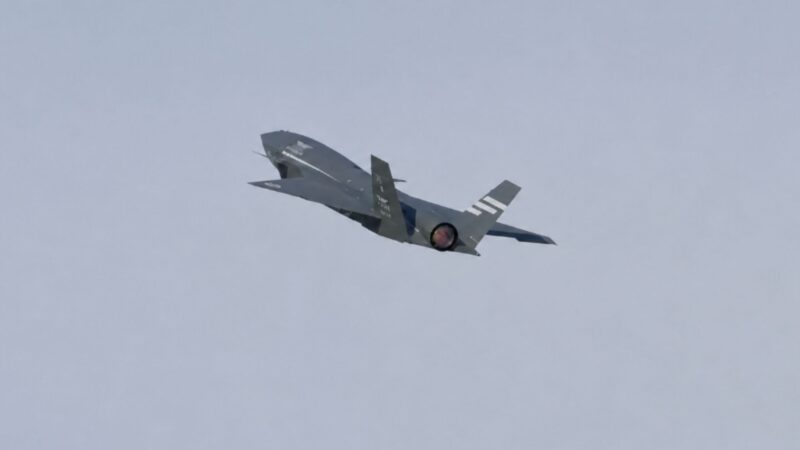
The delivery lands as Azerbaijan’s air arm changes composition. Its operational fleet is built around 11 MiG-29A and 33 Su-25 aircraft, with 40 JF-17C Block III fighters on order from Pakistan following a February 2024 contract for 16 aircraft and a June 2025 expansion. Quwa reported in July 2026 that at least nine airframes had reached Azerbaijan with two confirmed in service, with full operational capability targeted around 2027 and weapons integration still unresolved.
Havelsan remains smaller than Türkiye’s headline primes, and is absent from the SIPRI Top 100 for 2024, which places Aselsan 47th on $3.47 billion alongside Turkish Aerospace, Baykar, Roketsan and MKE. The company states a business volume of roughly $2 billion over three years, exports doubled over the same period to about one-third of revenue, and technologies in use in 28 countries.
Its ADVENT combat management system reached its first NATO member state in July 2026 through the Romanian Navy corvette program, joining an export base that already covers Pakistan, Indonesia, Ukraine, Qatar, Oman, Nigeria, Malaysia and Chile.
Azerbaijan hosts ADEX 2026 at the Baku Expo Center from 30 September to 2 October, with around 40 Turkish companies expected.