Aselsan – which brands itself Türkiye’s leading defense industry company – reported revenue of 88.5 billion Turkish lira for the first half of 2026, a 25% increase in real terms and roughly US$1.8 billion.
The real-terms qualifier carries weight. Turkish issuers report under inflation accounting, so the 25% figure is already adjusted for domestic price growth rather than flattered by it, and the same result converts to 37% in US dollars.
Earnings before interest, taxes, depreciation and amortization (EBITDA) reached US$488 million at a margin of 26.3%, an improvement of 120 basis points year-on-year.
Second-quarter results drove much of that. Aselsan booked net profit of 8.5 billion lira against a market expectation of 6.9 billion lira, on quarterly revenue of 51.8 billion lira and an EBITDA margin of 27%.
The order book is where the company’s trajectory is clearest. Aselsan signed new contracts worth US$4.9 billion in the half, a 72% increase on the same period in 2025.
Total backlog closed the half at US$23.2 billion, up 45% year-on-year and up from US$20.7 billion at the end of the first quarter.
Because intake is running well ahead of recognized revenue, the backlog is compounding rather than drawing down. Chief executive Ahmet Akyol said the company expects to see US$30 billion next year, against a figure that exceeded US$20 billion in 2025.
For comparison, Aselsan closed full-year 2025 with revenue of 180.4 billion lira on 15% real growth and export revenue of US$958 million, the latter an 89% increase.
Domestic demand still dominates the mix. International sales accounted for 17% of the total in the first half, against 83% domestic – weighted toward the Turkish Armed Forces and the Presidency of Defence Industries (SSB), the authority that runs Türkiye’s major procurement programs.
Much of that domestic flow ties to Çelik Kubbe, or Steel Dome, the layered air defence architecture first deployed at EFES 2026, for which Aselsan supplies sensors, effectors and the command layer.
Spending grew faster than sales in two categories. Research and development outlays reached US$804 million, up 41%, while capacity and scale investments reached US$323 million, up 195%.
Physical expansion accompanied that. The company brought a new production and test facility of 17,360 square metres into service and installed nineteen new robotic automation lines, with the first phase of its Oğulbey technology hub due to become operational in the third quarter of 2026.
Headcount rose alongside it, with more than 1,000 new hires during the half, roughly 15% of them international.
The balance sheet absorbed the investment without visible strain. Operating cash flow came in at 15.2 billion lira, the equity ratio stood at 56%, and net debt to EBITDA eased to 0.55 from 0.57.
Guidance for the full year was left unchanged, with the company targeting real revenue growth of 10% or more against 2025, an EBITDA margin above 24%, and capital expenditure of 50 billion lira.
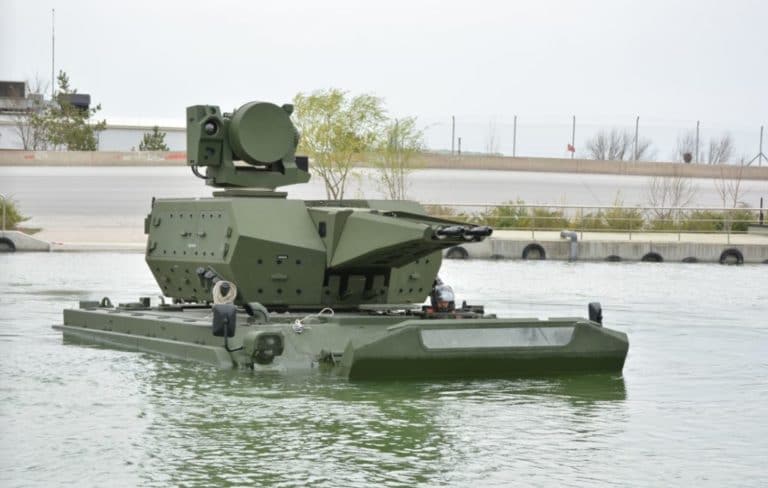
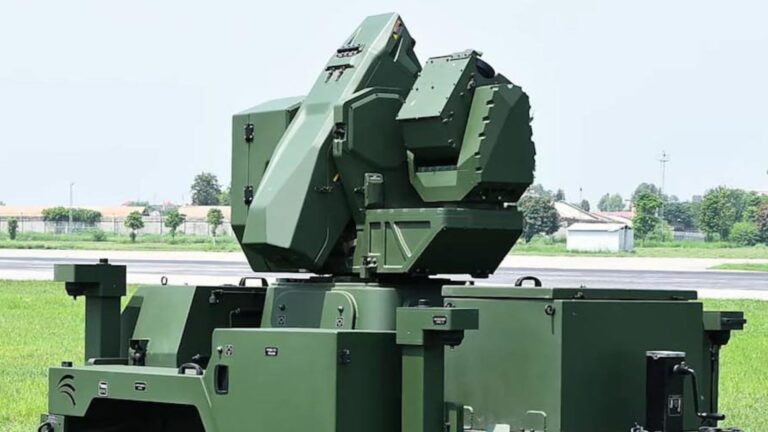
Aselsan’s portfolio spans the Hisar surface-to-air missile family and the Korkut self-propelled anti-aircraft gun, radar and electronic warfare suites, the ASELPOD targeting pod, military 5G infrastructure and naval combat management systems, including the fit aboard the Pakistan Navy’s Babur-class MILGEM corvettes.
The order book has kept building since the period closed, with Aselsan signing a €1.47 billion contract in July to expand Steel Dome air defence production.