
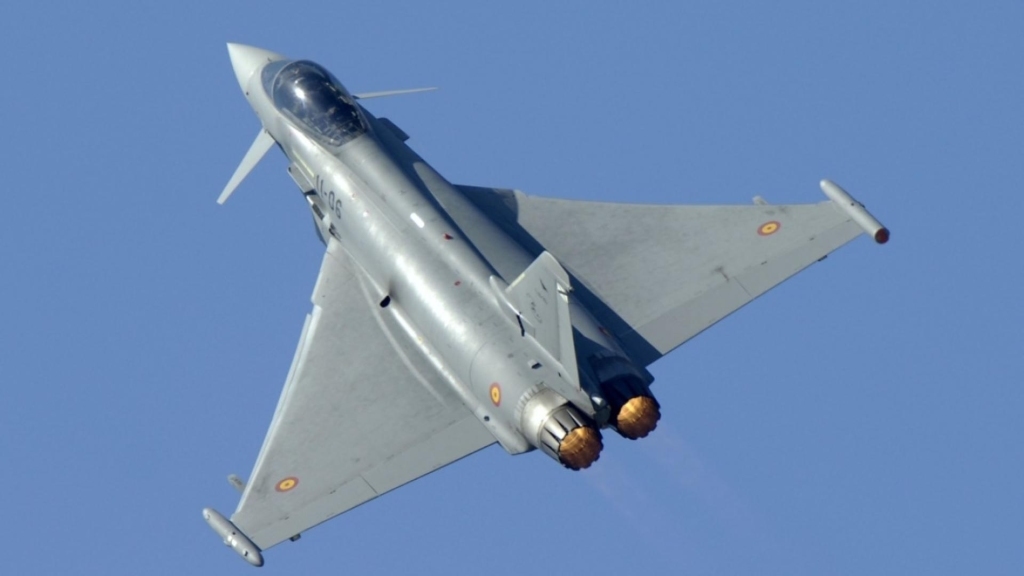
BAE Systems confirmed in its 2026 half year results on 30 July that manufacturing of Türkiye’s 20 Eurofighter Typhoon aircraft is already underway in the UK and across the Eurofighter partner nations, with first delivery scheduled for 2030. The disclosure came as a single line in a financial statement rather than a standalone program announcement, and no first-metal-cut ceremony has been held.
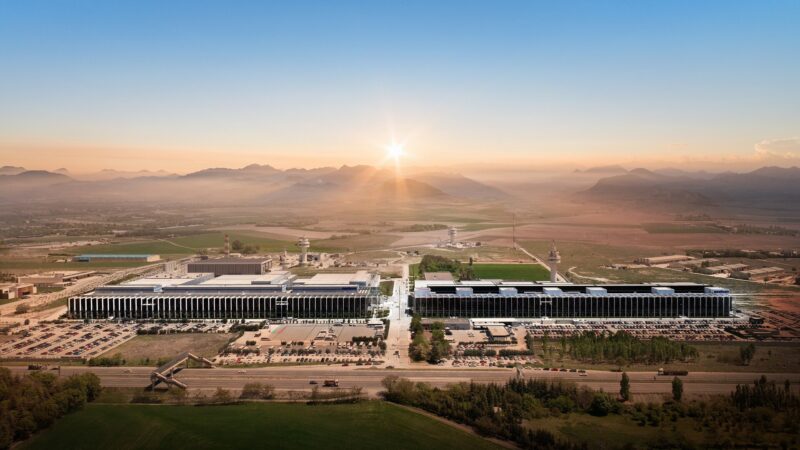
Component manufacture for the Turkish aircraft has commenced at BAE’s Samlesbury site in Lancashire. The Typhoon workshare agreement sees more than a third of each aircraft manufactured in the UK, sustaining a 20,000-strong workforce with nearly 6,000 jobs at Warton and Samlesbury.
Turkish personnel move next. Ministry sources said at a weekly briefing in Ankara on 23 July that flight personnel will be sent to the United Kingdom in August 2026 to begin their flight training as soon as possible.
Defence Minister Yaşar Güler set out the delivery profile in December 2025 as six aircraft in 2030, eight in 2031 and six in 2032. Neither government has announced a first flight date for a Turkish-marked Typhoon.
The order is driving a production rate increase across the whole Eurofighter line. Chief executive Charles Woodburn said Typhoon output is rising from 12 to 14 aircraft per year to close to 30, describing it as roughly doubling the production rate, with Türkiye’s order named as a driver. BAE reported half year sales of £15.8 billion and a record £84 billion backlog.
The contract behind the work was signed at the Presidential Complex in Ankara on 27 October 2025 during then-prime minister Keir Starmer’s visit, covering 20 aircraft at a headline value of up to £8 billion, or roughly $10.7 billion. Quwa reported the signature at the time as Türkiye’s $10.67 billion deal with the UK for 20 Eurofighter Typhoon fighters.
That headline figure splits across two instruments. The Turkish Ministry of National Defence confirmed the aircraft contract at £5.4 billion. A separate training and support intergovernmental agreement was signed in London on 25 March 2026 by Güler and then-UK Defence Secretary John Healey, valued by trade reporting at £2.5 to £2.6 billion against a UK Ministry of Defence that has never disclosed a figure for it.
Both UK principals on the deal have since moved. Healey became Chancellor of the Exchequer in Andy Burnham’s first cabinet on 20 July 2026, with Wes Streeting taking Defence, ten days before BAE confirmed Turkish manufacturing was underway. Starmer had resigned as prime minister earlier that month, ending the premiership under which the contract was signed.
Türkiye reached this point after two decades of declining the aircraft and then losing another. The Eurofighter consortium invited Türkiye to become the fifth Eurofighter partner at IDEF in 2005 and proposed joint manufacture of 40 to 60 aircraft in December 2010, and Ankara declined both in favour of the F-35. The White House then removed Türkiye from the F-35 program on 17 July 2019 over the S-400 purchase, costing 100 planned F-35As.
Formal Typhoon talks opened when Güler confirmed negotiations with the UK and Spain for 40 aircraft in November 2023, a process Quwa followed from the point Türkiye began talks for Eurofighter Typhoon jets in October 2024. Germany cleared the path in two stages, with Olaf Scholz signalling in October 2024 that Berlin would not obstruct negotiations and the Merz government’s Federal Security Council granting formal export approval for up to 40 aircraft in July 2025. Güler and Healey signed the enabling memorandum of understanding at IDEF in Istanbul on 23 July 2025.
Turkish industrial participation does not extend to the airframe. No Turkish Aerospace Industries workshare or local assembly has been reported, and BAE has disclosed no offset structure. Writing for the Atlantic Council, Can Kasapoğlu argued that shared maintenance, logistics, avionics and weapons integration could lay some groundwork to help KAAN’s co-development and allow Turkey to evolve from being merely a buyer to a defense partner, while judging it unlikely Ankara joins the European consortium.
What Ankara did secure, reported in December 2025, is the right to integrate Turkish munitions onto the Eurofighter, including the Gökdoğan air-to-air missile and a longer-range weapon designated Gökhan. That is a stated permission rather than a funded integration program, with no contract, cost or timeline announced.
The delivered weapons package, reported by Reuters and never itemized officially, covers Meteor, an advanced short-range air-to-air missile and Brimstone. Janes reported in March 2026 that the aircraft will be Tranche 4+ fitted with the Leonardo ECRS Mk 0, an active electronically scanned development of the Euroradar CAPTOR, rather than the Mk 2, since the Royal Air Force’s own Mk 2 fielding does not begin before 2030.
The near-term bridging capability remains unresolved. Türkiye has pursued 12 second-hand Tranche 3A aircraft from Qatar alongside modernized airframes from Oman, with Ankara shifting priority to Qatar in January 2026 after Oman hardened its negotiating position and Omani aircraft slipped to 2028 delivery. No ex-Qatari Typhoon has been reported arriving in Türkiye against a target of late February 2026.
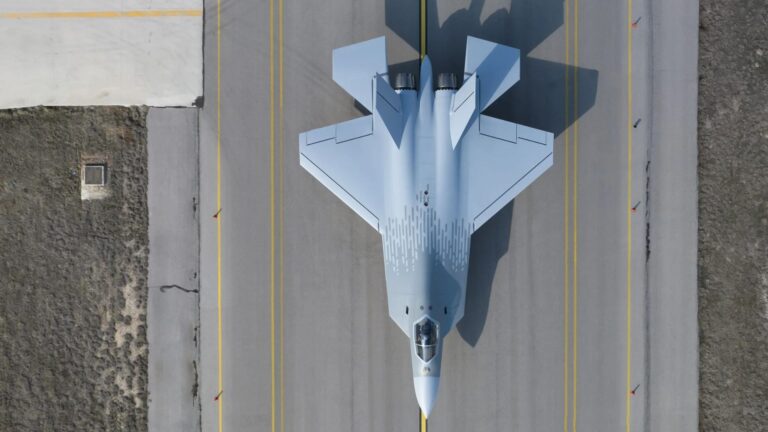
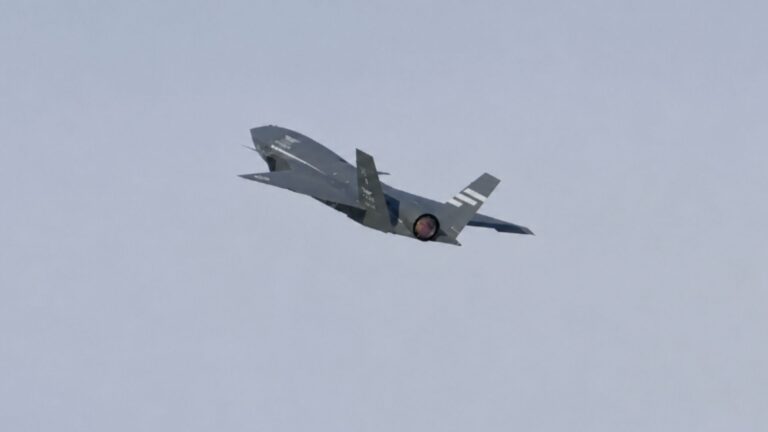
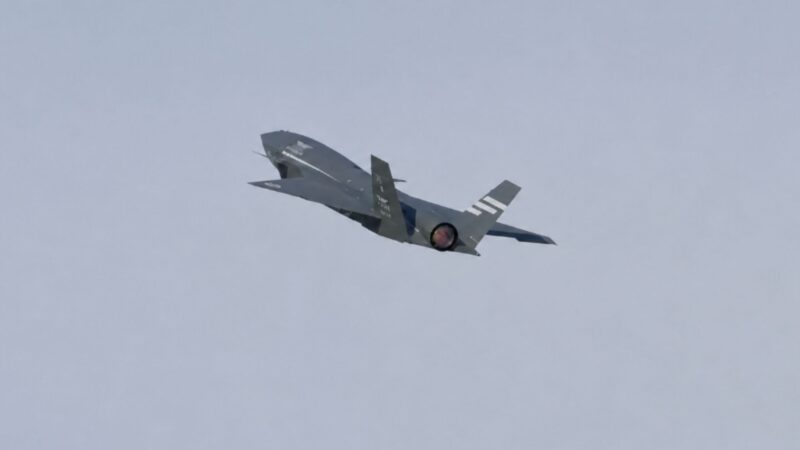
The Typhoon covers the gap until KAAN, which Turkish Aerospace expects to deliver from 2028 with prototypes P1 and P2 flying by the end of 2026. Quwa’s Turkish Market Intelligence reporting has framed that program around Ankara’s effort to strip foreign control out of the supply chain that feeds the aircraft, a constraint the Typhoon buy does not resolve and was not intended to.
That constraint held again in July 2026. Days before BAE confirmed Turkish metal was being cut, the US State Department told Congress that Türkiye has not yet met the conditions for F-35 access while it retains the S-400, contradicting President Trump’s remarks in Ankara earlier that month.