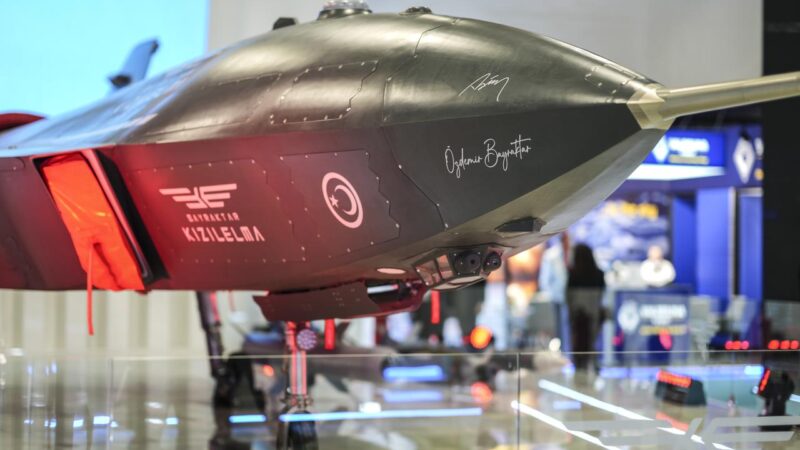

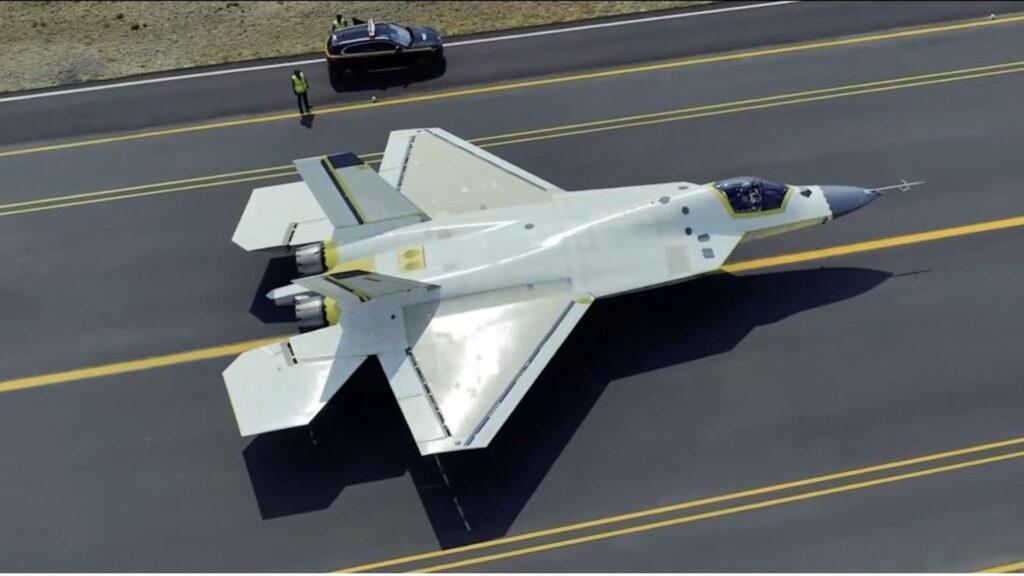
On 31 July 2026, Turkish Aerospace Industries (TAI/TUSAŞ) released footage showing KAAN P1 – the second prototype of Türkiye’s KAAN next-generation fighter aircraft (NGFA) – completing its first taxi test at the company’s facility in Ankara. Compared to KAAN P0, the demonstrator that first flew in February 2024, KAAN P1 carries a more advanced system architecture. This architecture consists of integrated mission-system elements that more closely mirror the intended production configuration.
The KAAN – originally designated the TF-X – is the fifth-generation stealth fighter Türkiye began pursuing in earnest after Washington removed it from the F-35 Lightning II program in 2019. Ankara’s answer was to build the aircraft itself, and to strip foreign control out of the supply chain that feeds it.
Overall, KAAN P1 will take on most of the flight-test work ahead of the production-ready platform. The KAAN P1 is expected to fly in the next several months, with P2 following shortly. TUSAŞ is working to deliver the first batch of KAAN fighters to the Turkish Air Force (TuAF) in 2028.
In terms of the production-ready platform, the first 40 KAAN airframes will be powered by the General Electric F110 turbofan engine. These aircraft will join the TuAF. However, TUSAŞ is planning to field the KAAN Block-30 with indigenous TUSAŞ Engine Industries (TEI) TF-35000 turbofan engines from 2033.
The KAAN Block-30 is TUSAŞ’ centrepiece for engaging the wider market, with 48 aircraft on order from Indonesia and active interest from key markets such as Pakistan, Azerbaijan, and Qatar, among others, including NATO members like Spain.
The KAAN P1 is arguably Türkiye’s flagship defence program, not just for bringing together – and evolving – the country’s most advanced and industrially intensive capabilities, but for being Ankara’s key to meeting global demand for an otherwise elusive and exclusive technology, i.e., stealth fighters.
Quwa Pro
See Where Emerging Defence Markets are Moving
Quwa Pro goes beyond tracking programs and equipment by explaining the policies, incentives, industry dynamics, and competitive pressures shaping South Asia's defence markets.