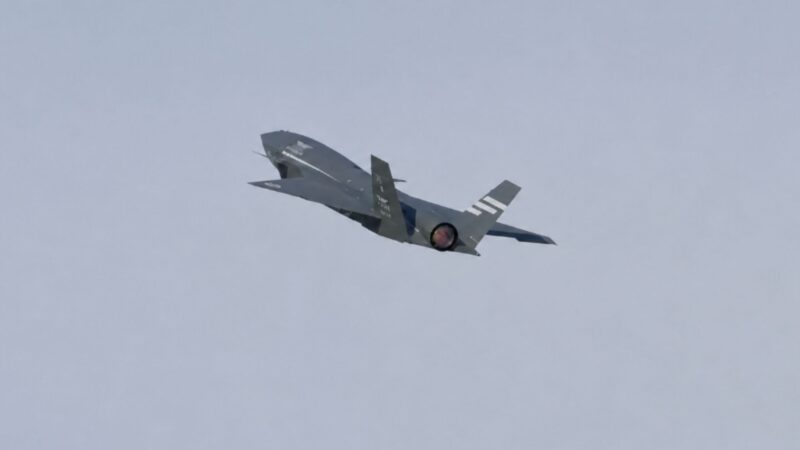

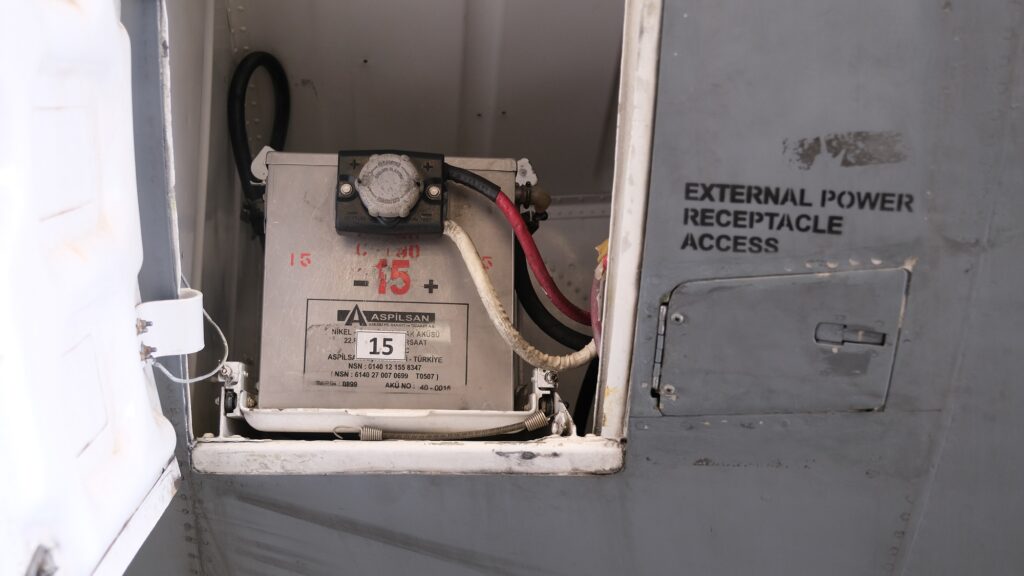
For the KAAN fighter, ASPİLSAN Enerji produces two battery types and a charging device as part of its aviation business. In remarks published on 5 October 2026, chief executive Ahmet Turan Özdemir outlined that production role within Turkish Aerospace Industries’ (TUSAŞ) combat-aircraft program.
ASPİLSAN had named KAAN in its aircraft battery-development portfolio by June 2024, establishing that the October comments describe an existing role. Its TUSAŞ work also covered HÜRJET and HÜRKUŞ, the GÖKBEY and ATAK-2 helicopters, and the ANKA and AKSUNGUR uncrewed aircraft.
The company’s aviation battery history began with the CN-235 transport program in the early 1990s and continued with domestic replacements for batteries on other Turkish military aircraft. In 2024, it put its design and manufacturing coverage at more than 40 aircraft and helicopter types, including uncrewed platforms.
Manufacturing the battery is one part of ASPİLSAN’s energy-system engineering work, which also includes battery-management electronics, mechanical design, housings and software. From that combination of disciplines, Özdemir has described a production chain starting with raw materials and ending with complete energy systems for defence customers including TUSAŞ, ASELSAN and ROKETSAN.
After an earlier focus on nickel-cadmium batteries, ASPİLSAN began lithium-ion manufacturing at its Kayseri plant in 2022, Özdemir said. Project-based government support backed that investment as the company extended its production capabilities across rechargeable cells and complete battery systems.
In his September 2025 battery update, Özdemir identified a lithium-ion battery for KAAN and described investment intended to increase domestic content in the company’s battery work. He also described research into lithium iron phosphate, lithium polymer and drone batteries, placing the fighter-related work within a broader program of battery technology development.
A separate development was the silicon-enhanced cell Özdemir presented at the World Defense Show in February 2026, claiming a 20% energy-density improvement. He said the additional energy in a smaller space could support longer endurance or enable users to carry more payload.
Temperature extremes, mechanical shock, humidity, vibration and low pressure feature in ASPİLSAN’s environmental test services. Its published approach calls for engineering and qualification tests selected according to the intended operating environment and the military, aviation, maritime or industrial requirements that apply to the battery under development.
The P1 prototype’s first taxi test took place in July 2026, following an earlier KAAN demonstrator’s maiden flight in February 2024. P1 brings additional mission-system elements into the test effort as TUSAŞ uses successive aircraft to work towards the intended production configuration.
TUSAŞ chief executive Mehmet Demiroğlu addressed propulsion supply in July, reporting that the company held an F110 engine export licence and was working with General Electric. The engine serves prototypes and initial production aircraft while Turkish propulsion development continues as another part of the wider industrial effort.
Özdemir’s October remarks prioritized domestic software and hardware, with domestic cells where possible, for critical energy systems. He associated reliable power and resistance to cyber interference with requirements for aircraft, land vehicles, naval systems and space projects.
Other components also undergo development and qualification with Turkish partners ahead of platform integration, Özdemir said. The battery and charger work therefore sits within ongoing cooperation across the aircraft and equipment supply chain.