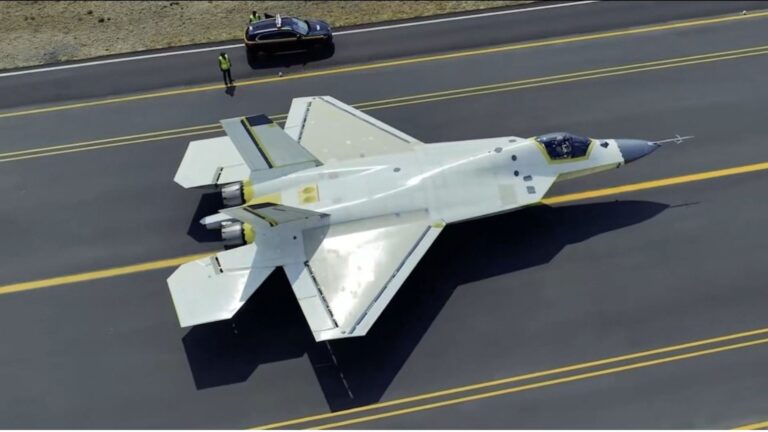
The United States Congress has cleared the export of General Electric F110 engines for Türkiye’s KAAN fifth-generation fighter, after a joint resolution seeking to block the sale failed to advance during the mandatory 15-day review window.¹
Turkish Aerospace chief executive Mehmet Demiroğlu confirmed at the Farnborough International Airshow that the company now holds the export licence and is working with GE Aerospace to secure the powerplants.²
“We can say that we have the export licence for the engine,” Demiroğlu told reporters at the show.²
The engine at the centre of the arrangement is the F110-GE-129E/F, a low-bypass afterburning turbofan in the roughly 29,000-pound thrust class that already powers late-model F-16 and F-15 fighters across allied air forces.
Türkiye had sought about 80 engines in total to sustain flight testing and the first low-rate production batches, having taken delivery of ten F110s before the restrictions took hold.³
The proposed package, reported at around 700 million dollars, had drawn objections from several lawmakers over Türkiye’s continued possession of the Russian S-400 air defence system.³
Those objections left the engines as the last major obstacle between the KAAN and sustained flight testing.⁴
The ten engines already in hand are enough to support the two flying prototypes, which Turkish Aerospace intends to return to the air before the end of 2026.²
With the congressional hurdle cleared, Ankara now moves into detailed technical and commercial discussions with the US administration and GE Aerospace on delivery schedules, engine integration and certification.¹
The licence had been suspended under the Countering America’s Adversaries Through Sanctions Act, triggered in 2019 by Türkiye’s purchase of the S-400 – the same decision that removed Ankara from the Lockheed Martin F-35 program.⁴
Congress has since viewed any KAAN-related approval through that lens, treating the F110 clearance as a limited opening rather than a full reset of defence ties.⁴
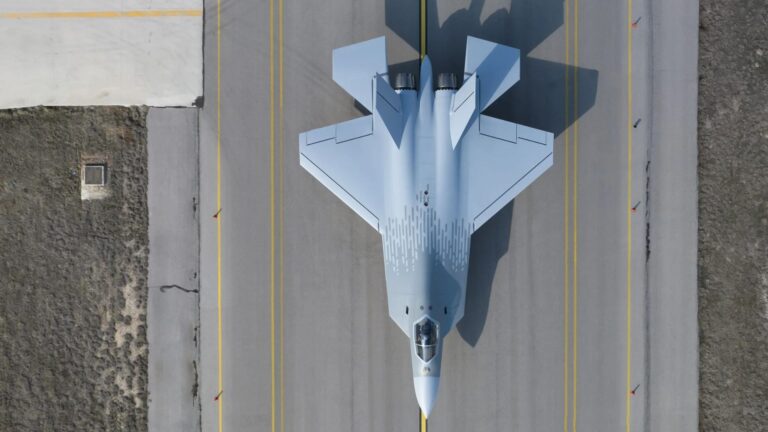
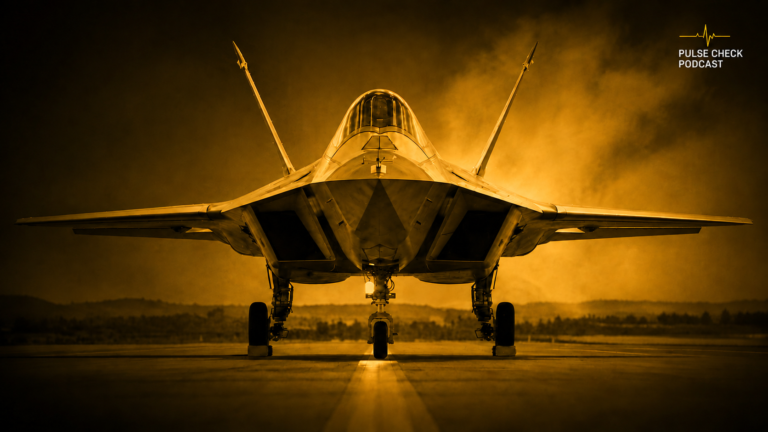
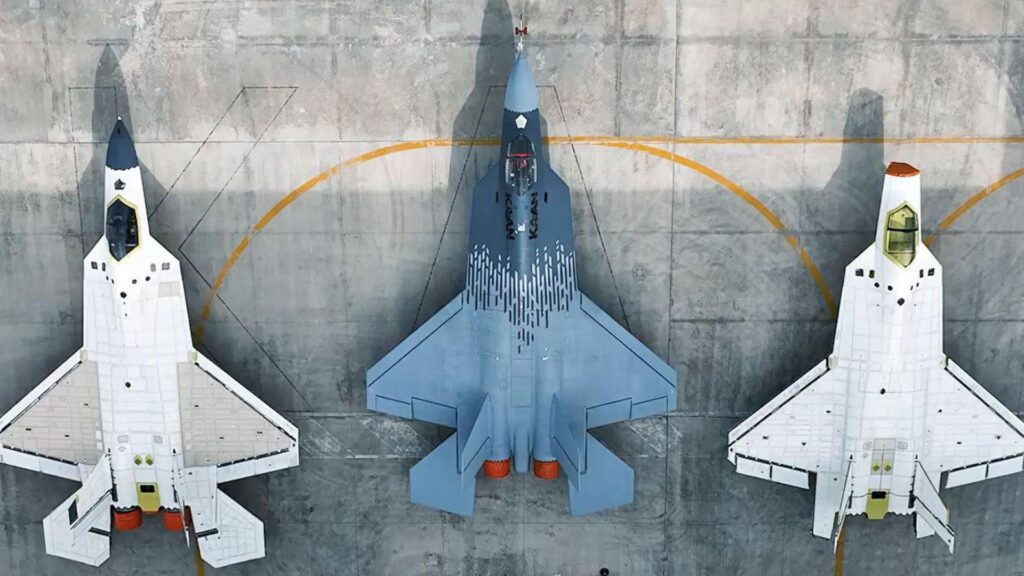
KAAN, developed by Turkish Aerospace under the Presidency of Defence Industries, made its first flight in February 2024 and is intended to enter Turkish service toward the end of the decade.⁴
The first production tranches, designated Block 10 and Block 20, will fly on the F110.²
Later Block 30 and Block 40 aircraft are planned to move onto a domestically developed engine from around 2032.²
TUSAŞ Engine Industries already assembles F110s under licence in Türkiye for the Turkish Air Force’s F-16 fleet, one of the largest in the world, though the powerplant itself remains bound by US export controls.³
That dependence is what makes TEI’s indigenous TF35000 – an afterburning turbofan targeting roughly 35,000 pounds of thrust that reached critical design review in early 2026, with first tests slated for this year – the piece on which Türkiye’s long-term export plans turn.
A homegrown engine would free the aircraft from US licensing, the condition Indonesia attached to its own purchase, and Jakarta’s order for 48 KAANs – the type’s first export deal, valued at around ten billion dollars – is the first Ankara must fulfil.⁵
Pakistan and Azerbaijan, the latter already a partner in the program, sit among the next customers Türkiye is courting as it works to turn a national fighter into an exportable one.⁵
Notes
- “US Congress Clears F110 Engine Sale for Türkiye’s KAAN Jet,” Yeni Şafak, July 2026.
- “TAI Boss Confident on Kaan Schedule, F110 Deliveries,” FlightGlobal, July 21, 2026.
- “US Notifies Congress of $700M Engine Sale to Turkey,” Aerotime, June 2026.
- “U.S. Set to Approve $700M GE F110 Engines for Türkiye KAAN Fighter Testing Despite S-400 Dispute,” Army Recognition, July 2026.
- “Türkiye to Export 48 Kaan Fighter Jets to Indonesia in a ‘Record’ Deal,” Daily Sabah, June 11, 2025.