
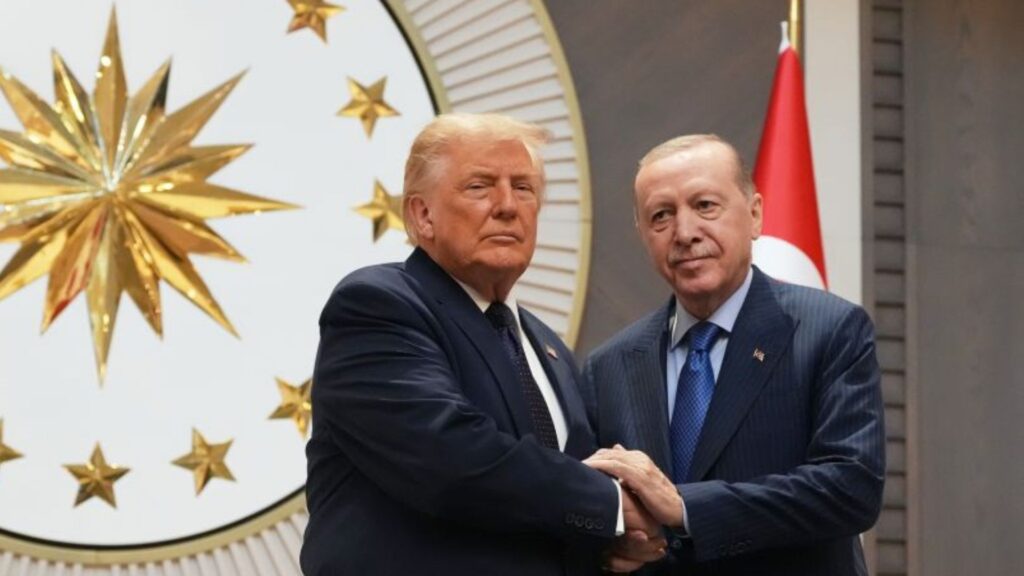
US President Donald Trump has said Washington intends to lift the CAATSA sanctions imposed on Türkiye over its purchase of the Russian S-400 air defence system.
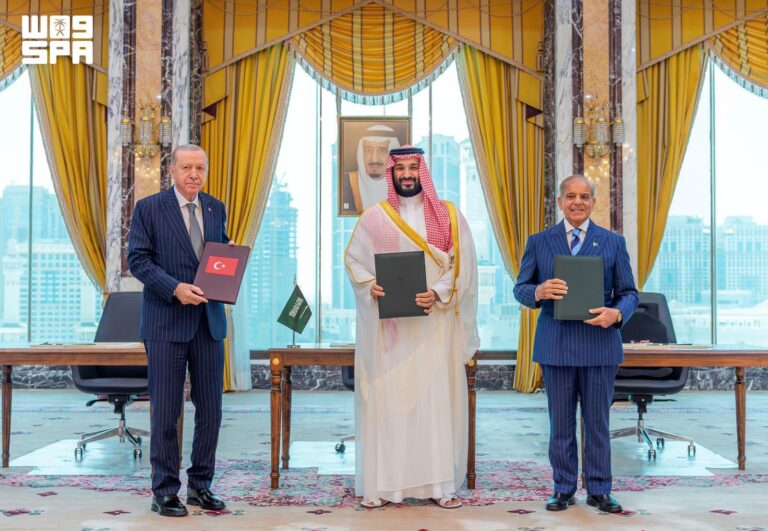
Speaking alongside President Recep Tayyip Erdoğan at the NATO summit in Ankara on 7 July 2026, Trump said the United States would take the sanctions off, and added that he would “certainly consider” returning Türkiye to the F-35 program.
The sanctions, applied under the Countering America’s Adversaries Through Sanctions Act (CAATSA) in December 2020, targeted Türkiye’s Presidency of Defence Industries (SSB) and followed Washington’s decision in 2019 to remove Türkiye from the F-35 program.
Both steps stemmed from the same dispute – Ankara’s purchase of the S-400, which the United States argued could not sit alongside the F-35.
A statement of intent is not the same as removal. CAATSA is a federal statute, and unwinding it would run through either a presidential waiver or Congress.
The F-35 is harder still: a 2020 US law bars Türkiye’s return until the administration certifies that Ankara no longer holds or operates the S-400, which points back to the system Türkiye has so far kept.
Trump played down the S-400 as an obstacle, but the certification requirement has not moved, and any return would sit alongside the F-16 Block 70 and SAMP/T files Türkiye is already pursuing.
If the sanctions do ease, the most immediate effect would likely fall on aircraft engines.
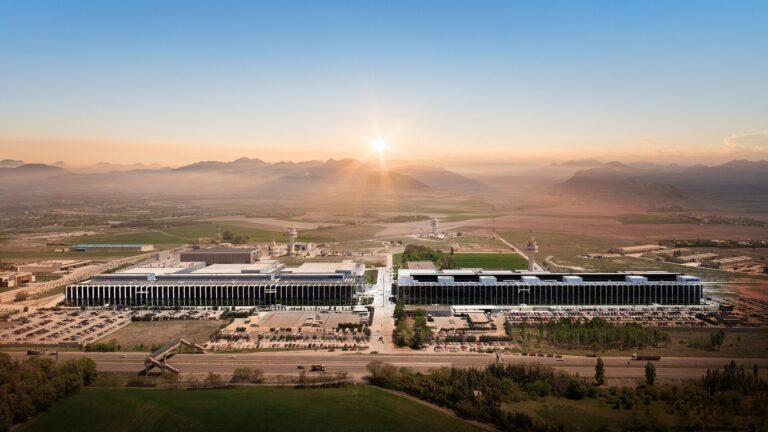
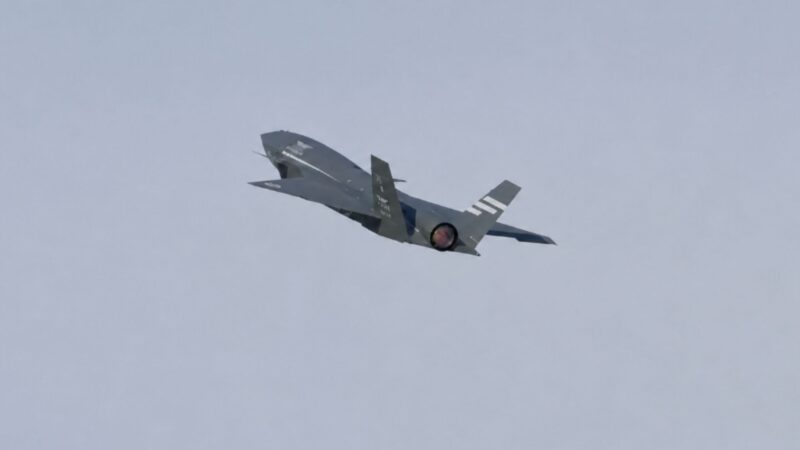
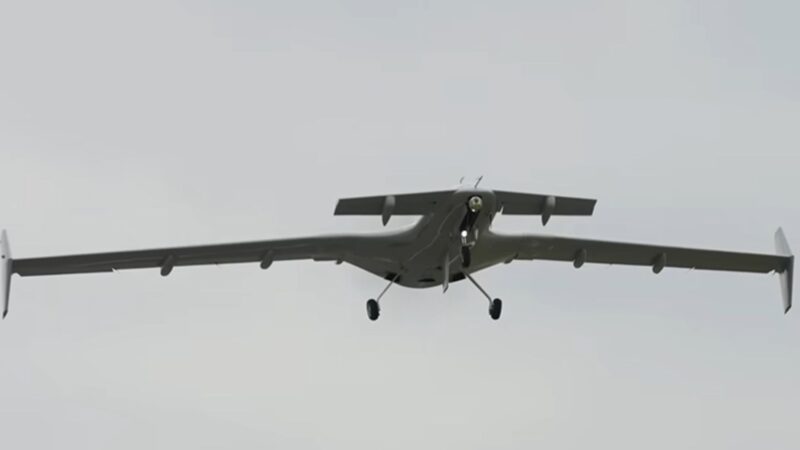
Türkiye’s KAAN fighter made its first flights on imported General Electric F110 engines, and Erdoğan has said he expects a positive result from Trump on engines for the aircraft. A more permissive Washington would clear the way for F110 deliveries and licences, keeping KAAN’s early production moving while TEI matures the indigenous TF35000 meant to replace them.
Warmer ties could also loosen a quieter constraint: the US approvals that Turkish systems need when they carry American components and are sold onward.
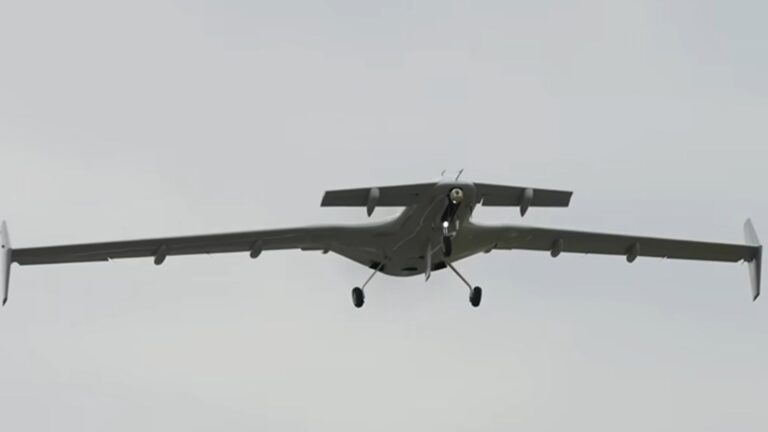
The clearest precedent is the T129 ATAK attack helicopter.
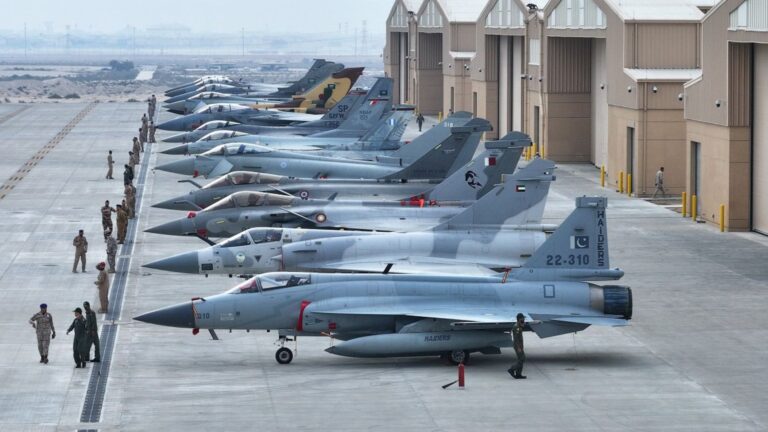
Pakistan signed a $1.5 billion deal for 30 of them in 2018, only for the sale to stall and lapse after Washington refused to license the re-export of their US-origin LHTEC engines, citing the state of US–Türkiye relations.
Washington later cleared the same engine for the Philippines, underlining that the approval was a political choice rather than a technical one. A Washington less inclined to withhold approval from Ankara could revisit such cases, with Pakistan the obvious test given the history, and with the F110-powered KAAN raising the same question for any future export.
For now, the shift is one of tone.
Trump has reset the atmosphere around a relationship that spent years frozen over the S-400, and Erdoğan has said Trump promised an initial five F-35s.
Whether that turns into released engines, a path back to the F-35, or easier re-export approvals will be decided by US law and case-by-case licensing rather than by a single remark at a summit. The signals to watch are concrete ones – an F110 licence, an S-400 announcement, or a third-party sale that Washington waves through.
Quwa Pro
Track The Markets, Buyers, and Signals Shaping Turkish Defence Exports
Follow how Turkish companies are presenting their products, where militaries are showing interest, and what those moves reveal about demand across regional defence markets.
Featured & Trusted By