
Pakistan’s Global Industrial & Defence Solutions (GIDS) has begun marketing upstream inputs for use in third-party loitering munitions (LM) and drones.
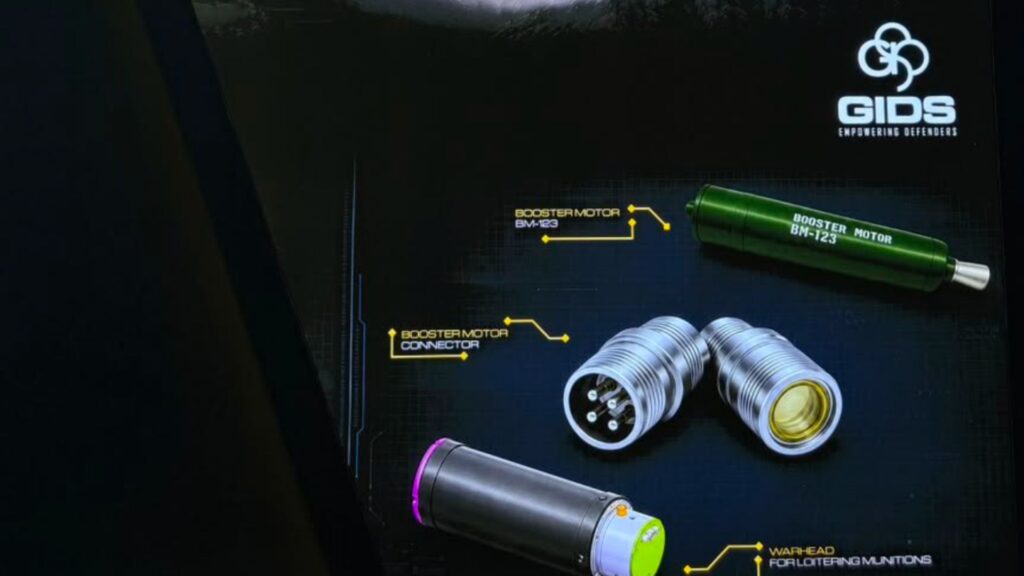
At its pavilion at the 2026 African Aerospace and Defence exhibition (AAD 2026), GIDS is showing the BMS-123 rocket booster motor, a booster motor connector, a loitering munition warhead and a range of fuzes.
These inputs are not as attention-grabbing as major platforms such as the Shahpar-3 unmanned aerial vehicle (UAV), but they signal a shift in how GIDS – the commercial arm of the National Engineering and Scientific Commission (NESCOM) – is approaching the global loitering munition and small-factor drone market.
Moving Up the Chain Instead of Competing Downstream
Rather than compete against the large – and still growing – number of companies offering finished munitions, GIDS is moving higher up the chain by becoming a source of key inputs for those same competitors.
This shift to the upstream is what Quwa argued for in an earlier analysis of how Pakistan’s state-owned enterprises (SOE) can collaborate closely with the private sector rather than compete with it.
There is no shortage of companies, abroad or within Pakistan, capable and willing to design, develop and produce loitering munitions.
Quwa Pro
See Where Emerging Defence Markets are Moving
Quwa Pro goes beyond tracking programs and equipment by explaining the policies, incentives, industry dynamics, and competitive pressures shaping South Asia's defence markets.