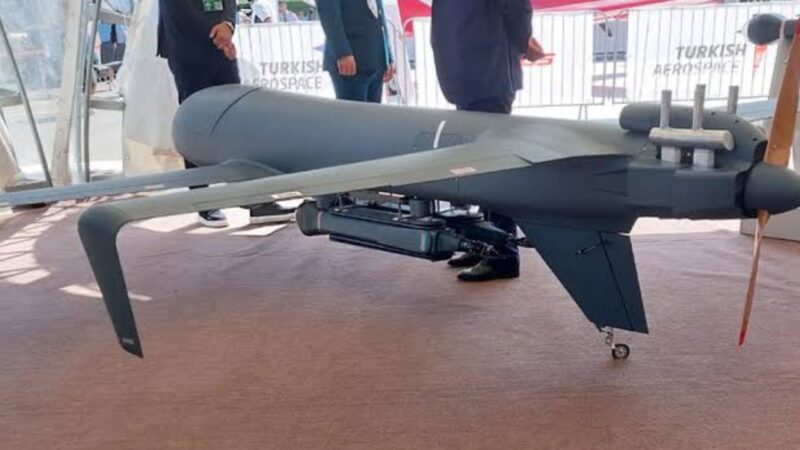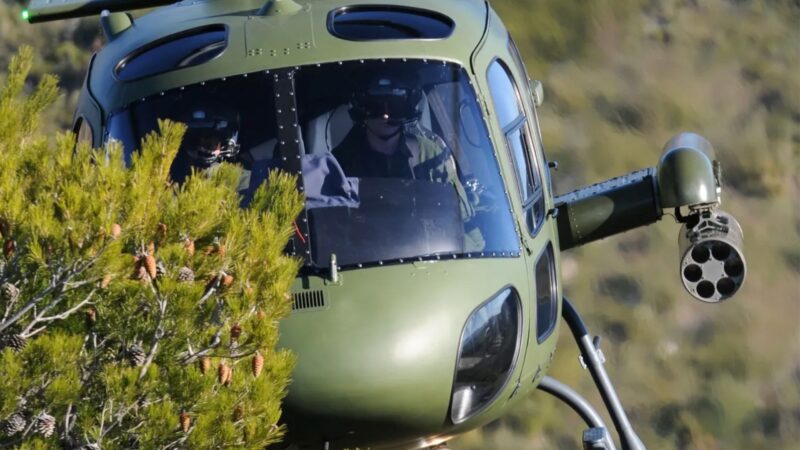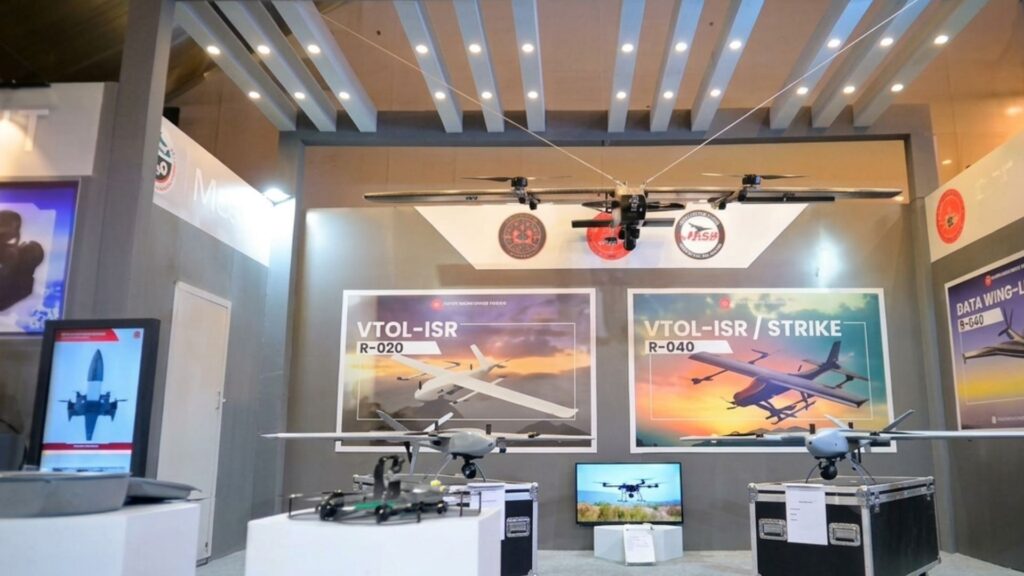
In recent years, Pakistan’s private sector has shown a capacity to design original solutions, especially in the domain of unmanned aerial systems (UAS). In fact, at least one such company is working on the sensor-to-effector networking and automation layer that programmes like Heavy Industries Taxila’s (HIT) P-905 counter-drone system depend on. Likewise, at least one company is developing its own interceptor drone stack, i.e., from both automated lightweight and heavyweight effectors to a network-enabled system integrating sensors and providing additional automation elements in the process. Gradient Aerospace, which revealed its ‘Atlas’ perception stack alongside the Swift and Shark interceptors at Indus RAS Expo 2026, is one example. Overall, there has been a notable increase in the number of private companies entering the small-factor UAS market.
Why the SOEs Ended Up Competing With the Private Sector
Historically, the tension in Pakistan’s defence ecosystem had been the armed forces’ push to involve state-owned enterprises (SOEs) in production. In Pakistan’s early years, forming the SOEs was essential as, generally, private capital was not available to take on the very technology-intensive, scale-heavy output work for things like ammunition production.
But in more recent decades, those same SOEs were also brought into domains where, initially, the private sector was already doing fairly well, such as drones. In the 2000s, Pakistan’s private sector was already off to a promising start with surveillance drones through firms like Integrated Dynamics and SATUMA. From the late 2000s, however, the armed forces consciously chose National Engineering & Scientific Commission (NESCOM) to drive the military’s future drone needs.
Interestingly, the first SOE into the drone business was Pakistan Aeronautical Complex (PAC), through the Pakistan Air Force’s licensed production of the Selex ES Falco from 2010. As Quwa noted in its August analysis of NESCOM’s drone portfolio, the PAF was bound to the licensing terms and the original equipment manufacturer’s (OEM) guardrails, with limited say or capacity to carry out changes and upgrades without approval. The Ministry of Defence Production (MoDP) then recorded the wider shift in its 2015-16 report as the “indigenization of UAVs of various configurations,” with Scout and Shahpar-I as the flagship programmes.
While this led to the Shahpar, a true homegrown and promising drone platform, it also stopped private sector growth by pulling the oxygen from the room, so to speak, upon the incentive structures of private capital.
Read more: Pakistan Bet Its Drone Industry on NESCOM. It’s Starting to Pay Off.
These issues were discussed in previous Quwa analysis articles, including on why the “no cost, no obligation” procurement model deters private investment and on the testing and certification barriers private firms face. For this piece, however, this author wants to steer attention towards the opportunity – i.e., a pathway through which SOEs can not only operate alongside the private sector but also drive its growth while also helping Pakistan both save on foreign currency and draw more via exports.
A Dozen Drone Initiatives, All Importing the Same Parts
Quwa is aware of at least a dozen private sector drone initiatives as of 2026. All of these initiatives involve ‘small-factor’ drones, such as quadcopters, first-person-view (FPV) attack drones, and interceptor drones. There is no shortage of initiative in terms of pursuing both licensed and original design work in the small-factor UAS domain.
However, across each and every one of these solutions is the reality that the upstream components, i.e., electric motors, plastic moulds, fibre optic cables, and basic optronics, will all be imported. Thus, instead of competing with these smaller companies by providing comparable designs, the SOEs could, instead, look to indigenizing and supplying the upstream components.
Quwa Pro
See Where Emerging Defence Markets are Moving
Quwa Pro goes beyond tracking programs and equipment by explaining the policies, incentives, industry dynamics, and competitive pressures shaping South Asia's defence markets.
Subscribe Already a subscriber?Sign in