

The Department of National Defence (DND) and the Defence Investment Agency (DIA) launched the Defence Drone Initiative (DDI) on 23 July 2026, opening a standing marketplace meant to qualify Canadian companies to supply uncrewed and autonomous systems to the Canadian Armed Forces (CAF) and the Canadian Coast Guard (CCG).
The marketplace runs through a Request for Supply Arrangement (RFSA) open on CanadaBuys until 14 August 2026, with the Defence Investment Agency holding a virtual information session for suppliers on 30 July.
Minister of National Defence David McGuinty framed the initiative as a speed play, saying the DDI “will connect the operational needs” of the Canadian Armed Forces and Coast Guard with Canadian industrial capacity.
Lieutenant-General Darcy Molstad, Commander of the Canadian Joint Forces Command, told The Globe and Mail the intent is a gated process where companies “demonstrate their capabilities over time” so Ottawa can identify which suppliers can scale.
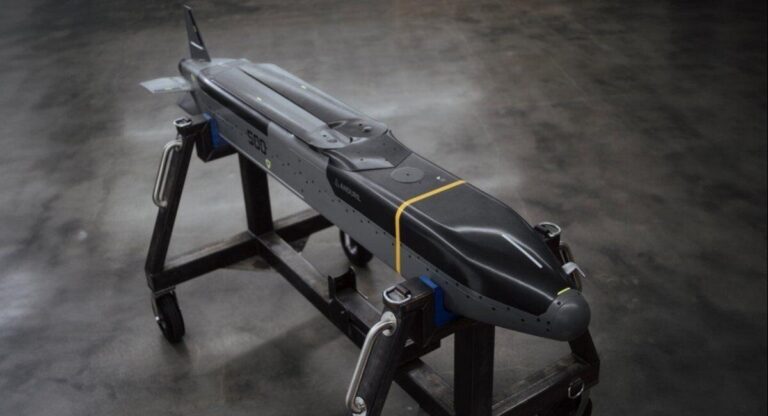
The RFSA is organized around five qualification streams – uncrewed and counter-uncrewed systems and components, data/electronic warfare/cyber systems, systems integrators, test and evaluation services, and a low-barrier innovation and experimentation lane for early-stage technology – and covers six capability areas spanning tactical ISR drones, uncrewed ground vehicles, uncrewed maritime systems, low-cost counter-drone interceptors, standardized drone munitions, and a deep precision strike lane that DND’s own backgrounder cautions is not yet an acquisition decision.
Qualification does not guarantee a contract, but successful applicants could be notified as early as September, and the RFSA itself is a five-year standing instrument that reopens every three months through mid-2027 and roughly every six months after that.
Know What Defence Buyers in Will Need Next
See emerging requirements, likely suppliers, and routes to market across Pakistan, MENA, and fast-moving defence technologies, before demand becomes obvious.
Uncrewed Systems Anchor Canada’s Defence Industrial Strategy
The marketplace operationalizes a policy structure Ottawa built over the prior nine months.
Prime Minister Mark Carney’s Defence Industrial Strategy, “Security, Sovereignty and Prosperity,” launched 17 February 2026, named uncrewed and autonomous systems one of ten sovereign capability priorities and set a target of raising the share of defence acquisitions awarded to Canadian firms to 70 percent.
The Defence Investment Agency, created in October 2025 as a special operating agency, is the buying mechanism DND credits with accelerating the process through what CEO Doug Guzman called a “Build-Partner-Buy approach.”
That architecture extends into Quebec, where McGuinty announced on 14 July 2026 that an Espace Aéro-led consortium of 30 organizations would receive US$21 million (C$29.6 million) over two years to establish the Uncrewed Systems Defence Innovation Secure Hub in Mirabel, sponsored by the Canadian Joint Forces Command and built on the earlier Maritime DISH pilot.
Industry Minister Mélanie Joly said the hub would help Canadian innovators “transform cutting-edge ideas into real-world capabilities.”
Related reading
Ottawa’s Bet on Attritable Systems Follows Ukraine’s Drone War
The doctrinal rationale behind the marketplace is explicit in Molstad’s own framing: “expensive and exquisite capabilities can be neutralized by very low-cost attritable systems,” he told the Globe, arguing Canada needs that same low-cost mass to fight in a modern context.
The RFSA’s own technology questionnaire reportedly asks vendors whether their systems are already in use in Ukraine or informed by lessons from the war there, and Ottawa is separately developing a “Maple List” of pre-vetted drones and components modelled on Ukraine’s Brave1 marketplace and the American Blue List.
Where the DDI departs most from precedent is pace.
Canada’s marquee uncrewed procurement to date, the MQ-9B SkyGuardian ordered from General Atomics in December 2023, will not deliver its first aircraft until 2028 under a single-platform, project-based process.
The Globe’s reporting frames the contrast directly: traditional procurement “doesn’t lend itself to technologies such as drones that require constant iteration.”
Industry voices see the marketplace as an attempt to close a domestic supply-chain gap as much as a demand signal – Volatus Aerospace CEO Glen Lynch told the Globe Canada is still missing domestic production of “flight controllers, speed controllers, batteries, and motors,” the component-level base a standing marketplace is meant to eventually justify building.
Quwa Pro – Defence Market Intelligence
See Where Defence Demand and Technology Are Moving Next
Track procurement priorities across Pakistan, the Gulf and wider MENA, and Central Europe. Follow emerging vendors, drones, AI, C-UAS, and affordable precision weapons, and see how lessons from today’s conflicts are reshaping military requirements and market opportunities.
Featured & Trusted By