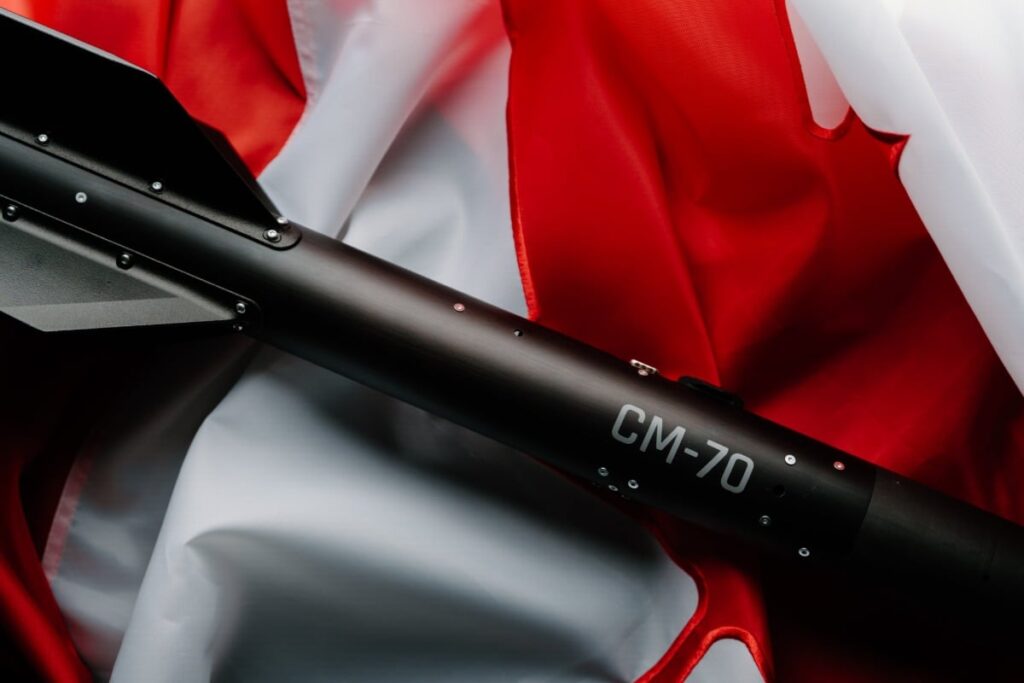
North Vector Dynamics, a Calgary-based startup, published a revised specification set for its CM-70 counter-unmanned aerial system missile in a social media post on 27 July 2026, the first substantive change to the design’s public figures since the spring.
The weapon itself is not new. It has appeared on the company’s website since June 2025 under the name SPEAR, with the product page renamed CM-70 around the turn of the year.
Current published figures give a mass of 3 kg, a length of 0.9 m, a range of 3.5 km and a speed of 900 km/h, against what the company describes as Group I to III drone threats.
Those numbers have moved repeatedly. The May 2026 version of the same page listed 2.5 kg and 0.72 m at more than 1,000 km/h, while the 2025 version gave a range of 2 km and an energetic payload of 0.8 kg that has since been withdrawn.
Guidance has shifted as well, from autonomous infrared in 2025 to a semi-active laser arrangement the company labels SALG, which the same page pairs with claims of radio silence and autonomy in GPS-denied conditions.
Dr. Paul Ziadé, co-founder and chief executive officer, described the CM-70 in April as an attritable, precision-guided missile, giving its mass at around 2 kg and dating the firm’s air defence work to early 2024.
Ziadé has put the target unit cost at under $10,000, against roughly $3.7 million for a Patriot interceptor and about $35,000 for a Shahed-class one-way attack drone.
The company has carried an ITAR-free claim on the product page since June 2025, promising procurement free of United States International Traffic in Arms Regulations controls for allied integration.
Ziadé has tied that positioning to investor behaviour, saying American backers are looking at non-American defence firms because it will become harder for American companies to export to the European Union, Canada and Asia.
He has described active relationships in Germany, the Czech Republic and Southeast Asia, advanced diligence in the United Arab Emirates, and an intention to field the missile in Ukraine during 2026.
On the capital side, Czechoslovak Group’s Tech Horizons fund took a stake in May 2026, with NordSpace Ventures following in July as a strategic investor and propulsion partner.
Domestically, the firm holds a $4.2 million contract from Defence Research and Development Canada for high-speed and hypersonic aeropropulsion work, on top of $2.5 million in earlier grants through the IDEaS program.
It is also one of 26 participants selected for the IDEaS counter-UAS sandbox at Suffield, Alberta from 14 September, though it is entered there under its SHIELD system rather than the CM-70.
Ottawa launched a Defence Drone Initiative on 23 July naming low-cost, low-collateral counter-drone interceptors among its focus areas, with a request for supply arrangement closing on 14 August.
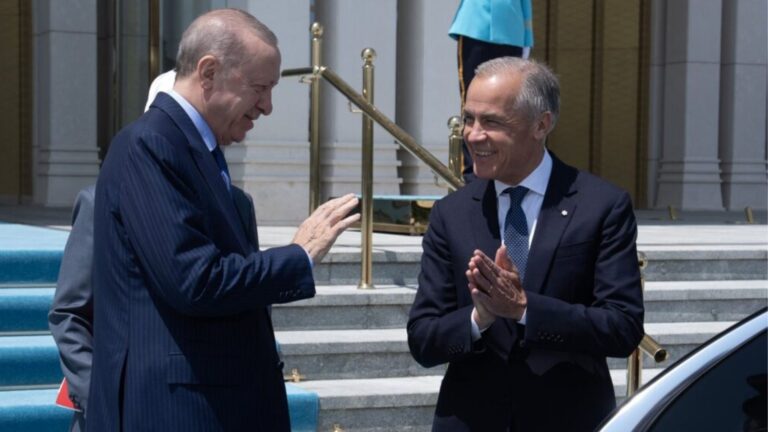
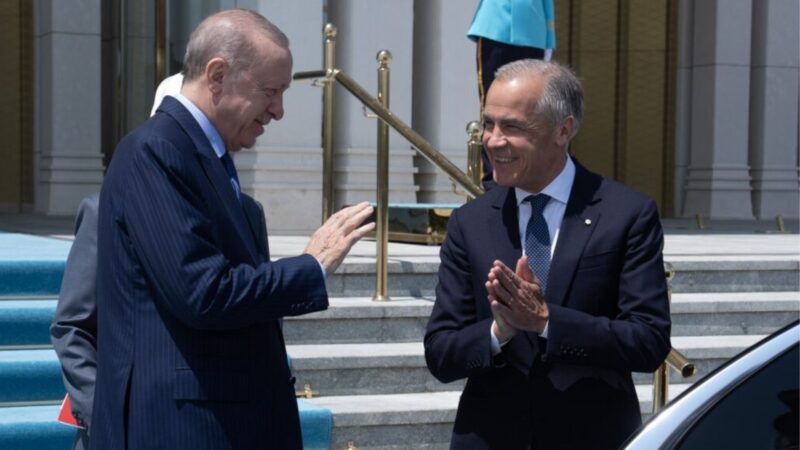
The financing architecture is newer still. Nine countries signed a declaration at the NATO summit in Ankara on 7 July backing the Canada-led Defence, Security and Resilience Bank, which is meant to begin operations as early as 2027.
Prime Minister Mark Carney said the bank would unlock investment and strengthen the defence industrial base, while Finance Minister François-Philippe Champagne framed it as strengthening collective capacity to produce and export defence capabilities.
The declaration was signed by Canada alongside Albania, Belgium, Greece, Latvia, Luxembourg, Romania, Türkiye and Ukraine, and states that the bank is intended to complement rather than duplicate existing national and multilateral instruments.
The more concrete opening is the European Union’s SAFE instrument, which Canada joined on 15 June as the first non-European participant.
Under those terms Canadian content may account for up to 80 per cent of procurement value, against 35 per cent for other third countries, with a participation fee where European content falls below 65 per cent.
Export Development Canada has meanwhile provided roughly $2 billion in financing and insurance to defence and security firms since expanding its sector approach in 2025, including $1.1 billion to more than 60 companies this year.
Canada’s Defence Industrial Strategy targets a 50 per cent increase in defence exports over the decade. It starts from a 2024 base in which 63 per cent of the sector’s roughly $8 billion of exports went to the United States.