
The Prime Minister’s Office confirmed on 8 July 2026 that Canada’s Light Utility Vehicle (LUV) project has been restricted to two Canadian defence industry suppliers competing to deliver between 1,600 and 2,100 vehicles, plus 400 to 500 light utility trailers, for the Canadian Armed Forces.
CBC News reported the program is worth up to US$3.5 billion (C$4.9 billion) and that Public Services and Procurement Canada had sidelined the two American finalists, AM General and Oshkosh Defence, leaving only domestic firms in contention.
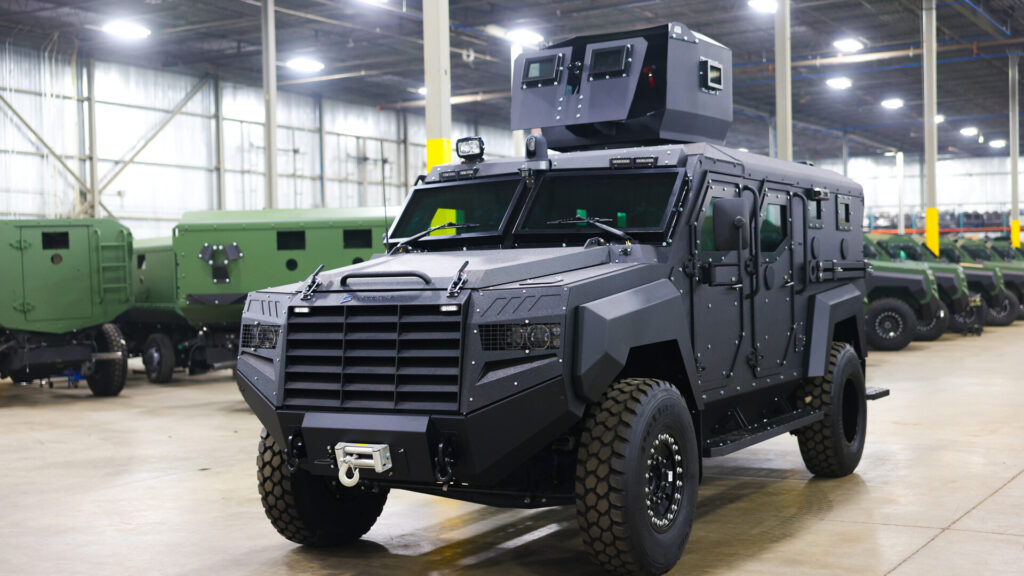
Brampton, Ontario-based Roshel Inc. is one of the two remaining bidders, according to Defence Blog, citing CityNews reporting on the restructured competition.
The second finalist has not been named in any government or company statement reviewed; PSPC and DND have not confirmed its identity publicly.
Know What Defence Buyers in Will Need Next
See emerging requirements, likely suppliers, and routes to market across Pakistan, MENA, and fast-moving defence technologies, before demand becomes obvious.
Roshel’s Ukraine Combat Record Is Central to Its Pitch for a First-Ever CAF Contract
Roshel, founded in Toronto in 2016 by chief executive Roman Shimonov, builds its Senator armoured platform at a roughly US$46-million (C$65-million) facility in Brampton.
The company told CityNews it has produced more than 2,500 vehicles for Ukraine alone, which Shimonov said made Roshel “the largest armoured vehicle manufacturer in the world” by that measure.
Despite exporting the Senator to the United States, United Kingdom, Germany, France, and several other countries, Roshel has never previously sold a vehicle to the Canadian Armed Forces – a gap Shimonov called out directly: “we weren’t able to sell to our own government,” despite exporting “100 per cent” of production.
Related reading

Shimonov has argued Roshel’s domestic footprint should weigh in the Buy Canadian evaluation, saying the government should “choose real Canadian companies” rather than firms that merely promise to become Canadian if awarded the contract.
The company has also pointed to speed: Shimonov told CityNews Roshel could begin LUV deliveries within 2026 itself, well ahead of the project’s original 2029 delivery target.
Roshel formed a partnership with Algoma Steel in April 2026 to build LUV vehicles using Canadian-made ballistic steel, with Algoma chief executive Rajat Marwah calling the arrangement a way to put “our production capabilities, our workforce, and our Sault Ste. Marie facilities directly in service of Canada’s national security.”
Program Would Replace Canada’s Aging G-Wagon Fleet
The LUV project is intended to replace the Canadian Army’s Mercedes-Benz G-Wagon Special Military Pattern vehicles across four variants – command and reconnaissance, utility, military police, and cable-laying roles – with a requirement for STANAG 4569 Level II ballistic protection and a base chassis already in militarized service with a NATO or Five Eyes partner.
Major Varun Vahal, the LUV Project Director, told Canadian Army Today in December 2025 that troops would receive the vehicles “as originally scheduled, between 2030 and 2034” under the program’s prior structure, before Ottawa’s decision to restrict the tender to two Canadian firms.
Six companies had originally qualified for the LUV competition, a field that included the now-eliminated AM General and Oshkosh Defence alongside several Canadian and Canadian-subsidiary firms.
Neither PSPC nor DND has published the restricted tender’s award timeline, and the department declined to comment on the competition when asked by CBC.
What is confirmed is the scale of the shift: a project that began as an open international tender is now a closed, Canadian-only contest between Roshel and one still-unnamed rival, run against the backdrop of Ottawa’s Defence Industrial Strategy target of directing 70 percent of defence acquisitions to Canadian firms.
Quwa Pro – Defence Market Intelligence
See Where Defence Demand and Technology Are Moving Next
Track procurement priorities across Pakistan, the Gulf and wider MENA, and Central Europe. Follow emerging vendors, drones, AI, C-UAS, and affordable precision weapons, and see how lessons from today’s conflicts are reshaping military requirements and market opportunities.
Featured & Trusted By