
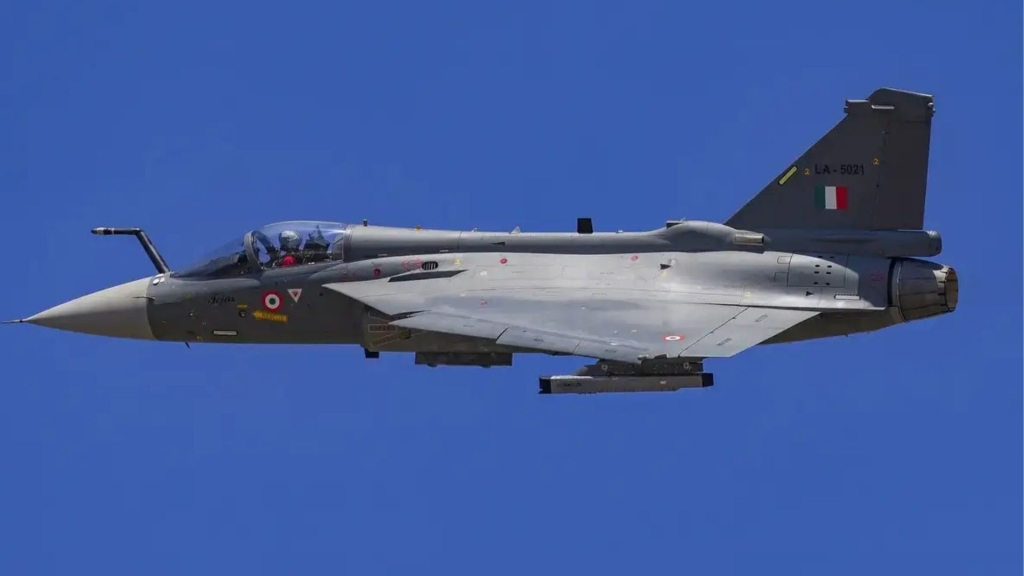
The crash of the Indian Air Force’s HAL Tejas (LA-5026) during an aerobatic display at the 2025 Dubai Air Show warrants a careful, non-definitive examination.
The final determination rests with the official Court of Inquiry. However, the available video footage, aerodynamic considerations, and known characteristics of modern fly-by-wire fighters point toward a sequence shaped by low-altitude maneuvering, a possible altitude-setting error, and the limits of the aircraft’s control system in an unforgiving flight envelope.
Entry, Energy State, and a Potential Altitude Misjudgement
The incident occurred as the Tejas entered a low-level rolling maneuver. Observers noted a slight deviation from the routine performed on previous days – an offset that placed the aircraft marginally out of position and reduced the margin for recovery.
The aircraft failed to complete the roll and arrest its descent, ultimately impacting the ground with insufficient altitude remaining. This is a classic manifestation of the low-level “energy trap”: the pilot exhausts both kinetic (speed) and potential (altitude) energy before the aircraft can be stabilized.
A compelling hypothesis for this reduced margin is an initial misjudgement of true altitude, potentially caused by an incorrect QNH (altimeter pressure) setting. The METAR for the period (OMDW 211300Z) reported a QNH of 1017 hPa. An altimeter set even 10 hPa higher would over-read by nearly 300 feet, significant enough to erase the narrow safety buffer that aerobatic displays typically depend on.
Quwa Plus
Go Beyond the Headlines on Pakistan’s Defence and Security.
Quwa Plus gives you deeper reporting, briefings, and analysis on Pakistan’s defence programs, foreign policy, national security, and regional strategy. Follow the developments that matter to professionals, analysts, and serious readers tracking Pakistan’s security landscape.
Join ($29.99/Year) Already a subscriber?Sign in