Introduction
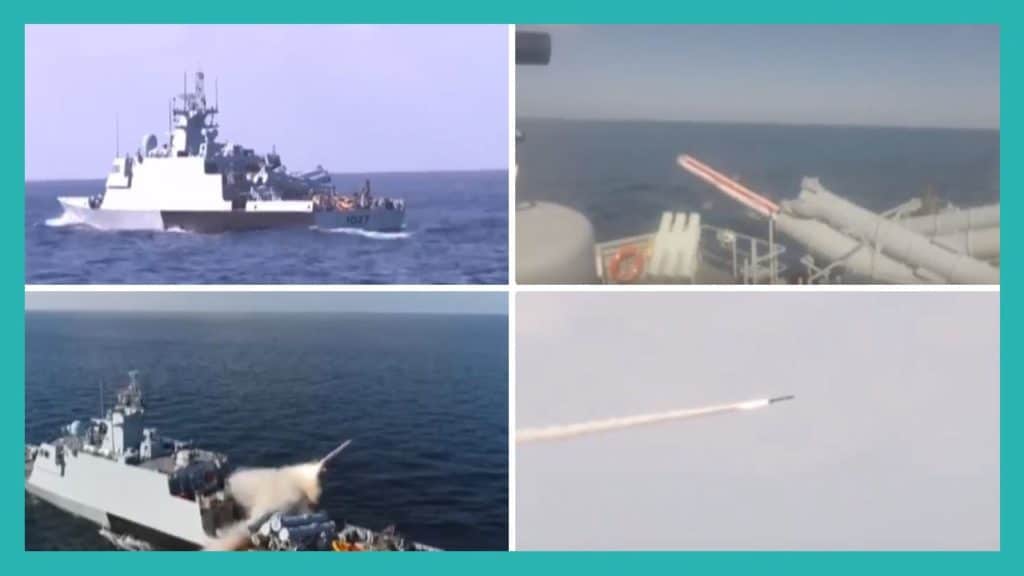
On January 03, the Pakistan Navy announced that it test-fired a new anti-ship cruise missile (ASCM) with land-attack capabilities, the “Harba.” The dual-ASCM/land-attack cruise missile (LACM) was fired from an Azmat-class fast attack craft (FAC), the PNS Himmat. Seemingly based on the Babur-series of LACM, the Harba ASCM is a sub-sonic, sea-skimming ASCM with an inertial navigation system (INS)-based mid-course guidance suite and active-homing terminal stage seeker. Pakistan did not disclose the specific seeker type it is using or the Harba’s range, though the land-attack mission could indicate a long-range mission that is commensurate with the Babur Version 2 ground-launch cruise missile (GLCM) or Babur 3 submarine launch cruise missile (SLCM). However, the Harba ASCM does provide Pakistan with its own anti-ship warfare (AShW) munition and another strategic deployment option, joining the Babur 3 SLCM.
By deploying the Harba ASCM from aboard an Azmat FAC, a 500-ton surface combatant inherently lacking in a long-range surface surveillance and tracking radar to independently use the Harba ASCM to its fullest range, the Pakistan Navy has demonstrated that it has formed a network-enabled warfare environment – i.e. a system that connects the Azmat FAC to off-board sensors to provide situational awareness, targeting and mid-course guidance for the Harba ASCM fired from the Azmat FAC. Secondly, testing the Harba ASCM from the Azmat FAC shows that Pakistan has the ability and willingness to deploy potent long-range land-attack capabilities from low-cost – and potentially scalable in the future – launch platforms. The Harba is the first piece of Pakistan’s effort to improve its anti-access and area-denial (A2/AD) capabilities to guard its littoral waters, exclusive economic zone (EEZ) and sea-lines-of-communications (SLOC).
The Harba dual-ASCM and LACM
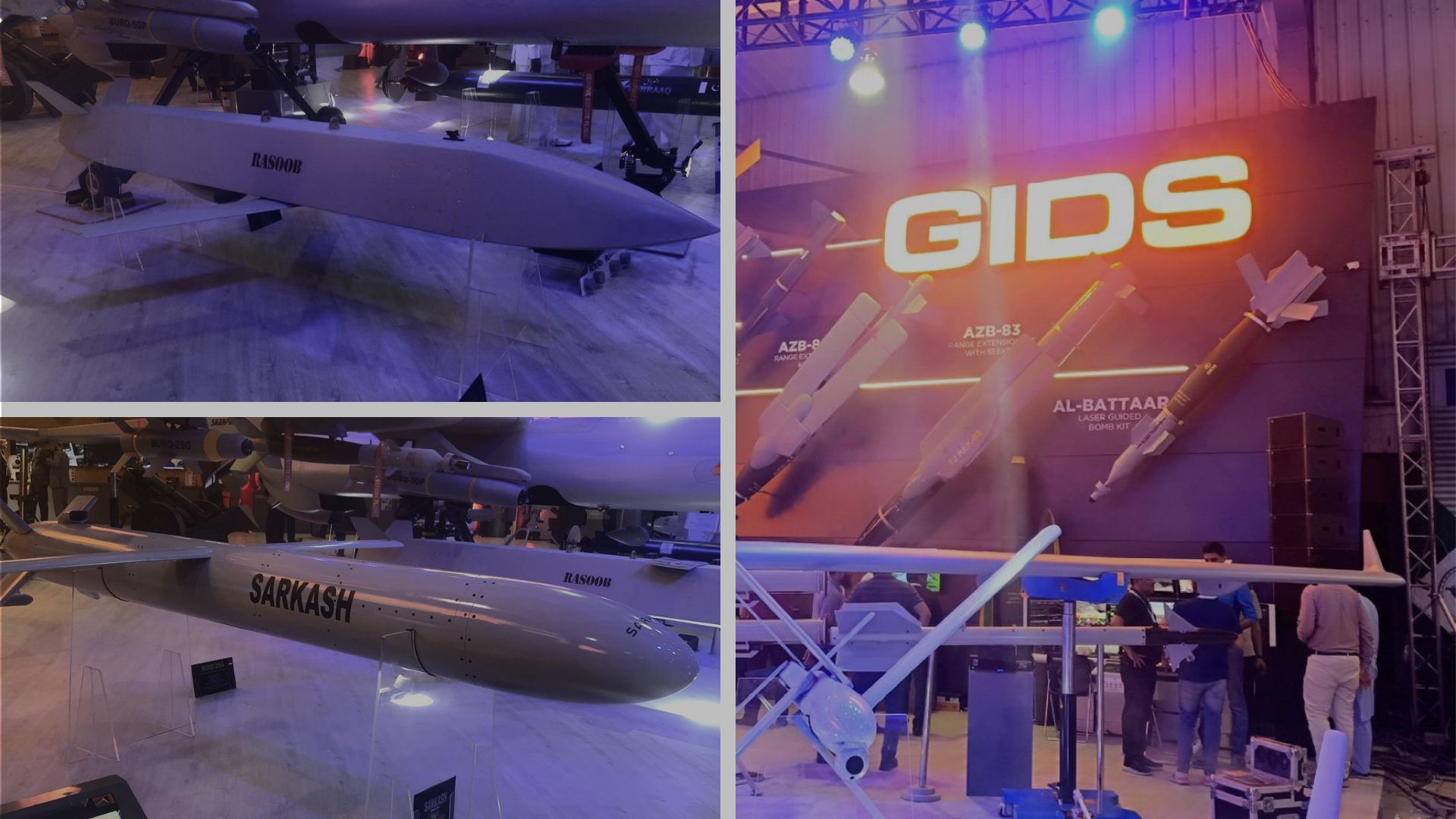
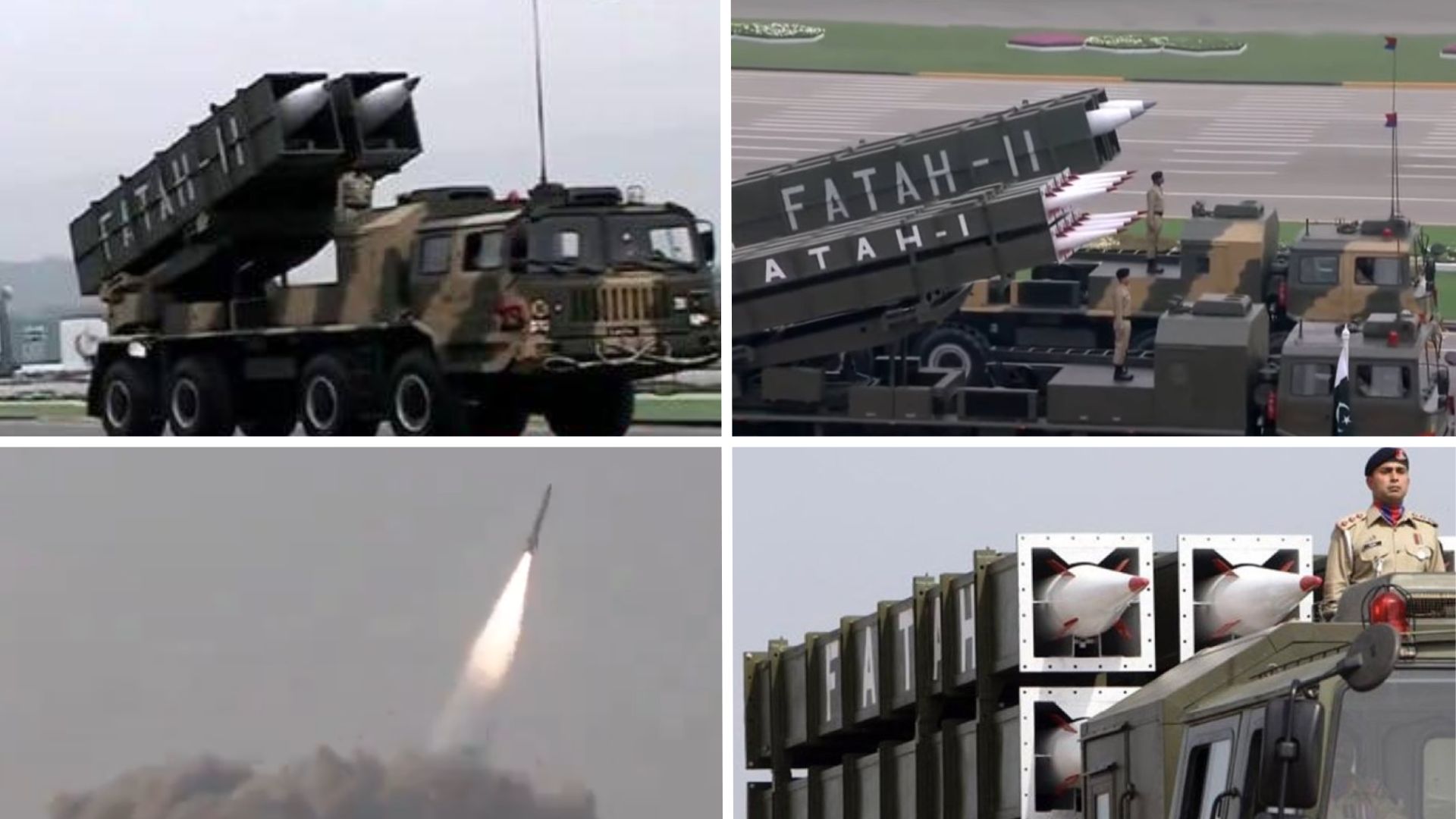
The Harba ASCM joins the Babur and Babur Version 2 GLCM, Babur 3 SLCM and Ra’ad/Ra’ad II air-launched cruise missile (ALCM) as among Pakistan’s stand-off range munitions. The Babur and Ra’ad-series, while capable of deploying conventional (e.g. high-explosive, blast fragmentation and/or penetrator) warheads, they are considered strategic weapons by the Army, Navy and Air Force. In other words, they are a means to deploy miniaturized nuclear warheads using a wide variety of platforms, including small platforms such as combat aircraft and submarines in the case of the Ra’ad/Ra’ad II and Babur 3, respectively.
Pakistan did not specify if the Harba ASCM will have a strategic role (though it is plausible if it is based on the Babur-series). There had been anticipation of a new ship-based ASCM following Pakistan’s Ministry of Defence Production’s (MoDP) disclosure of a ship-based launcher for an ASCM and LACM in its 2014-2015 yearbook. This launcher was due for completion by October 2018. Later, the design for the PNS Himmat and the fourth Azmat FAC, which is currently under-construction at Karachi Shipyard & Engineering Works (KSEW), had showed a 2×3 aft-positioned missile launch system instead of the 2×4 system for the shorter-range C-802A found on the preceding two Azmat FAC (i.e. PNS Azmat and PNS Dehshat) and the F-22P. In March 2017, Pakistan test-fired a long-range anti-ship missile from the shore that the Inter Services Public Relations (ISPR) said featured “advanced technology and avionics [for] … engagement of targets at sea.”
It should be noted that in April 2016, the Pakistan Navy had tested another shore-based ASCM designated “Zarb.” Observers believe that the Zarb was in fact the Chinese C-602, which would provide a heavier (i.e. 300 kg) warhead and longer range than the C-802A. In the absence of official confirmation from Pakistan, one could reasonably speculate that the Harba and Zarb are connected (i.e. C-602-derived). However, the Harba’s land-attack capability could also be taken as an indicator for a link to the Babur, especially as the Babur’s longer-range envelope would position the Harba as a credible land-attack threat. In this respect, the Harba could be derived from either the Babur Version 2 GLCM or the Babur 3 SLCM, which offer 700 km and 450 km in range, respectively. In either case, it is a large range improvement over the C-802A.
However, it is difficult to determine which of the two platforms could have been selected for the Harba. Theoretically, the Babur 3 could make sense from a standardization standpoint as it would mean the Navy need only maintain a single missile platform for its surface and sub-surface requirements. However, it is unclear how much standardization matters. For example, it is possible that the miniature propulsion (e.g. mini-turbojet or turbofan), flight control systems and mid-course INS guidance are the same between the Babur 3 and Babur Version 2, but that the difference stems from reduced airframe size (for fitting into submarine torpedo tubes, which could mean less room for fuel and, in turn, less range). Furthermore, the Babur 3 necessitates encapsulation for it to undertake underwater launch. If the encapsulation and/or de-encapsulation process cannot be done outside of the missile’s production facility, then the benefit of standardization between the surface and sub-surface missiles is limited. Why select the Babur 3 for the Harba and its lesser range if the Babur V.2 with 700 km can be had (and fit in the PNS Himmat’s launcher)?
Quwa Plus
Go Beyond the Headlines on Pakistan’s Defence and Security.
Quwa Plus gives you deeper reporting, briefings, and analysis on Pakistan’s defence programs, foreign policy, national security, and regional strategy. Follow the developments that matter to professionals, analysts, and serious readers tracking Pakistan’s security landscape.