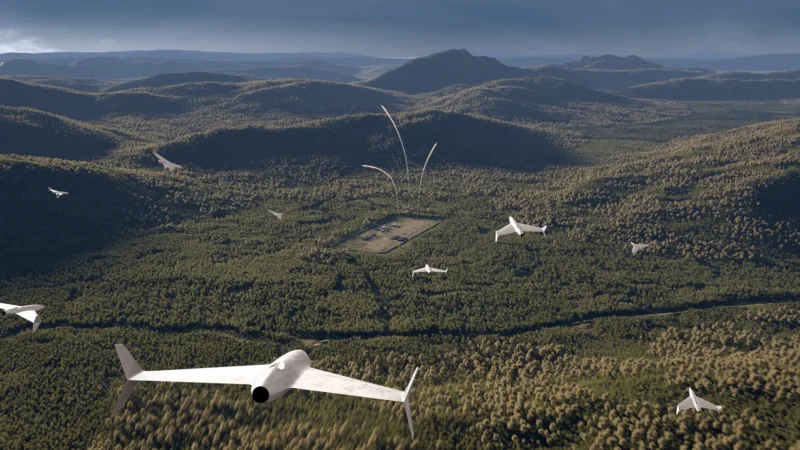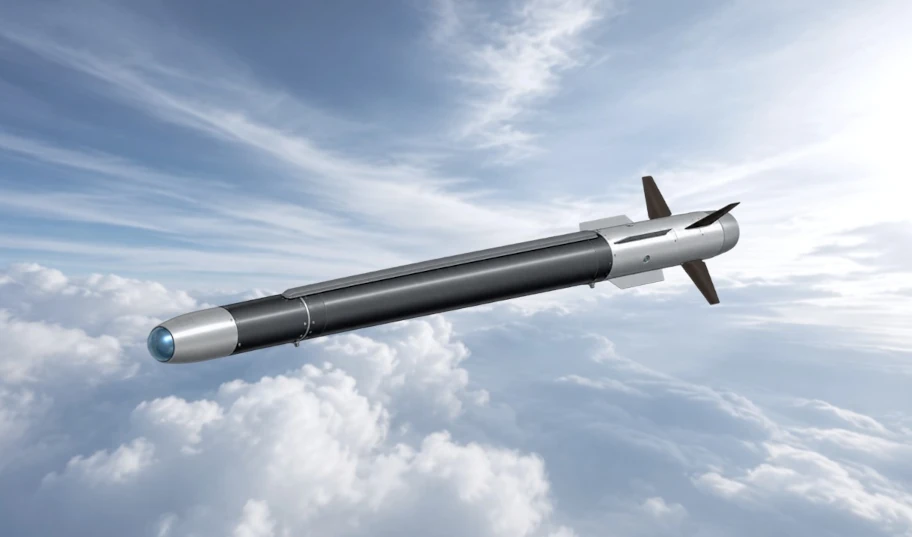
The MBDA Counter Mass Interceptor (CMI) is a supersonic counter-drone missile developed by MBDA UK with Poland’s Wojskowy Instytut Techniczny Uzbrojenia (WITU), or Military Institute of Armament Technology. MBDA gives the envelope as ranges and altitudes of over 6 km.
MBDA unveiled CMI at the Farnborough International Airshow in July 2026, and announced the WITU cooperation on 9 September 2026 at MSPO in Kielce.
MBDA plans an initial firing campaign in 2027. No armed force has ordered CMI.
Know What Defence Buyers in Will Need Next
See emerging requirements, likely suppliers, and routes to market across Pakistan, MENA, and fast-moving defence technologies, before demand becomes obvious.
Key facts
| Attribute | Value |
|---|---|
| System name | Counter Mass Interceptor (CMI) |
| Category | Supersonic kinetic counter-UAS interceptor missile |
| Manufacturer | MBDA UK, with WITU (Wojskowy Instytut Techniczny Uzbrojenia) |
| Country of origin | United Kingdom and Poland |
| Range and altitude | Over 6 km (MBDA-stated) |
| Speed | Supersonic (MBDA-stated). No figure published |
| Weight | About 53 kg, as briefed at Farnborough 2026 |
| Length | About 2.3 m, as briefed at Farnborough 2026 |
| Diameter | 122 mm, as briefed at Farnborough 2026 |
| Warhead | Blast-fragmentation. Mass not disclosed |
| Seeker and mode | Not named by MBDA. Farnborough briefings gave a fixed field-of-view long-wave infrared (LWIR) seeker, fire-and-forget with lock-on before launch |
| Propulsion | Not disclosed |
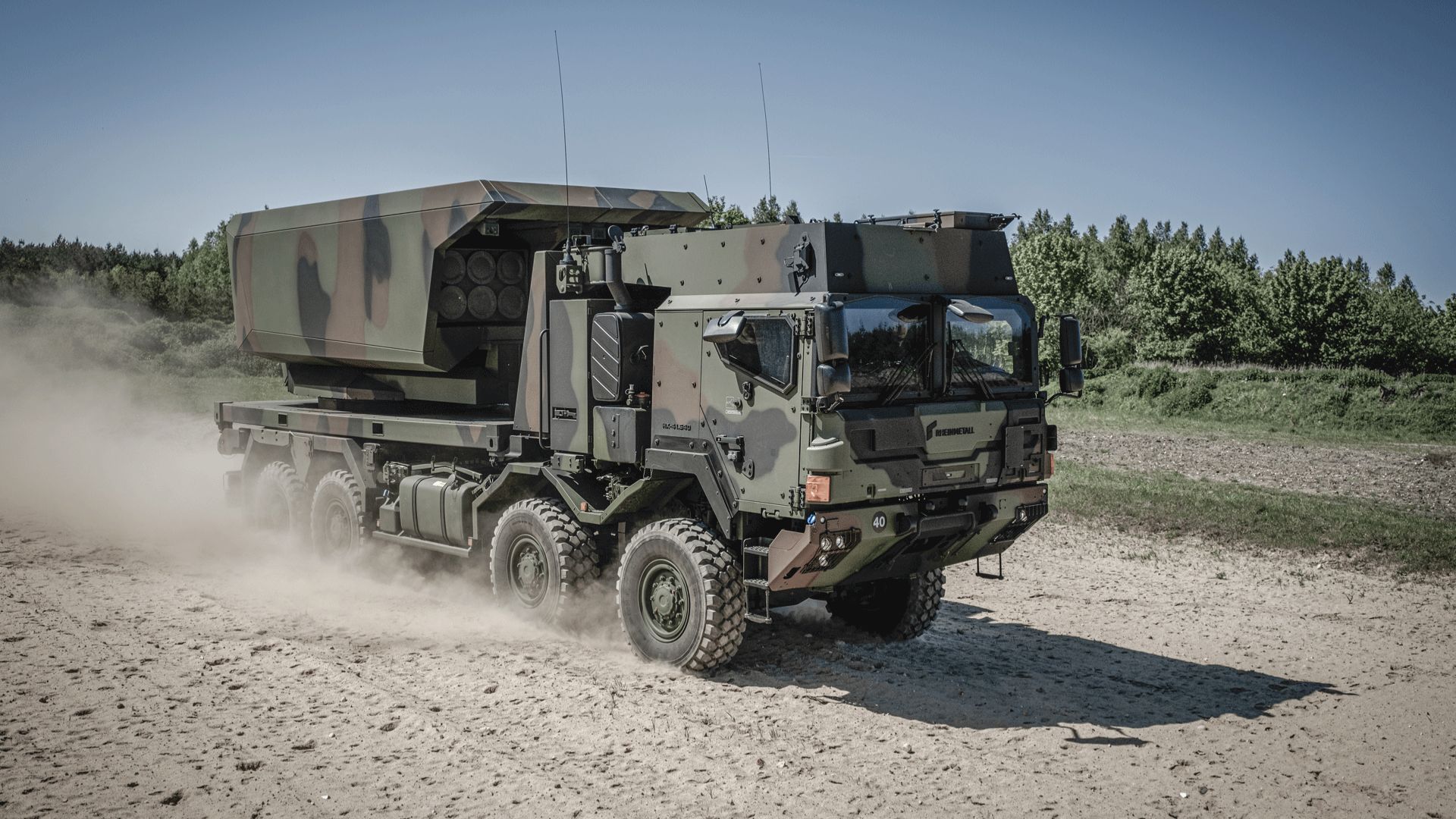
| Launcher | Surface-Launched ASRAAM turreted launcher on a Supacat 6×6 |
| Magazine depth | Not disclosed |
| Unit cost | Not disclosed |
| Operators | None |
What is the MBDA Counter Mass Interceptor?
The MBDA Counter Mass Interceptor is a low-cost kinetic drone interceptor built to defeat raids rather than single targets.
MBDA describes CMI as “a low-cost high volume solution to mass attacks” from one-way and ISR drones, helicopters and cruise missiles.
Shephard Media reported the target set as Class 1 to 3 uncrewed aerial vehicles, helicopters and cruise missiles.
Who makes the Counter Mass Interceptor?
MBDA UK leads the Counter Mass Interceptor, and Chris Allam is its UK Managing Director.
The Polish partner is WITU, the Wojskowy Instytut Techniczny Uzbrojenia at Zielonka, led by Col Paweł Sweklej PhD.
WITU is a Polish military research institute, not a Polska Grupa Zbrojeniowa subsidiary.
WITU designed the missile and MBDA supplies the seeker. MBDA’s release describes “the joint integration of the seeker into a prototype missile designed by WITU”.
Allam tied the work to MBDA’s PILICA+ deliveries and “unprecedented technology transfer on NAREW”.
Sweklej said CMI “enables the exploitation of a fully Polish missile design paired with a state-of-the-art seeker”, and linked it to HYDIS.
Counter Mass Interceptor specifications
MBDA’s only published performance figure is the envelope: ranges and altitudes over 6 km.
Dimensional figures come from Farnborough 2026 briefings. Aviation Week recorded 122 mm diameter, 2.3 m length and about 53 kg.
Breaking Defense reported MBDA saying CMI doubles the 2 to 3 km ceiling of conventional counter-UAS effectors, implying 4 to 6 km, below MBDA’s own figure.
The warhead is blast-fragmentation, with no mass or fuze type disclosed.
MBDA’s own release names no seeker type. Farnborough press briefings described a fixed field-of-view long-wave infrared (LWIR) seeker, and Strefa Obrony called MBDA’s contribution an infrared homing head.
Propulsion is not disclosed: no motor type, burn profile or supplier.
Sources conflict on size. TURDEF called CMI only slightly smaller than the 166 mm ASRAAM, while the briefed figures place it far below.
How the Counter Mass Interceptor is launched
CMI is launched from Surface-Launched ASRAAM, MBDA’s ground-based application of the Advanced Short Range Air-to-Air Missile.
TURDEF reported the Farnborough 2026 display showed the round on a Supacat 6×6 turreted launcher, with Aviation Week noting an upgraded electro-optical and infrared sensor.
Luke Webster, an MBDA business development manager whose exact title differs between outlets, told Breaking Defense the design aims to be “close to platform agnostic as we can be”.
Magazine depth is not disclosed.
One vehicle then carries two effectors: ASRAAM for higher-value targets, CMI for the lower tier. Aviation Week reported Surface-Launched ASRAAM has passed 400 intercepts in Ukraine.
Counter Mass Interceptor programme timeline
| Date | Event |
|---|---|
| 27 May 2026 | United Kingdom and Poland sign the Northolt Treaty in London, covering joint development of a next-generation medium-range air defence missile |
| July 2026 | MBDA unveils CMI at the Farnborough International Airshow, displayed on a Surface-Launched ASRAAM vehicle |
| August or September 2026 | Seeker field trials at a Polish test range against representative drone targets. MBDA gives September 2026, Strefa Obrony gives August 2026 |
| 8 September 2026 | MBDA and WITU sign a memorandum of understanding at MBDA’s MSPO stand in Kielce, per Strefa Obrony |
| 8 September 2026 | MBDA opens a service and technology centre at Czosnów, Poland, supporting PILICA+ |
| 9 September 2026 | MBDA publishes the CMI cooperation announcement |
| 2027 | Initial firing campaign planned (MBDA-stated) |
| 2028 | First version targeted, per Grosswald reporting from Farnborough |
What makes the Counter Mass Interceptor different: the price of one intercept
CMI exists to narrow the price gap between an attacking drone and the missile fired at it.
The Center for Strategic and International Studies estimated Russian Shahed-type drones cost roughly US$35,000 each to produce, in figures cited by Reuters.
A Patriot PAC-3 MSE interceptor costs roughly US$4 million, according to US Army budget documents cited by Reuters.
MBDA has not published a CMI unit price. Webster told Shephard Media the system is “lower cost than its competitors” and would not be drawn on figures.
Strefa Obrony reported the constraint plainly: the missile should not cost more than the weapons it is fired at.
CMI’s 122 mm diameter matches rocket artillery calibre, which Quwa noted lets the programme use existing production bases.
Counter Mass Interceptor compared to rival drone interceptors
| System | Maker | Category | Key figure | Unit cost |
|---|---|---|---|---|
| Counter Mass Interceptor | MBDA UK with WITU | Supersonic LWIR interceptor missile | Over 6 km range and altitude (MBDA-stated) | Not disclosed |
| Coyote Block 2C | Raytheon | Turbojet interceptor | Fielded on US Navy destroyers | About US$125,000, derived from 600 rounds at US$75 million |
| Roadrunner-M | Anduril Industries | Recoverable twin-turbojet interceptor | Over 500 systems ordered October 2024 | Not separable. US$249.98 million covered over 500 systems plus Pulsar electronic warfare capability |
| APKWS | BAE Systems | Laser-guided 70 mm rocket | Ground and air launched | US$20,000 to US$35,000 |
| Skyranger 30 | Rheinmetall | 30 mm airburst gun turret | Germany committed about US$9 billion | Not disclosed |
| RapidFire | Thales | 40 mm gun turret | Not disclosed | Not disclosed |
| PAC-3 ACE | Lockheed Martin | Reduced-cost Patriot interceptor | First flight about 18 months from July 2026 | US$1.5 million to US$2 million target |
| MEROPS Surveyor | Perennial Autonomy | Propeller interceptor drone | About 280 km/h | About US$15,000 |
CMI sits between guided rockets and full air defence missiles. APKWS and MEROPS cost less but are slower and shorter-legged.
Roadrunner-M is the closest match in behaviour, though Anduril’s bundled contract blocks a per-round comparison.
Europe’s fielded gun alternatives, Rheinmetall Skyranger 30 and Thales RapidFire, work inside the 2 to 3 km band CMI is built to exceed.
MBDA’s DEFENDAIR is in development against drones, and TURDEF says CMI complements it at longer range and higher speed.
The MBDA Crossbow and MBDA Deluge one-way effectors run the other way, generating the raids CMI is built to absorb.
Who operates the Counter Mass Interceptor?
No armed force operates the Counter Mass Interceptor. Breaking Defense reported in July 2026 that no first order was lined up.
Prospective: Poland. MBDA and WITU state the intent is “a fully Polish sovereign solution for Poland”.
The memorandum signed at MSPO 2026 covers missile research, not procurement.
Poland’s counter-drone money was committed before CMI was announced.
Kongsberg Defence & Aerospace announced a NOK 16 billion counter-UAS contract with Poland’s Ministry of National Defence on 30 January 2026. That is Kongsberg’s share of a roughly PLN 15 billion programme.
That programme, SAN, covers 18 batteries and 52 fire platoons carrying 35 mm, 30 mm and 12.7 mm guns alongside missiles and interceptor drones.
SAN therefore already funds a missile tier at the layer CMI is pitched at.
CMI appears in no NAREW, PILICA+, Wisła or SAN documentation. Quwa’s MSPO 2026 survey covers that field.
Prospective: the United Kingdom, which fields Surface-Launched ASRAAM under the Northolt Treaty framework.
What is not publicly known about the Counter Mass Interceptor
- Magazine depth. No source gives rounds per launcher, which governs the mass-raid claim.
- Unit cost. No figure at any point, only a design constraint.
- Propulsion. No motor type, supplier or burn profile; a rocket motor is inferred.
- Speed. “Supersonic” with no Mach number.
- Warhead. Blast-fragmentation only, with no weight and no confirmed fuze.
- WITU airframe lineage. No predecessor designation exists.
- Production site. No factory named in Poland or the UK.
- Funding. The memorandum carries no disclosed value.
- The French variant. Grosswald reported a French-led successor, unconfirmed elsewhere.
Quwa Pro – Defence Market Intelligence
See Where Defence Demand and Technology Are Moving Next
Track procurement priorities across Pakistan, the Gulf and wider MENA, and Central Europe. Follow emerging vendors, drones, AI, C-UAS, and affordable precision weapons, and see how lessons from today’s conflicts are reshaping military requirements and market opportunities.
Featured & Trusted By







Frequently asked questions about the MBDA Counter Mass Interceptor
What is the MBDA Counter Mass Interceptor?
The MBDA Counter Mass Interceptor is a supersonic counter-drone missile from MBDA UK and Poland’s WITU. MBDA gives its range and altitude as over 6 km, and calls CMI a low-cost answer to mass drone, helicopter and cruise missile attacks.
Who makes the Counter Mass Interceptor?
MBDA UK makes the Counter Mass Interceptor with WITU, the Wojskowy Instytut Techniczny Uzbrojenia, a Polish military research institute at Zielonka. WITU designed the missile and MBDA supplies the seeker, with Chris Allam leading MBDA UK and Col Paweł Sweklej leading WITU.
How much does the Counter Mass Interceptor cost?
MBDA has not published a Counter Mass Interceptor unit price, and Luke Webster told Shephard Media the system is “lower cost than its competitors” while declining specific figures. Strefa Obrony reported the goal as a missile costing no more than the drones it engages.
What is the range of the Counter Mass Interceptor?
MBDA states the Counter Mass Interceptor engages threats at ranges and altitudes of over 6 km, and no maximum range is published. Breaking Defense reported MBDA saying CMI doubles the 2 to 3 km ceiling of conventional counter-drone effectors, which implies 4 to 6 km.
What warhead does the Counter Mass Interceptor carry?
The Counter Mass Interceptor carries a blast-fragmentation warhead, as briefed by MBDA at Farnborough 2026 and recorded by Aviation Week, and its mass is not disclosed. TURDEF reported proximity fuze sensors on the nose, an observation MBDA has not confirmed.
How is the Counter Mass Interceptor launched?
The Counter Mass Interceptor is launched from Surface-Launched ASRAAM, displayed at Farnborough 2026 on a Supacat 6×6 turreted launcher. MBDA says the design is close to platform agnostic, with unmanned ground and surface vehicles assessed; magazine depth is not disclosed.
Is the Counter Mass Interceptor an interceptor drone?
The Counter Mass Interceptor is a missile, not an interceptor drone, and interceptor drones such as the MEROPS Surveyor use propellers and fly at a few hundred kilometres per hour. CMI is a supersonic round fired from a turret with lock-on before launch.
Who is buying the Counter Mass Interceptor?
Nobody has bought the Counter Mass Interceptor, and Breaking Defense reported in July 2026 that no first order existed. Poland is the anchor prospect, though its Ministry of National Defence committed the counter-drone budget to Kongsberg’s SAN programme in January 2026.