
The restiveness of Pakistan’s Balochistan and Khyber Pakhtunkhwa (KPK) provinces has long been a persistent condition, one which the centre has, especially in recent years, been trying to bring under control through a series of counterinsurgency (COIN) campaigns.
Historically, Pakistan’s COIN efforts would involve the Pakistan Army’s conventionally oriented, standing forces on one end, facing far more diffused and mobile, but also generally less armed and/or provisioned irregulars on the other. However, the current COIN experience is seeing the rise of a new advent: the use of drones by both sides of the conflict.
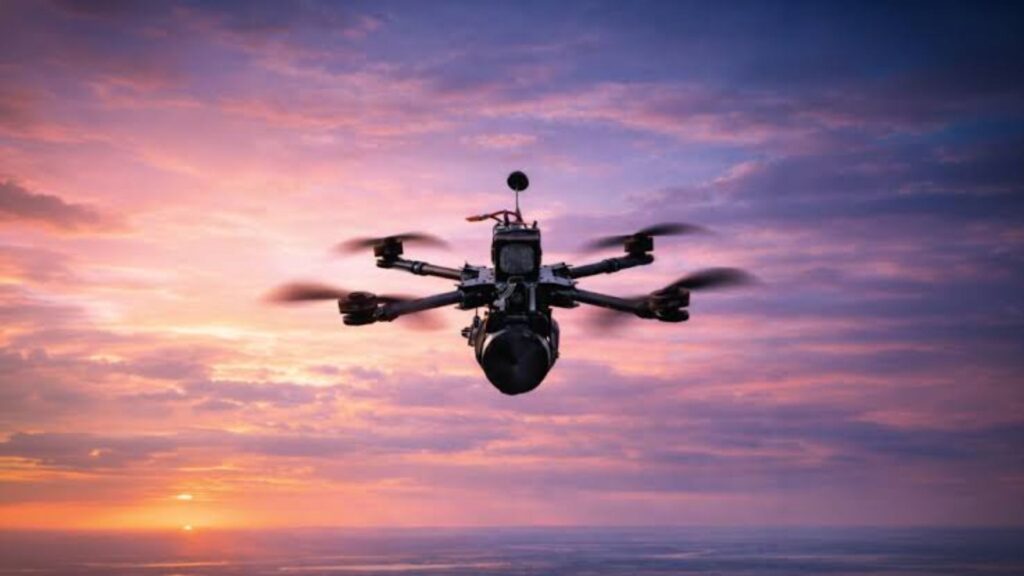
This two-way drone warfare is in itself a complex dynamic. Pakistan is both the end-user of the small-factor drone – e.g., quadcopter and first-person-view (FPV) drone – but must also defend against them across its fixed installations (e.g., air bases) and forward-deployed units.
The Threat Pakistan Is Absorbing
Some of the threats Pakistan has faced include repurposed Chinese commercial quadcopters – such as the DJI Mavic 3, Matrice series, and Air 2 airframes. These typically range in cost from USD $200 to $1,000 per unit. Insurgents have modified these drones with explosives weighing 400-700 g, grenades, or nail/ball-bearing packages. Currently, none of the reported drones have leveraged purpose-built release mechanisms; thus, they have largely consisted of crudely taped and tied improvisations. Inter-Services Public Relations (ISPR), the Pakistan Army’s press wing, stated that in 2025, Pakistan faced 405 small-factor drone attacks in Khyber-Pakhtunkhwa.
Director General ISPR Lt. Gen. Ahmed Sharif Chaudhry provided that figure at his year-end press conference, setting it against 5,397 terrorist incidents recorded across the country in 2025. Thus, quadcopter strikes accounted for close to one in every 13 attacks that year.
What has shifted through 2026 appears to be the method rather than the hardware. At Khazina Banda in Hangu, between 29 and 31 July, a drone strike opened on a police post before drones and heavy weapons engaged the reinforcement convoy that responded, leaving 11 police personnel dead and 28 injured.
Quwa Pro
See Where Emerging Defence Markets are Moving
Quwa Pro goes beyond tracking programs and equipment by explaining the policies, incentives, industry dynamics, and competitive pressures shaping South Asia's defence markets.