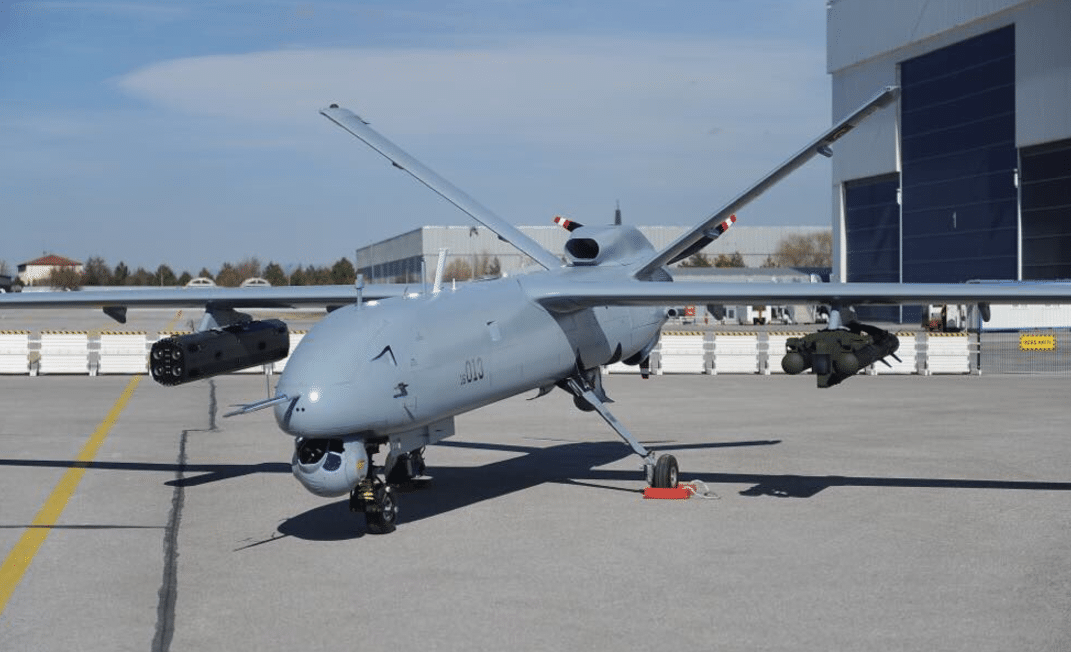
Saudi Arabia is reportedly in talks with Turkish Aerospace Industries (TAI) for six Anka medium-altitude, long-endurance (MALE) unmanned aerial vehicles (UAV).
Speaking to Defense News, TAI marketing and communications manager Görkem Bilgi revealed that Saudi Arabia had been engaged with TAI for the Anka UAV system since 2013, but a deal has yet to be signed.
Go deeper into the defence market.
Research on procurement, emerging technology and the industry behind the news.
Reportedly, the two sides are still in the process of settling the issue of cost – now a factor in light of lower oil prices – and other unspecified issues.
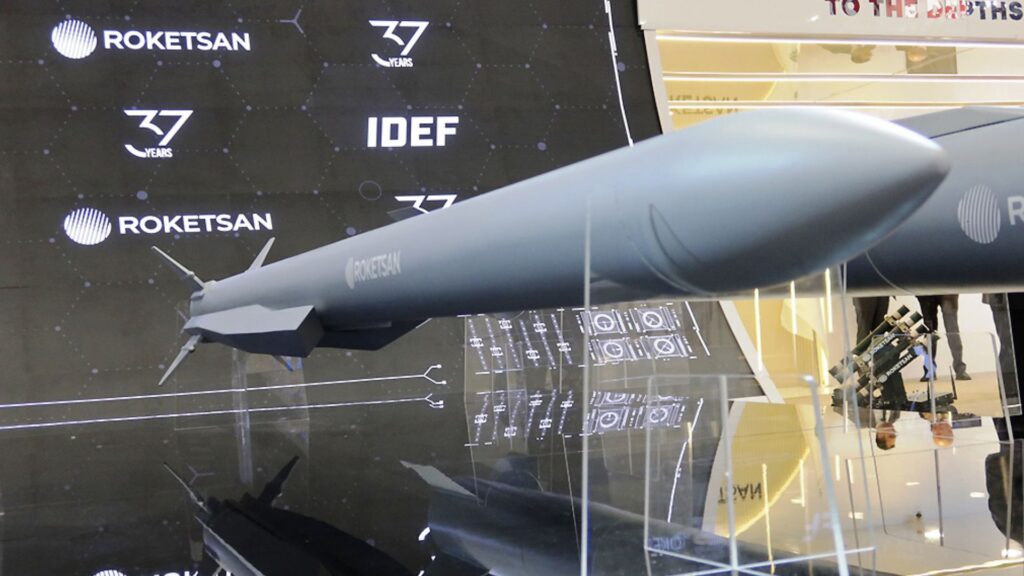
Having first flown in 2010, the TAI Anka is a MALE UAV platform capable of intelligence, surveillance and reconnaissance (ISR) and precision-strike missions. TAI successfully weaponized the Anka in April 2017 by configuring and test-firing the Roketsan MAM-L.
Notes & Comments:
Though it is fulfilling an Anka delivery contract to the Turkish Armed Forces (for 10 Anka-S), TAI has been seeking to export the Anka, especially to Middle East and Southeast Asian markets. Riyadh’s apparent interest in the Anka is intriguing considering that it is already procuring comparable Chinese UAVs.
In March, the King Abdulaziz City for Science and Technology (KACST) had signed an agreement with China Aerospace Science Technology Corporation (CASC) to produce CASC’s drones in Saudi Arabia. In February, Taqnia Aeronautics Company signed a similar deal with China Aerospace Long-March International (ALIT).
In May, KACST revealed its own MALE UAV design in the Saqr 1. According to the Saudi Press Agency, the Saqr 1 is equipped with a Ka-band satellite communication (SATCOM) terminal, enabling the Saqr 1 to fly a range of up to 2,500 km. It has an ‘average altitude’ of 20,000 ft and endurance of 24 hours.
Moreover, the Saqr 1 also has a payload of 250 kg for electro-optical and infrared (EO/IR) equipment and guided air-to-surface munitions, including the AR-1 air-to-ground missile (AGM) and FT-9 bomb.
The KACST and Taqnia programs indicate that Saudi Arabia is well into the process of securing MALE UAVs, hence it is unclear why it would need to engage with TAI for the Anka.