Algerian President Abdelmadjid Tebboune decided on 26 October to send units of the People’s National Army (ANP) to Niger, a day after both chambers of parliament approved the move. It will be Algeria’s first deployment of troops abroad since 1973, when Algerian forces took part in the Arab–Israeli war.
The Council of the Nation, Algeria’s upper house, unanimously approved the proposal on 25 October, and the People’s National Assembly ratified it later the same day. Both chambers voted in closed sessions after Tebboune submitted his request on 22 October.
Go deeper into the defence market.
Research on procurement, emerging technology and the industry behind the news.
The vote used a procedure set by the 2020 constitutional revision, under which Article 91 allows the president to authorize a deployment abroad if at least two-thirds of the members of each chamber approve. The Niger mission is the first deployment abroad to be approved under that requirement, which also sits alongside provisions for United Nations (UN) and African Union (AU) peacekeeping.
The deployment is intended to protect Algeria’s energy interests and fulfil a bilateral agreement with Niger, under the security framework the two governments formalized in October. Senator Belkacem Boulghiti said after the vote that “we are not sending our soldiers to wage war in Niger, but for a mission to secure economic infrastructure”.
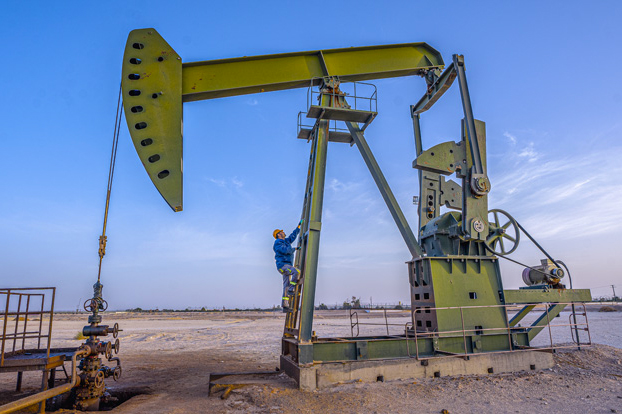
Madama, in northern Niger, has been reported as a possible location for the Algerian units. Algeria’s energy interests there include Sonatrach’s Kafra project, where the Kafra Sud-Est 1 well drilled by Entreprise Nationale de Forage (ENAFOR) lies about 85 km from the border.
Construction of the Algerian section of the Trans-Saharan Gas Pipeline began in June. The pipeline would carry Nigerian gas to Europe through Niger and Algeria.
Ties between Algiers and Niamey had been strained by Algeria’s condemnation of Niger’s 2023 coup, before Niger’s leader, Abdourahamane Tiani, visited Algeria in February. The parliamentary vote followed a protocol signed on 21 October by ANP Chief of Staff General Saïd Chanegriha and Niger’s defence minister, General Salifou Mody. Tebboune received Mody on 13 October and again on 21 October, the day the protocol was signed.
The ground deployment builds on an air deployment from late August, when Algeria’s Ministry of National Defence said two patrols of Su-30 fighters and an air-to-air refuelling aircraft landed in Niamey at Niger’s request. That move followed a mutiny in Niamey overnight from 28 into 29 August, which Tebboune later described as a “coup attempt”. Tebboune said in an interview broadcast on 3 October that the jets were sent because some parties had “gone too far”, describing the mutiny as a provocation against Algeria.
Relations had suffered a setback in April, when Algeria shot down a Malian drone, prompting Niger, Mali and Burkina Faso to recall their ambassadors from Algiers. Stockholm International Peace Research Institute (SIPRI) estimates put Algeria’s 2025 military spending at more than $25 billion, the highest in Africa.
Algeria had also handed over four helicopters to Niger on 9 August, weeks before the mutiny. Tebboune’s 26 October order now clears the ANP units to move under the 21 October protocol, with Sonatrach’s oil facilities in Niger set as the mission’s focus.