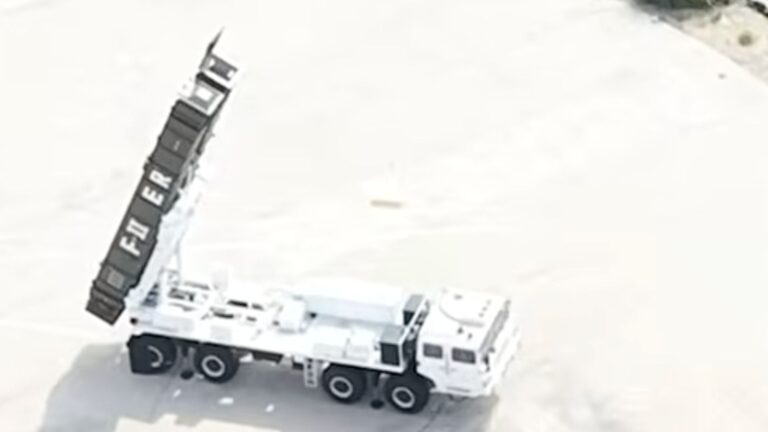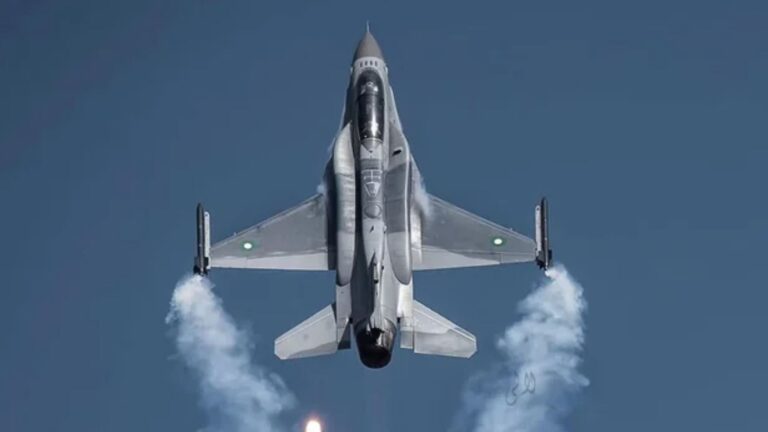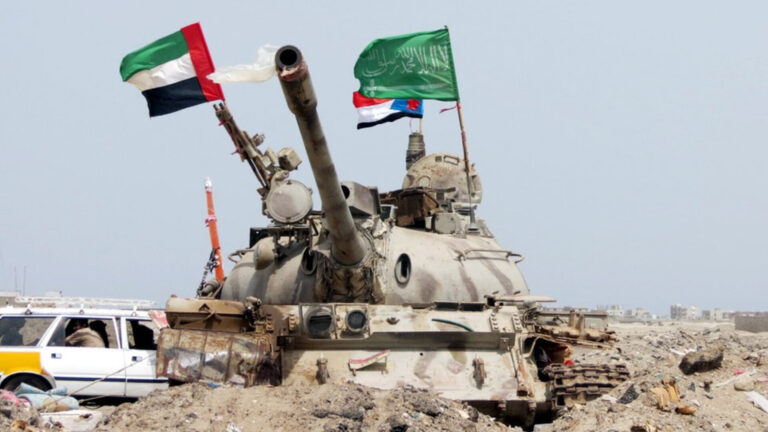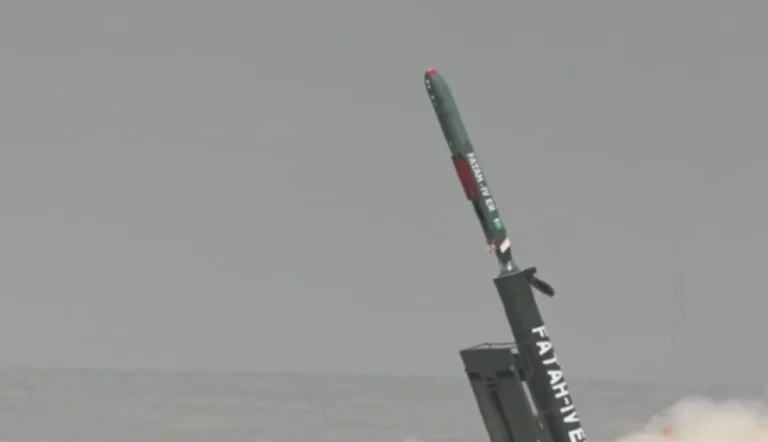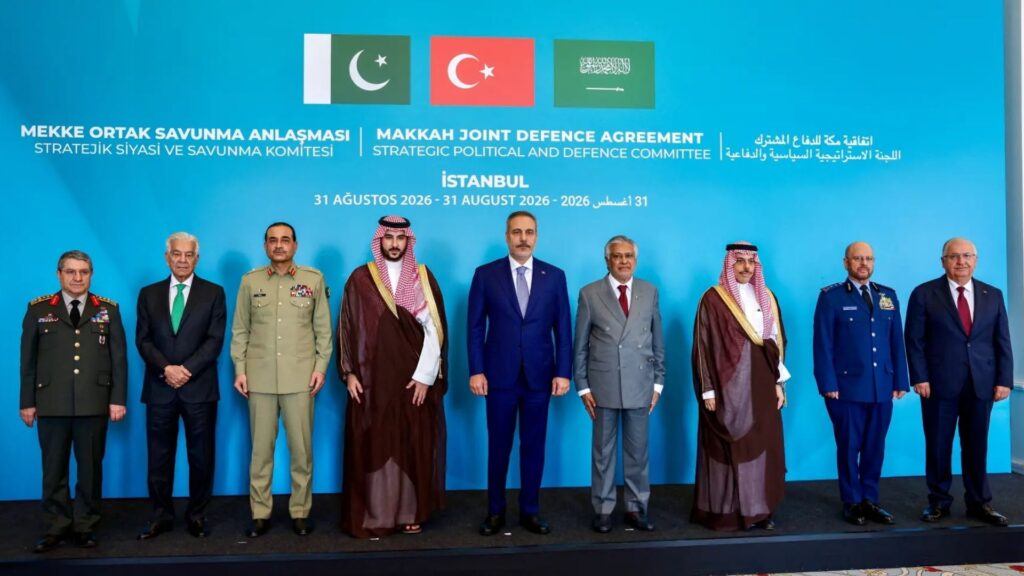
On 31st August, the heads of Pakistan, Saudi Arabia, and Türkiye officially called their recently signed defence agreement the “Makkah Defence Alliance” (MDA).
The inaugural secretary-general will be appointed from Pakistan.
On 28 August, Pakistan and Kuwait signed a bilateral defence agreement focused on building Kuwait’s capacity through personnel training and other assistance.
Between these new agreements and the preceding engagements in Azerbaijan, Libya, Sudan, and, not least, the US-Iran War, Pakistan has, in effect, involved itself in Middle East security affairs.
To be clear, Pakistan’s engagement with the Middle East is not new; it has always maintained bilateral agreements with key players, most notably Saudi Arabia and Türkiye. However, there has never been a surge of engagements – especially multilateral ones like the MDA or the Islamabad Talks – that anchored Pakistan in so many Middle East security dynamics all at once.
This is not to say that agreements like the MDA et. al. have any real teeth (that remains to be seen), but one can certainly make the case that, at the minimum, Pakistan’s national security leadership (i.e., Field Marshal Asim Munir) is steering the political focus and, potentially, military weight of the country westward – i.e., away from India. However, doing so would require the buy-in of the national security establishment, i.e., the tri-services and wider network of military leaders and decision-makers.
Indeed, this author has been arguing this observation since as early as June 2025 – i.e., only a month after the conflict with India – and coined it as the “Look West” thesis, stating:
However, the U.S.’s vision for Pakistan could potentially involve more than solely Iran and, potentially, be a call to Rawalpindi to ‘look West’ in both its immediate security concerns and its long-term direction.
In other words, Washington likely wants Pakistan to focus its energies on Afghanistan and Iran so as to ensure both countries remain stable and favourable to U.S. interests. Moreover – and more importantly – the U.S. wants Pakistan and India to normalize their ties, potentially by formalizing the Line of Control as the international border between the two countries.
A ‘look West’ doctrine would require normalization with India and, consequently, a gradual shift towards managing security and stability on the western front.
Like clockwork, Quwa’s forecast came to fruition:
- In June 2025, the US likely encouraged then-General Munir to adopt ‘look West.’
- In September 2025, Pakistan signs a bilateral defence agreement with Saudi Arabia.
- In October 2025, Pakistan begins sharpening its security posture against Afghanistan.
- In November and December 2025, news reports emerged of Pakistan signing bilateral defence agreements with Libya and Sudan.
- In December 2025, the US released its latest National Security Strategy – and Quwa forecasted that this could be the framework through which Pakistan becomes a Middle East security partner.
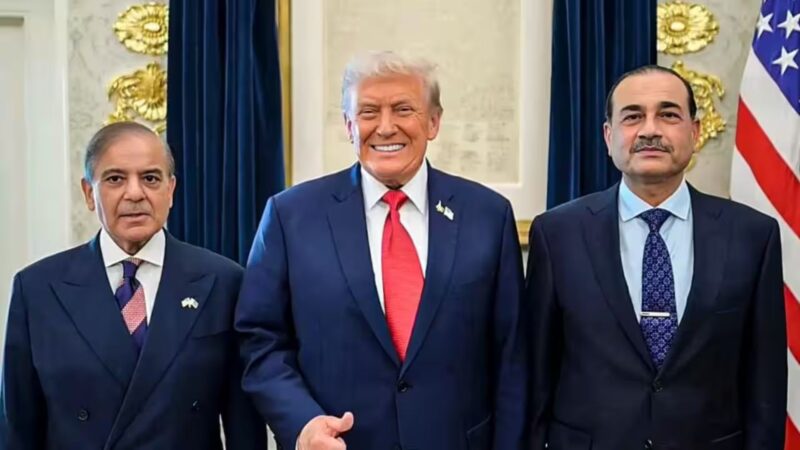
- In January 2026, Pakistan joined the US Board of Peace on Gaza.
- From February 2026, tensions between Afghanistan and Pakistan escalate to the point where the latter begins initiating major air strikes in the former.
- From March 2026, Pakistan’s national security leadership emerges as a key player in mediating between the US and Iran as the two engage in a conflict. In this task, Field Marshal Munir took on the task of identifying Iran’s new emergent decision-makers (who overruled the old guard, notably Foreign Minister Aragchi and Parliament Speaker Ghalibaf). Pakistan had tried to develop a direct link between the US and this new Iranian power cadre.
Admittedly, normalization with India is unlikely to be on the table for the foreseeable future, though it has been something Washington pushed for. In this iteration of US-Pakistani ties, Washington is likely more pragmatic than before in understanding that a formalized peace between the two neighbours would not occur (and, arguably, that might weaken the national security leadership’s position in Pakistan relative to the wider establishment). Therefore, the US may push for a ‘cold peace’ instead. However, for it to work, Pakistan’s conventional posture would have to be elevated so as to deter another Sindoor episode.
Thus, it is possible that the current US administration acknowledged Pakistan’s concerns regarding India.
Hence, to help assuage Pakistan, it could be that the US is actively encouraging Saudi Arabia and Türkiye to help Pakistan build capacity, provided it keeps its focus on the Middle East.
Whether this materializes in actuality is not known, but one can imagine that this was very much the type of ‘deal’ Field Marshal Asim Munir needed to take back to Pakistan to get the far broader national security establishment to cleanly align on another ‘look West’ episode.
So, what would all this translate into in terms of tangible outcomes?
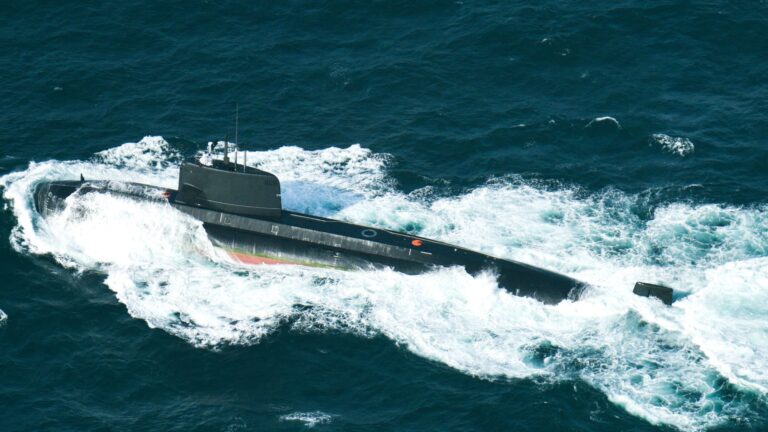
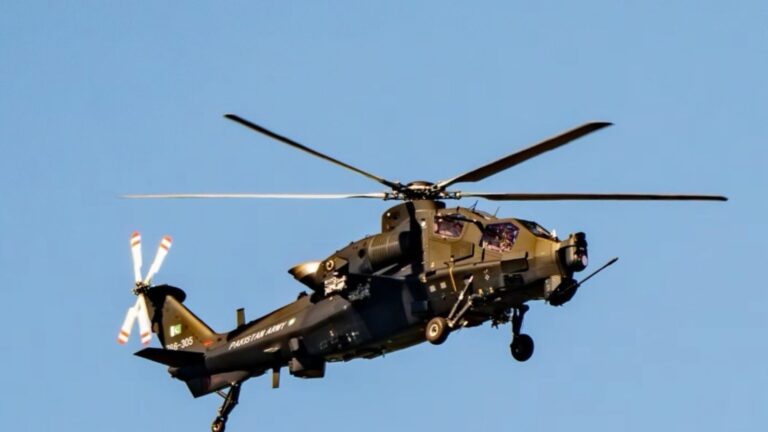
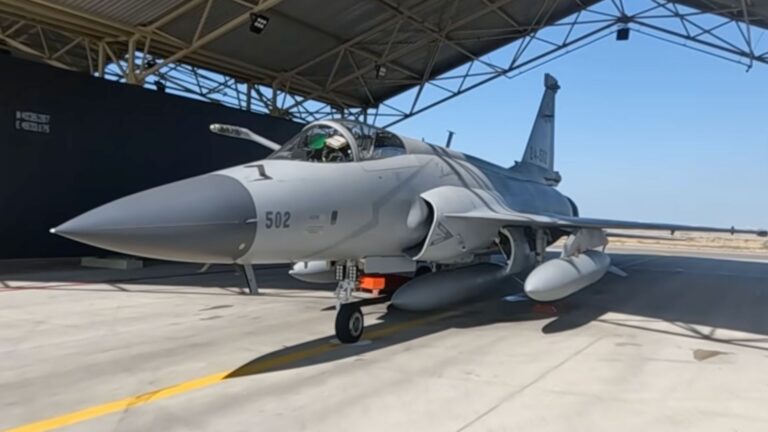
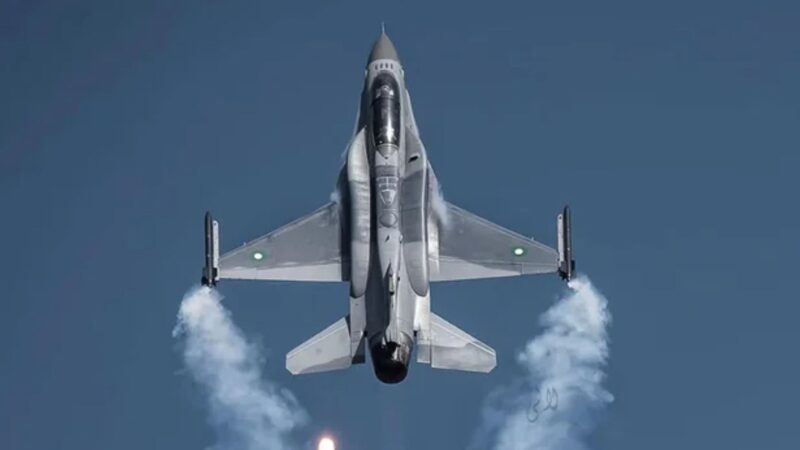
Well, if read at the highest, broadest level, it could mean capacity building for Pakistan. Indeed, of all the promising concepts of the MDA, the idea of capacity building via joint procurement, industry integration, accessible credit or loans, access to technology, and so on would be the lowest-hanging fruit.
To be clear, it is still a high expectation and is optimistic, but it makes the most sense.
The idea of an actual alliance with a binding mutual aggression or response pact is untenable, as there is no joint integration or even interoperability in assets between the key members. Likewise, it is unlikely any of the countries involved want to embroil themselves in the security problems of their partners.
However, each of them can help the others in building their respective capacities to assume the burden for themselves – e.g., Saudi-led fiscal flexibility for Pakistan, Saudi-Pakistani market access for Türkiye, and secure technology access and industrialization for Saudi Arabia.
This is not to say that there will be no support between the members. Indeed, one should expect ‘passive’ cooperation through, for example, intelligence-sharing via satellite imaging, electronic warfare (EW) threat libraries, and other formats. There is also precedent for personnel deputations, especially from Pakistan to both Saudi Arabia and Türkiye at different points. Likewise, members can help each other with emergency or surge production capacity for munitions, spare parts, and the like.
Overall, this is likely the reading Pakistan’s national security establishment has of the MDA – and wider Middle East engagement as a whole. To what extent they succeed in improving Pakistan’s conventional deterrence capabilities remains to be seen, but, at least there is a new pathway to explore.
Quwa Plus · In-Depth Pakistan Coverage
Understand Pakistan’s Defence and National Security in Unmatched Depth
Understand what Pakistan is acquiring, how its armed forces are evolving, and where national security policy is heading through dedicated defence news, force analysis, procurement tracking, Pulse Check briefings, and more than a decade of documented reporting.
Featured & Trusted By