
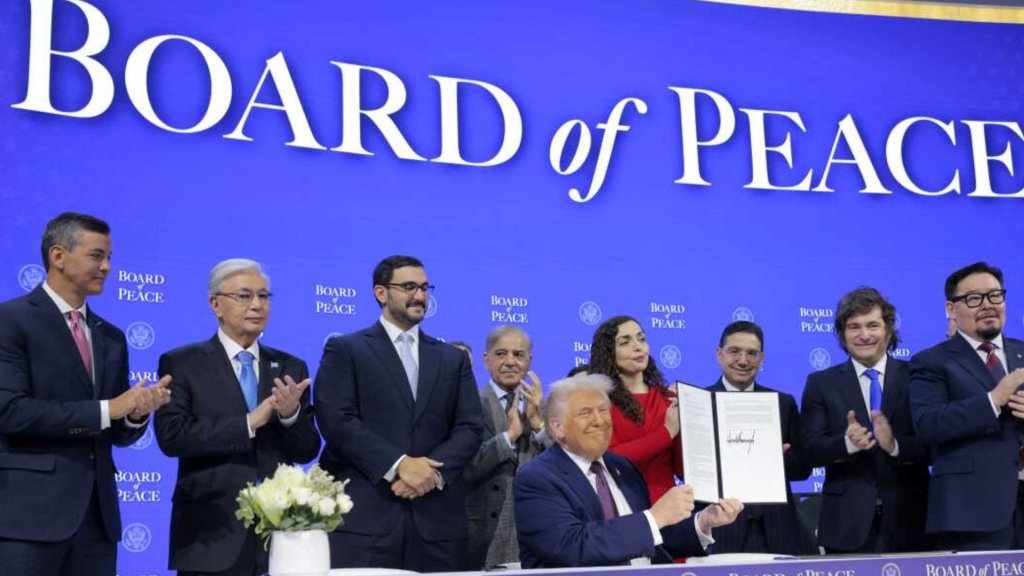
On 21 January 2026, the Government of Pakistan formally announced its membership in the Board of Peace, an international body tasked with facilitating the Gaza Peace Plan.
Pakistan is one of several Muslim-majority countries – alongside Egypt, Jordan, the United Arab Emirates (UAE), Türkiye, Saudi Arabia, and Qatar – participating in the body.
The decision to join the Board of Peace has drawn domestic criticism and debate, but its merits or flaws notwithstanding, this move once again validates Quwa’s core thesis – i.e., Pakistan’s pivot to focusing on Middle Eastern security affairs.
- Beyond Gaza: The Real Strategic Reason Pakistan Just Joined the US Peace Board
- Pakistan’s New CDF Sets A Promising Tone on Inter-Services Integration
- Unpacking the 2025 Saudi-Pakistan Defence Agreement
- Look West, Not East: What Washington Wants From Pakistan
Pakistan’s participation in the Board of Peace and the Gaza Peace Plan is now perhaps the strongest sign of this shift. This is not to suggest that Pakistan would play a leading role in any of these Middle Eastern security issues. Whether Pakistan assumes an actual leadership role in any of these issues is beside the point; the point is that the Middle East should be a priority for Pakistan’s national security leaders.
However, this shift will undoubtedly trigger the historical tension – i.e., balancing the push to look West with the pull of addressing the Indian threat.
Will Pakistan Gain Anything?
Quwa had theorized that Pakistan could ask for support in building its conventional force deterrence (to deter India from instigating a conflict) in return for ‘looking West.’ However, it is unclear to what extent the U.S. is interested in facilitating this exchange…
Granted, the Middle East could emerge as a source of defence exports that, if sold at healthy margins, could help Pakistan fund big-ticket procurement. However, aside from a spate of Reuters reports from a narrow pool of reporters, there is limited evidence of these sales.
The alternative support mechanisms would involve either aid or loans from countries like Saudi Arabia and Qatar. Interestingly, there are signs that Qatar, at least, is entering the defence financing business, having backed a USD $1 billion loan for the sale of two new I-Class frigates from Turkish shipbuilder TAIS to Indonesia.
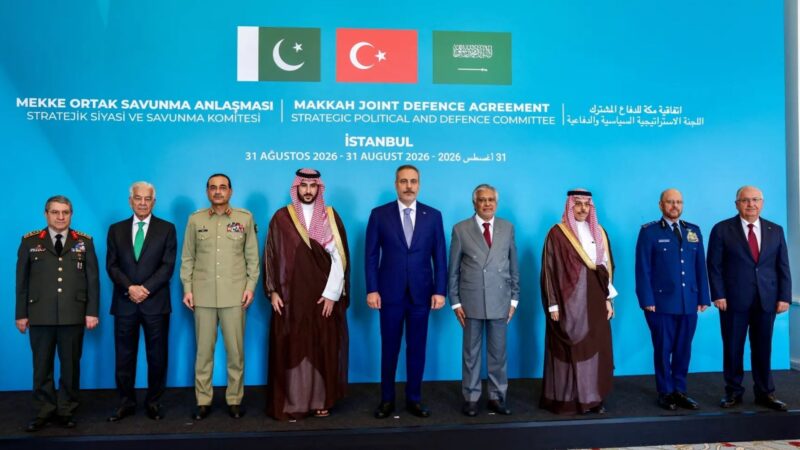
Thus, in theory at least, Pakistan’s involvement in Middle East security issues could, in various ways, lead to Gulf-backed loans and credit for arms procurement. This avenue would also allow Pakistan to engage Turkish vendors for solutions as well (as Ankara’s capacity to support such high-risk loans is limited; the Gulf could provide the liquidity). Interestingly, the trilateral agreement between Saudi Arabia, Türkiye, and Pakistan is worth following, as it could involve such arms sales mechanisms.
Quwa Plus
Go Beyond the Headlines on Pakistan’s Defence and Security.
Quwa Plus gives you deeper reporting, briefings, and analysis on Pakistan’s defence programs, foreign policy, national security, and regional strategy. Follow the developments that matter to professionals, analysts, and serious readers tracking Pakistan’s security landscape.
Join ($29.99/Year) Already a subscriber?Sign in