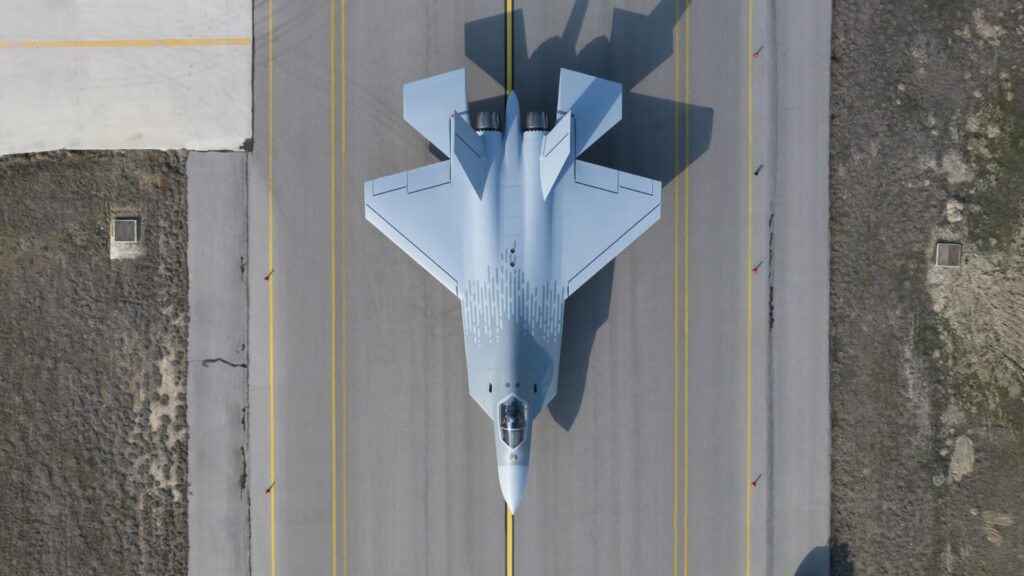
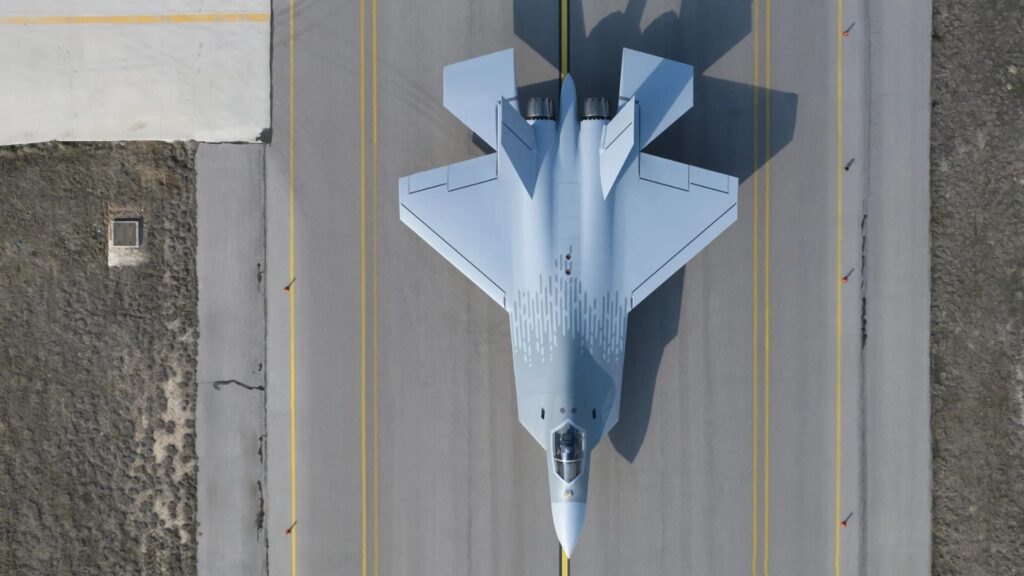
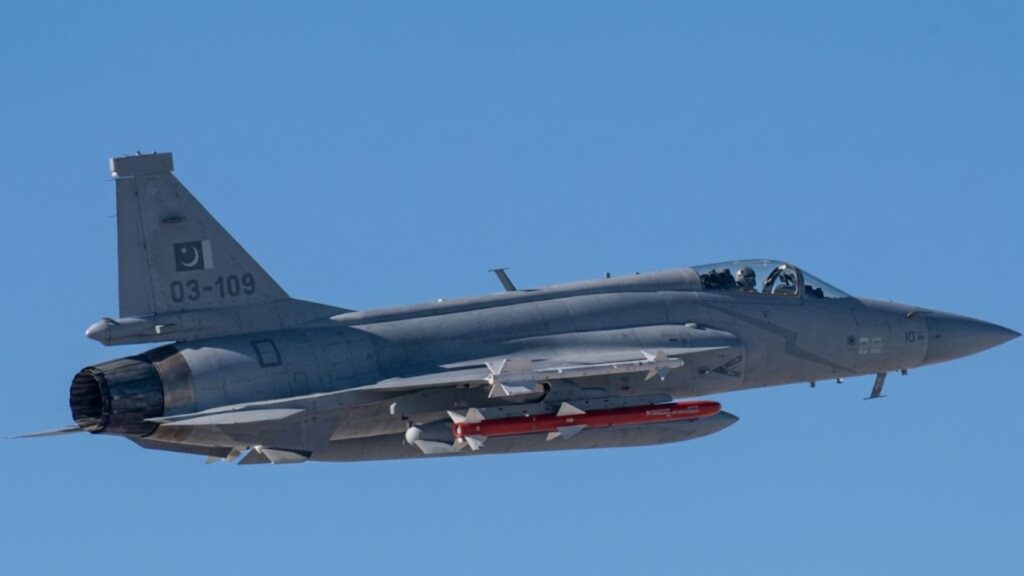
On 28 February, the Pakistan Air Force (PAF) inaugurated its sixth JF-17 fighter unit through a newly-raised multi-role fighter squadron, the No. 28 “Phoenix”. The state-owned Associated Press of Pakistan (APP) reports that the No. 28 is stationed at PAF Samungli in Quetta, Baluchistan.
According to the APP, the PAF Chief of Air Staff (CAS) Air Chief Marshal (ACM) Sohail Aman outlined that the No. 28 will play a key role in shoring-up Pakistan’s security interests along its western borders (which are shared with Iran and Afghanistan).
Go deeper into the defence market.
Research on procurement, emerging technology and the industry behind the news.
Pakistan Aeronautical Complex (PAC) rolled-out its 50th Block-II JF-17 at the end of 2017 – i.e. giving the PAF 100 JF-17s split equally between the Block-I and Block-II. The PAF will reportedly order another 12 JF-17 Block-IIs in 2018. This follow-on order will keep PAC’s production line warm ahead of the Block-III.
Notes & Comments:
With the No. 28 Squadron in place, the PAF has successfully distributed the JF-17 to each of its operational environments: South (No. 2), Central (No. 14, No. 16), North (No. 26) and West (No. 28). The sixth unit is the Combat Commanders School (CCS), stationed in Sargodha Air Base (Central).
Interestingly, a purported photo of a No. 28 JF-17 shows that it is equipped with an in-flight refueling (IFR) probe. While this is not surprising, considering that the Block-II incorporates IFR (starting with the 24 or 26th production aircraft), older – i.e. Block-I – units are also flying newer IFR-capable JF-17s. For example, the No. 16 Squadron – which launched with the Block-I – has JF-17 Block-IIs with IFR (photo). It suggests that several of the PAF’s JF-17 squadrons are, in fact, mixed capability units (e.g. with and without IFR).
If No. 2 is also IFR capable (plausible considering that it operates in Pakistan’s maritime environment), it would mean splitting the four IL-78 tanker-transport aircraft across at least three regions. With the IL-78s also serving as transports, it will be worth observing if this arrangement stretches the IL-78 fleet too thin.
In addition, it is interesting that the PAF opted to raise an entirely new squadron. Before this, the pattern (i.e. No. 2 and No. 14) indicated that the PAF was converting F-7P units to the JF-17. Thus, the intuitive next unit to convert would have been the No. 18 Squadron, which serves as the F-7P’s operational conversion unit (OCU). However, the No. 18 is currently in place, while its home – M.M Alam Air Base – was joined by a new lead-in-fighter-trainer (LIFT), ‘Shooter Squadron’.