
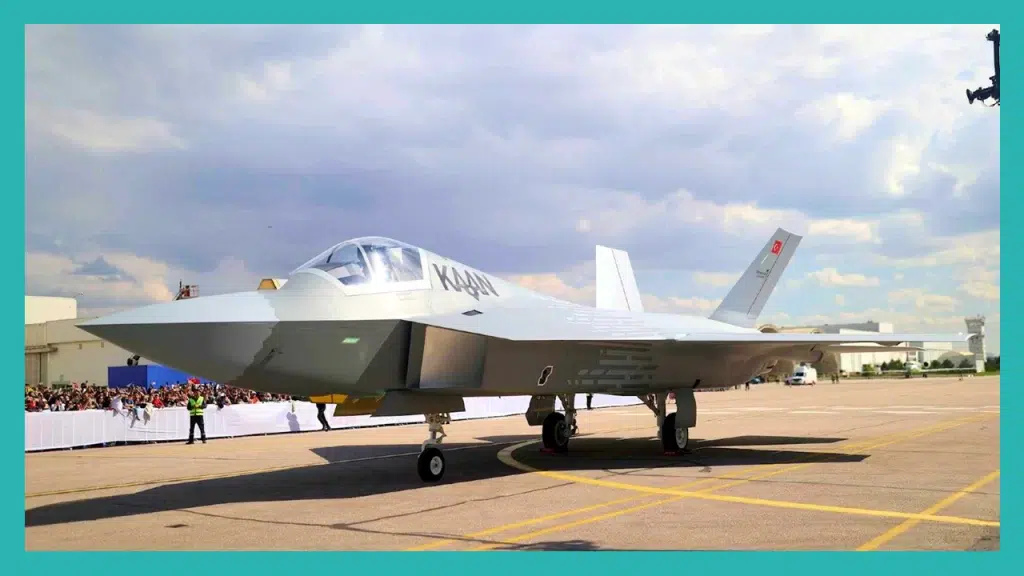
In August, Turkey’s Deputy Defense Minister, Celal Sami Tüfekçi, said that Turkish officials will visit Pakistan to discuss the latter’s potential entry into Turkey’s next-generation fighter aircraft (NGFA) program, the TF-X KAAN. Moreover, Tüfekçi revealed that nearly 200 Pakistani engineers were already involved in the KAAN (likely through Turkish Aerospace’s [TAI] local office in Pakistan). Inviting Pakistan into the KAAN could yield challenges and opportunities for both sides, however, as discussed in part-one of this analysis, an effective policy leadership on Turkey’s part could steer such a partnership in the right direction.
In part-two of this analysis, Quwa will examine the potential operational benefits of the Pakistan Air Force (PAF) inducting the KAAN. Overall, the impetus of pursuing the KAAN – or some other comparable design – is not just the need for an NGFA in of itself, but certain technical capabilities that the PAF never had the benefit of leveraging, until potentially now. Basically, the KAAN could be the PAF’s avenue for acquiring an effective strike capable platform with enough range and payload to drive offensive operations.
Traditionally, the PAF had always recognized the value of a strike platform; however, it rarely could access or afford the platforms most suited for the role. In the mid-1970s, Pakistan had negotiated with the United States for 110 Ling-Temco-Vought (LTV) A-7 Corsair IIs. For its time, the A-7 was a capable dedicated attack aircraft as it had a relatively high payload capacity and a robust avionics suite comprising of an integrated navigation system, terrain-following radar, and head-up display (HUD).
Unfortunately for the PAF, the U.S. ultimately acted on its concerns about Pakistan potentially pairing the A-7s with nuclear payloads, and, in turn, asked Pakistan to freeze its nuclear program before greenlighting the sale. However, Pakistan did not agree to those conditions and, thus, the deal was scrapped. While the A-7 was once again available in the 1980s, the PAF opted to pursue the multirole F-16, likely envisioning a future where the F-16 would form the mainstay of its fleet.
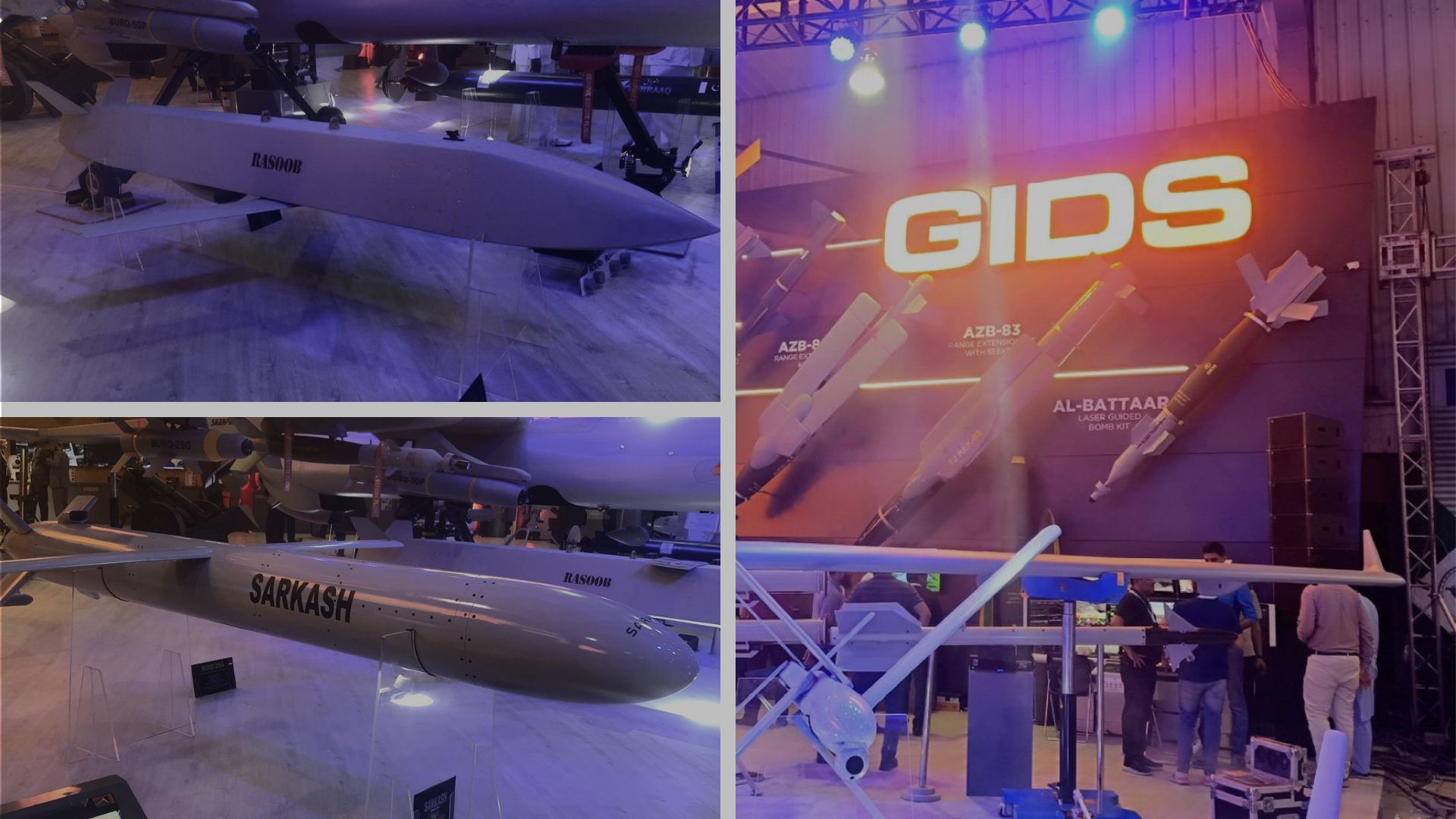
Since then, a platform designed for strike was either unavailable to the PAF, or unaffordable (if not in itself, then due to more urgent priorities needing funds). However, in the late 2000s, the PAF began investing in air-launched cruise missiles, glide bombs and other stand-off range weapons (SOW), thus giving its lighter aircraft – namely the Mirage III/5 and JF-17 – long-range strike capabilities. Those capabilities were put to the test in 2019 during the brief two-day skirmish between Pakistan and India.
Quwa Plus
Go Beyond the Headlines on Pakistan’s Defence and Security.
Quwa Plus gives you deeper reporting, briefings, and analysis on Pakistan’s defence programs, foreign policy, national security, and regional strategy. Follow the developments that matter to professionals, analysts, and serious readers tracking Pakistan’s security landscape.
Join ($29.99/Year) Already a subscriber?Sign in