

Executive Summary
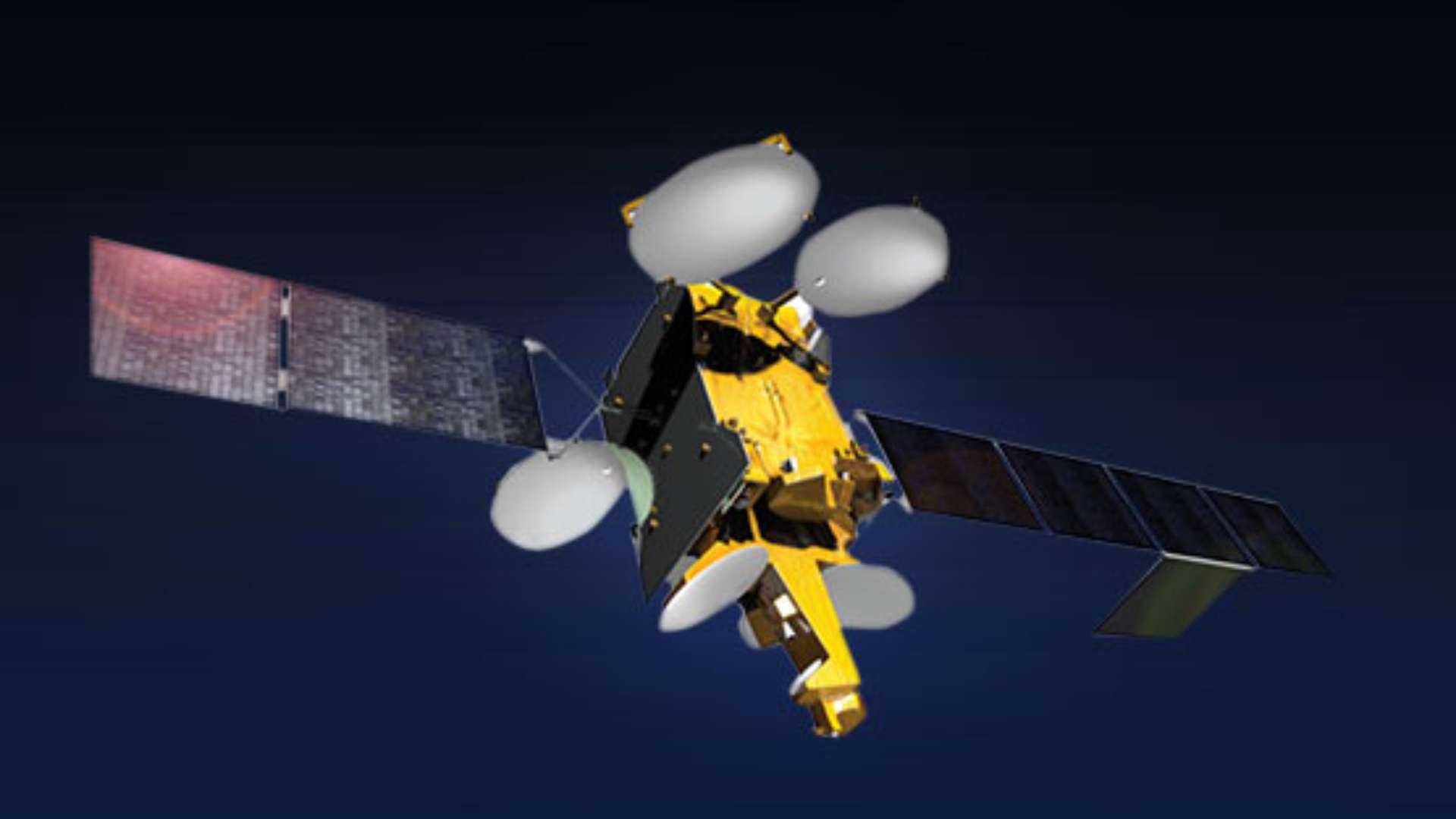
Pakistan’s recent strategic actions, most notably the formal establishment of the Army Rocket Force Command (ARFC) and the landmark USD $406 million strategic cooperation agreement with China’s PIESAT, represent the most significant doctrinal and technological shift in its conventional military posture in decades. This pivot towards a strategy of preemptive conventional strikes, designed to create standoff and deter limited conflict, is wholly contingent on the development of a high-tempo, resilient intelligence, surveillance, and reconnaissance (ISR) cycle. The PIESAT agreement, which envisions a constellation of over 20 interferometric synthetic aperture radar (InSAR) satellites, directly addresses the critical “sensor” component of the nascent kill chain.
However, this substantial investment in space-based assets paradoxically creates a new, more urgent center of gravity on the ground. The ability to translate petabytes of satellite data into actionable firing solutions in minutes – not hours or days – exposes a profound and lucrative capability gap in Pakistan’s existing ground segment infrastructure. The current apparatus is ill-equipped for the data volume, processing speed, and dissemination requirements of this new doctrine.
This in-depth report provides a comprehensive analysis of this emerging market. It dissects the doctrinal shift from a latent, human-centric intelligence cycle to a machine-speed, automated architecture. It maps the specific technological and integration gaps across the entire ground segment value chain – from data downlink and processing to AI-powered exploitation and cross-domain dissemination. Finally, it identifies concrete, addressable opportunities for domestic and international vendors, outlining potential partnership models to capitalize on what is arguably a generational modernization effort. The investment required to build this terrestrial backbone will likely equal or exceed the initial satellite procurement cost over the program’s lifecycle, representing a multi-billion-dollar opportunity for industry leaders in geospatial intelligence (GEOINT), command, control, communications, computers, intelligence, surveillance, and reconnaissance (C4ISR), and AI.
Other Market Intelligence Reports
- Analysis: Pakistan’s Underrated Maritime Air Presence – and its Future Challenges
- Report: How the Z-10ME Requires the Pakistan Army to Adopt a Low-Level Air Power Strategy
Goal: Compressing the OODA Loop
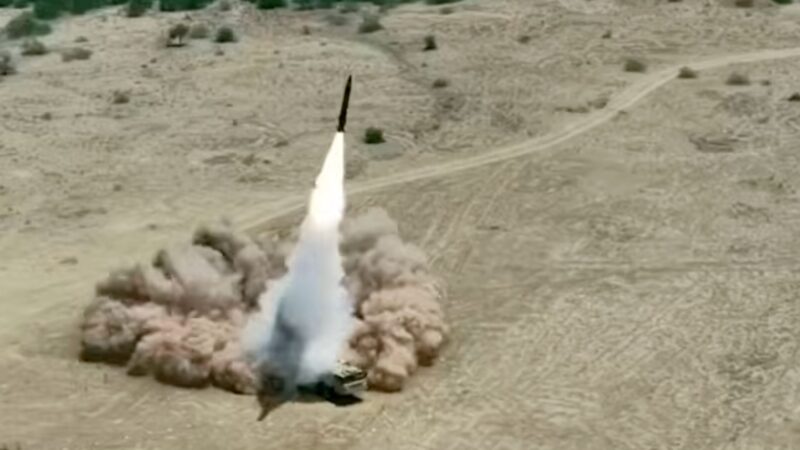
The creation of the ARFC is a direct response to a perceived erosion of strategic depth and the need to counter conventional military imbalances in the region. The command is intended to hold adversary high-value military targets at risk from the opening moments of any conflict, thereby disrupting mobilization and degrading warfighting capacity. The effectiveness of its arsenal, which includes systems like the Fatah-II guided multiple-launch rocket system (MLRS) and the Babur-family of ground-launched cruise missiles (GLCMs), will depend on the industrial reality of scaling munitions production to generate sufficient magazine depth for a high-tempo campaign.
This necessity has forced a radical rethink of Pakistan’s entire ISR enterprise, shifting its core objective from methodical, forensic analysis to immediate, operational cueing. This evolution can be understood as a transition through three distinct phases, moving from high-latency to near-zero-latency kill chains.
From Human-Paced to Machine-Speed Intelligence
Historically, Pakistan’s Imagery Intelligence (IMINT) capability was defined by a human-paced, and high-latency process. This traditional model, adequate for peacetime monitoring of static infrastructure, is fundamentally suboptimal for preemptive strikes against mobile or time-sensitive targets (TSTs).
| ISR Evolution Phase | Primary Platforms | Core Technology | Data Workflow (Latency) | Operational Utility |
| Phase 1: Latent Reconnaissance (1960s-2000s) | Mirage IIIRP, RT-33A, RB-57B | Wet-Film Optical Cameras | Fly > Land > Retrieve Film > Develop > Manual Analysis (Hours to Days) | Strategic mapping, post-strike damage assessment, monitoring fixed sites. |
| Phase 2: Near Real-Time Telemetry (2010s-Present) | F-16 Block 52+ with DB-110 Pod, PRSS-1, PRSC-EO1, and PRSC-S1 Satellites | Digital Electro-Optical (EO) Sensors with Data-Link | Collect > Transmit to Ground Station > Manual/Assisted Analysis (Tens of Minutes to Hours) | Limited tactical support, situational awareness, tracking slow-moving formations. |
| Phase 3: Automated Tip-and-Cue (2025 onwards) | PIESAT SAR Constellation, HALE UAVs | SAR/InSAR, EO/IR, SIGINT with AI/ML Processing | Continuous Collect > Automated Downlink > AI Change Detection > Cue to Shooter (Seconds to Minutes) | Preemptive strikes, dynamic targeting of TSTs, counter-battery fire, command & control disruption. |
This evolution is best understood through the lens of John Boyd’s OODA Loop (Observe, Orient, Decide, Act). The goal of the Phase 3 architecture is to drastically compress Pakistan’s own OODA Loop while simultaneously getting inside and disrupting the adversaries. The PIESAT constellation allows for persistent observation. An AI-powered ground segment would be designed to automate the orientation (understanding the data) and Decision (identifying a target) phases, enabling the ARFC to act before an adversary can react. The traditional TCPED (Task, Collect, Process, Exploit, Disseminate) cycle is thus being forcibly re-engineered into an automated, cyclical, and near-instantaneous process.
This challenge is not limited to land-based assets; integrating the considerable and scalable strike capabilities of the Pakistan Air Force (PAF) into this high-tempo targeting cycle will be critical for achieving mass and operational success. The investment in satellites is the enabler, but the investment in the ground segment is what delivers the decisive operational tempo.
Market Analysis: Unpacking the Ground Segment Opportunity
Pakistan possesses foundational elements for this new architecture: sovereign downlink sites, an adept software engineering base, and indigenous tactical data-link programs. However, these are all disparate components, not an integrated, high-performance system. Building the ‘connective tissue’, so to speak, requires specialized technologies and integration expertise that represent significant market opportunities.
1. Data Ingest and Downlink Infrastructure: The Digital Aperture
- Capability Gap:
- The sheer data volume from a constellation of high-resolution SAR satellites is immense. A single satellite pass can generate hundreds of gigabytes of raw data, requiring downlink speeds measured in Gigabits per second (Gbps), typically in the X-band or Ka-band frequencies. SUPARCO’s existing infrastructure is insufficient in capacity, geographic diversity, and resilience. A scalable network of fixed, transportable, and mobile ground stations is required to ensure continuous data ingest, even under threat of attack. Resiliency is key; relying on one or two fixed sites creates a critical single point of failure.
- Vendor Opportunities:
- High-Gain Antennas & RF Chains: A clear market exists for 7-13 meter X/Ka-band antenna systems for fixed sites and smaller, 2.4-4.5 meter transportable terminals that can be deployed for redundancy or with field formations. This includes the entire RF chain: low-noise amplifiers (LNAs), block downconverters (BDCs), and high-rate demodulators.
- Transportable/Mobile Terminals: Turkish firms like Aselsan market their TUAL-series transportable SATCOM terminals, which could be adapted for data reception. European and US vendors also offer proven solutions for “Teleport-in-a-Box” systems.
- Ground Station as a Service (GSaaS): While Pakistan will prioritize sovereign sites, it may augment its capacity by leveraging commercial GSaaS networks (e.g., AWS Ground Station, KSAT) for non-critical data or for added resiliency, creating an opportunity for service providers.
- Systems Integration: Companies like Telespazio bring unmatched experience from managing the ground segments of constellations like COSMO-SkyMed. Their expertise extends beyond hardware to mission-critical services like Launch and Early Orbit Phase (LEOP) support and In-Orbit Testing (IOT), representing a high-value partnership opportunity.
2. Payload Data Ground Segment (PDGS): The Digital Factory
- Capability Gap:
- The PDGS is the software and hardware core that transforms raw satellite telemetry into analysis-ready data products. This is far more than simple processing; it is a multi-stage digital production line. Pakistan has minimal experience in developing or integrating a defence-grade, multi-mission PDGS for radar satellites, which is significantly more complex than for optical sensors.
- The PDGS Workflow:
- Mission Planning & Scheduling: Automated systems to task the satellite constellation based on intelligence requirements, deconflicting requests and optimizing collection plans.
- Reception & Level 0 Processing: Ingesting the raw data stream and converting it into a baseline, unprocessed format.
- Level 1/2+ Processing: This is the computationally intensive core. For SAR, this involves complex algorithms to generate focused images (Level 1) and then further processing to create products like Coherent Change Detection (CCD) maps or Digital Elevation Models (DEMs) from InSAR pairs (Level 2+).
- Archiving & Cataloguing: Securely storing petabytes of data while ensuring it is indexed with standardized metadata for rapid discovery and retrieval.
- Dissemination: Pushing the finished data products to relevant end-users across secure networks.
- Vendor Opportunities:
- Core Processing Software: This is a highly specialized field. European integrators like GMV and Indra, with their central roles in the ground segments for the EU’s Copernicus and Galileo programs, possess proven, licensable software frameworks for SAR processing and mission management. Providing the core engine while local firms build user-facing applications is a viable partnership model.
- High-Performance Computing (HPC): SAR processing is GPU-intensive. There is a significant opportunity for providers of ruggedized, high-density GPU servers and the associated storage and networking fabric required to build out the processing centers.
3. AI-Driven GEOINT Exploitation: Automating Insight
- Capability Gap:
- The primary bottleneck in a high-revisit ISR system is no longer data collection, but human analysis. No team of analysts can manually scan hourly imagery of thousands of square kilometers. Automation is a necessity. Pakistan’s AI sector is growing but lacks the curated military datasets and operational machine learning operations (MLOps) frameworks to build reliable, defence-grade GEOINT models.
- AI/ML Model Requirements:
- Automated Target Recognition (ATR): Models trained to automatically detect, classify, and track objects of interest (e.g., T-90 tanks, S-400 batteries, Pinaka MLRS launchers, parked aircraft).
- Coherent Change Detection (CCD): The core of “tipping.” AI algorithms analyze pairs of SAR images to automatically flag subtle changes – like vehicle tracks appearing in a field – that indicate new activity.
- Activity-Based Intelligence (ABI): More advanced models that move beyond identifying objects to understanding patterns-of-life at key locations to predict intentions (e.g., pre-launch activity at a missile base).
- Vendor Opportunities:
- AI/ML Frameworks & MLOps: Leading commercial GEOINT firms like ICEYE (Finland) and US-based players have mature MLOps pipelines. They can provide the core software framework and foundational models, which can then be fine-tuned by Pakistani teams using local data.
- Data Labeling & Curation: A significant opportunity exists for service providers specializing in creating the high-quality, labeled datasets required to train AI models. This is a labor-intensive process that can be effectively localized.
- Synthetic Data Generation: To overcome the scarcity of real-world training data for certain rare targets, vendors specializing in generating synthetic SAR data can play a crucial role in robust model development.
| Metric | Manual GEOINT Analysis | AI-Powered GEOINT Analysis | Impact |
| Time-to-Insight | Hours to Days | Seconds to Minutes | Enables preemptive strikes on TSTs |
| Area Coverage | Limited by analyst availability | Scales to continental levels | Comprehensive, persistent monitoring |
| Analyst Focus | Manual searching, “Stare and Compare” | Higher-order analysis, validation of AI alerts | Increased efficiency and quality of analysis |
| Consistency | Varies by analyst skill and fatigue | Consistent, repeatable performance | High reliability and auditable results |
4. ISR Product Library & Cross-Domain Dissemination
- Capability Gap:
- Raw data and AI insights are useless if they cannot be discovered and delivered to the right user at the right time. Pakistan lacks a unified ISR product library and the accredited, high-speed security gateways to move data across different classification levels.
- Vendor Opportunities:
- Standardized ISR Libraries: There is a clear need for a system architected on principles like STANAG-4559 (the NATO Standard ISR Library interface). This ensures that a PAF planner, an ARFC targeting officer, and a Naval intelligence analyst can all query the same virtual catalog of intelligence products using a common interface. European C4I leaders like Leonardo and GMV have extensive experience fielding such systems.
- Cross-Domain Solutions (CDS): Moving a target coordinate from a “Top Secret” ISR network to a “Secret” fire control network is a major technical and security challenge. This requires accredited data guards – specialized hardware/software solutions that allow for secure, one-way, and filtered data transfer. This is a niche but absolutely critical market, typically led by specialized US, UK, and Israeli firms.
5. Resilient Communications and Integrated Spectrum Management
- Capability Gap:
- The entire kill chain is underpinned by the communications network. This network must be high-bandwidth, resilient to jamming, and extend to the tactical edge. Furthermore, the proliferation of friendly emitters (radar, data-links, radios) requires sophisticated spectrum management to prevent self-jamming (EMI fratricide).
- Vendor Opportunities:
- Tactical Data Links (TDLs) & Gateways: While Pakistan develops Link-17 and Link-Green, there is a need for multi-link gateways and advanced waveforms. Turkish firms like HAVELSAN and MilSOFT offer mature TDL processors and integration expertise, validated in complex NATO environments like the CWIX exercises.
- SATCOM on the Move (SOTM): ARFC’s mobile launchers will require ruggedized SOTM terminals to receive targeting updates while dispersed in the field. This is a significant hardware opportunity.
- Spectrum Management & EW Systems: The ground segment must be integrated with the Electronic Warfare battle. German leaders like Hensoldt and Rohde & Schwarz provide advanced spectrum management suites that allow for planning, monitoring, and deconflicting the electromagnetic spectrum, providing a critical operational advantage.
Market Assessment & Recommended Engagement Models
Vendors seeking to enter this market must understand the procurement landscape and align their offerings with Pakistan’s strategic goals of industrial localization and technological self-reliance.
| Capability Area | Pakistan’s Status | Market Opportunity | Key Challenge | Primary Engagement Model |
| Downlink Infrastructure | Foundational | Hardware, Integration, GSaaS | Scaling & Geographic Dispersal | Direct Sale, JV for Support |
| PDGS / Processing | Nascent | Core Software, HPC, Integration | System Integration Complexity | Technology Transfer, Licensing |
| AI / GEOINT | Developing (Academia) | MLOps Frameworks, Foundational Models | Lack of Military Training Data | Partnership, Co-Development |
| ISR Library / Standards | Weak | Architectural Design, Software | Inter-Service Standardization | Systems Integrator Contract |
| Cross-Domain Transfer | Weak | Accredited Hardware/Software | High Security Accreditation Hurdles | Niche Direct Sale |
| Comms & Spectrum | Moderate | Advanced Waveforms, SOTM, Mgmt Tools | Integration with Legacy Systems | Direct Sale, JV for SDRs |
Navigating the Procurement Landscape
Success requires engaging with a multi-layered ecosystem:
- End-User: The Pakistan Army (specifically ARFC) is the primary driver of requirements.
- Procurement Authority: The Directorate General Defence Purchase (DGDP) will manage major tenders.
- Strategic & Industrial Coordination: The Special Investment Facilitation Council (SIFC) and the Ministry of Defence Production (MoDP) will heavily influence decisions based on industrial participation, investment, and technology transfer.
- Technical & Industrial Partners: Engaging with entities like the National Aerospace Science and Technology Park (NASTP), NRTC, and private sector software houses will be crucial for localization and long-term sustainment.
The PIESAT satellite agreement is not an endpoint; it is the starting gun for a far larger and more complex modernization effort on the ground. Pakistan is embarking on a generational project to build an automated, machine-speed ISR-to-strike capability. This creates a multi-billion-dollar market for a vast array of technologies and services. Success for international vendors will not come from simple hardware sales, but from strategic partnerships that offer deep integration expertise, facilitate genuine technology transfer, and empower Pakistan’s domestic industry to sustain and evolve this critical national capability for decades to come. The new center of gravity is firmly on the ground, and the opportunities for those prepared to engage are immense.