
The Army Rocket Force Command (ARFC) gives Rawalpindi an organizational structure for conventional deep fires. Its credibility will depend on the depth of its magazines, the tempo of production, and the targeting architecture that connects ISR to strikes.
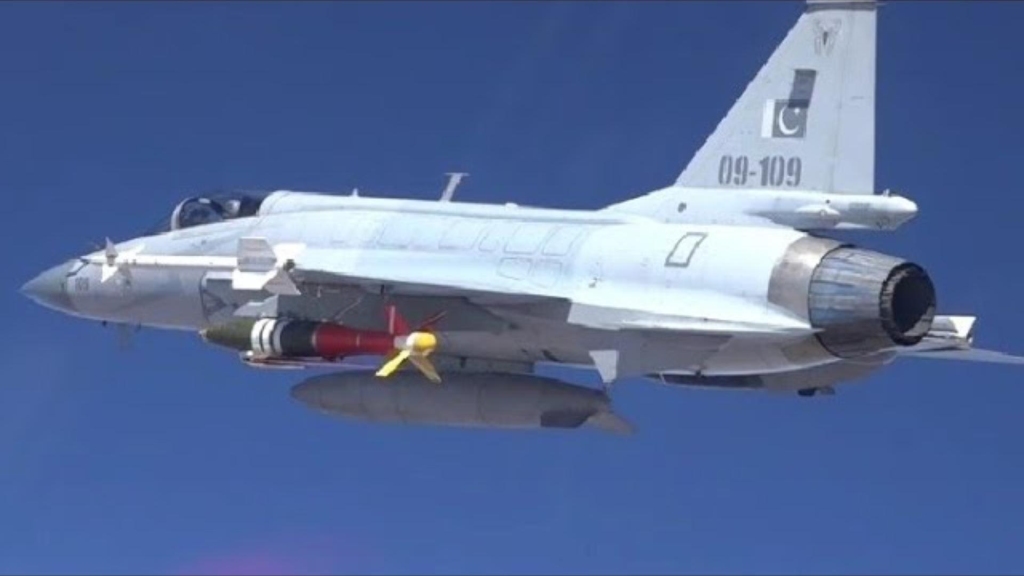
At the same time, the Pakistan Air Force (PAF) already operates a scalable strike option through the JF-17 paired with range-extension kits (REKs). These glide-bomb kits (also designated as the AZB) convert Mk-80-series bombs into precision, stand-off munitions at a cost Pakistan can sustain.
This analysis explains “Boots Theory,” assesses ARFC’s role and limitations, evaluates the JF-17’s affordability compared to Western fighters, and examines REK’s capability and cost. It also draws on Ukraine’s use of glide kits for context, explores doctrinal integration between ARFC and JF-17/REK, and outlines Pakistan’s industrial pathway to stockpiling kits at scale.
Get access to this article and all other Quwa content today.
Click Here
Related Reads
- Report: Industrial Reality Will Dictate Pakistan’s Conventional Deterrence Credibility
- How the Z-10ME Redefines the Role of Pakistan’s Army Aviation Corps
- Analysis: Pakistan’s Underrated Maritime Air Presence – and its Future Challenges
That said, two uncertainties limit what any rocket force can guarantee on night one: interception and accuracy. Ukraine’s experience shows that capable, well-served air defences can stop large volumes of cruise missiles – with measured intercept rates frequently reported in the ~70–80% bracket at their peak, though varying over time with inventory and tactics – while ballistic missiles complicate interception but still face attrition and decoys/pen-aids dynamics.
Circular error probable (CEP) performance also matters. Single-digit-metre CEPs are often claimed for some modern SSMs, but open sources document mixed results in the field, especially under jamming and when defenders adapt routes and timing. In Pakistan’s case, the Fatah-1 and Fatah-2 offer CEPs of under 15 m and 50 m, respectively; thus, their efficacy at scale could be questioned if used against smaller targets. The net point for planners is simple: some percentage will leak, some will miss, and the defender will adapt, so the magazine must be deep.
Quwa Plus
Go Beyond the Headlines on Pakistan’s Defence and Security.
Quwa Plus gives you deeper reporting, briefings, and analysis on Pakistan’s defence programs, foreign policy, national security, and regional strategy. Follow the developments that matter to professionals, analysts, and serious readers tracking Pakistan’s security landscape.