Executive Summary
Since its decisive naval defeat in the 1971 war, Pakistan has methodically constructed a sophisticated anti-access/area-denial (A2/AD) capability in the Northern Arabian Sea. This report details the multi-decade strategic effort by the Pakistan Air Force and Navy to build a layered, network-enabled shield designed to deter India’s larger naval forces.
Our analysis charts this evolution through three distinct phases:
- Foundational Response (1970s): The initial pairing of long-range surveillance aircraft with Exocet-armed Mirage fighters established the core doctrine.
- Stagnation and Vulnerability (1980s-1990s): Sanctions halted modernization, creating a dangerous capability gap as India’s naval power grew.
- Network-Enabled Resurgence (2000s-Present): The introduction of the JF-17 fighter, advanced P-3C Orion patrol aircraft, and indigenous tactical data links (Link-17 and Link-Green) created a modern, integrated force. The JF-17 Block 3, with its AESA radar, now provides a crucial qualitative edge.
Today, Pakistan’s maritime airpower presents a credible deterrent. However, this position is now challenged by India’s procurement of advanced Rafale-M fighters. To understand how Pakistan plans to counter this threat with next-generation patrol aircraft (Sea Sultan), advanced drones, and potentially new fighters, subscribe for the full, in-depth report.
Related Reads
Since 1971, the Pakistan Navy (PN) and Pakistan Air Force (PAF) have closely collaborated in building the country’s maritime airpower presence, an effort often understated in South Asia’s security dynamics. This presence is built on a network-enabled system designed to deny the Indian Navy (IN) operational freedom within Pakistan’s maritime areas of interest, such as its sea lines of communication (SLOC) and littoral waters.
The reason for building it was, simply put, the main result of the lessons learned in the 1971 Indo-Pak War when the IN exploited the PN’s weaker posture to inflict two missile strikes on Karachi, resulting in the loss of naval warships and port infrastructure and a partial blockade on West Pakistan. Following the war, Pakistan’s defence planners realized that the country’s naval posture, especially along its littoral spheres and SLOCs, was exposed to two key weak points: the lack of situational awareness of both an impending and ongoing IN attack on one end, and the inability to neutralize the IN threats both proactively and reactively.
While 1971 exposed Pakistan’s naval weakness to anti-ship missile (AShM) strikes, especially from small fast attack craft (FAC), the PN and PAF had worked to close the gaps from all ends, i.e., surface, sub-surface, and airborne threats alike. In addition, the PN and PAF realized that true naval resiliency was not restricted to solely ports, but also the SLOCs as well, especially on the western banks of the Arabian Sea where most Pakistani trade flows through (alongside, interestingly, a major portion of India’s trade).
Thus, Pakistan’s maritime airpower presence had to be both multi-dimensional in that it could readily address surface, sub-surface, and airborne threats and far-reaching enough to spread through the northern and western banks of the Arabian Sea.
Today, the PN and PAF have largely achieved these two goals using a mix of special mission assets to execute specific roles and force-multiplier systems, like network-enabled warfare, to interoperate their systems and augment less-equipped ones to play bigger roles. Overall, from a defensive standpoint, one can argue that the PN and PAF have built a credible ‘wall’ to deter the IN from interfering with Pakistan’s maritime interests. However, this posture could erode if not maintained in line with the IN’s rapidly growing offensive and power projection capabilities.
Urgency of Naval Airpower Post-1971 War
Historically, Pakistan’s defence planners did not take naval issues seriously. On the one side, Great Britain – and later the United States – had emphasized a western-focused orientation for Pakistan. It was to be a bulwark against the growing influence of the Soviets or the aggression of China, not a rival to India. On the other side, the 1947-1948 War with India over Kashmir led to planners prioritizing their conventional warfare investment towards land and air warfare, with the maritime sphere left largely deprioritized as these planners could not see the importance of naval warfare to issues like Kashmir. Finally, the PN itself was not built as a strong navy at the time of Partition, mostly owing to the fact that the regions that constitute Pakistan were more of a frontier extending out of the lands of India. From a naval standpoint, British India maintained its strongest forces in the eastern and southern coasts of the subcontinent, while the western edges (e.g., Karachi, Makran, Gwadar, etc) were closer to the orbit of Britain’s presence in the Arabian Sea. In other words, there was no historical need to build a strong naval force in such areas and, as a result, the PN did not inherit much.
However, ignoring the naval domain was a significant misreading of the geopolitical reality by Pakistan’s security planners. A cursory look at the map at the time would clearly show that the country (i.e., East Pakistan and West Pakistan) was split by the Indian Ocean, and keeping the link would one day require a strong navy with power projection capabilities. Unfortunately, both top decision-makers within Pakistan and the greater powers it had depended upon did not see the need for such naval power in Pakistan’s hands and, thus, it was left as an also-ran.
But naval airpower would become a priority, albeit following distressful circumstances – i.e., the categorical defeat of 1971 and loss of East Pakistan. This shift in priorities was a direct consequence to the strategic shock the IN delivered through Operations Trident and Python, i.e., strikes using anti-ship missiles (AShM) on PN surface vessels and infrastructure at port, such as fuel tanks. The challenge at hand was not only that IN surface combatants (although small missile boats) could ingress so deep into Pakistan’s littoral waters, but also the reality that these vessels were armed with, basically, stand-off range weapons in the Styx.
Thus, for a deterrence posture to work, it would need to push these threats much farther away so as to cut the range advantage of the Styx and, by extension, future anti-ship cruise missiles (ASCM). Both PN and PAF planners realized early on that the challenge was both multi-modal in the sense that they needed capabilities to stop different types of threats (e.g., surface, aerial and sub-surface), but that long-range situational awareness was equally critical. The response mechanisms would not be as effective unless there was awareness of a potential IN operation much earlier on in the process, ideally, at the point of ingress into the Arabian Sea, if not much earlier within the Indian Ocean. Finally, the nature of operations at sea also necessitates mass to sustain frequently recurring operations, even in peace time. Unlike the in-land environment, the naval environment is vast, hence it requires constant activity in the air for around-the-clock ISR, quicker responsiveness to an area of interest, and support for patrolling naval warships.
In effect, these factors shaped Pakistan’s maritime airpower presence into a force that could provision a relatively large number of air platforms (i.e., mass), leverage a far-reaching ISR coverage net to watch over both the Arabian Sea and the western side of the Indian Ocean, and deploy a strike capability that can touch the Indian Ocean, if not engage deeper, so as to disrupt IN activity at the point of an operation being initiated rather than near Pakistan.
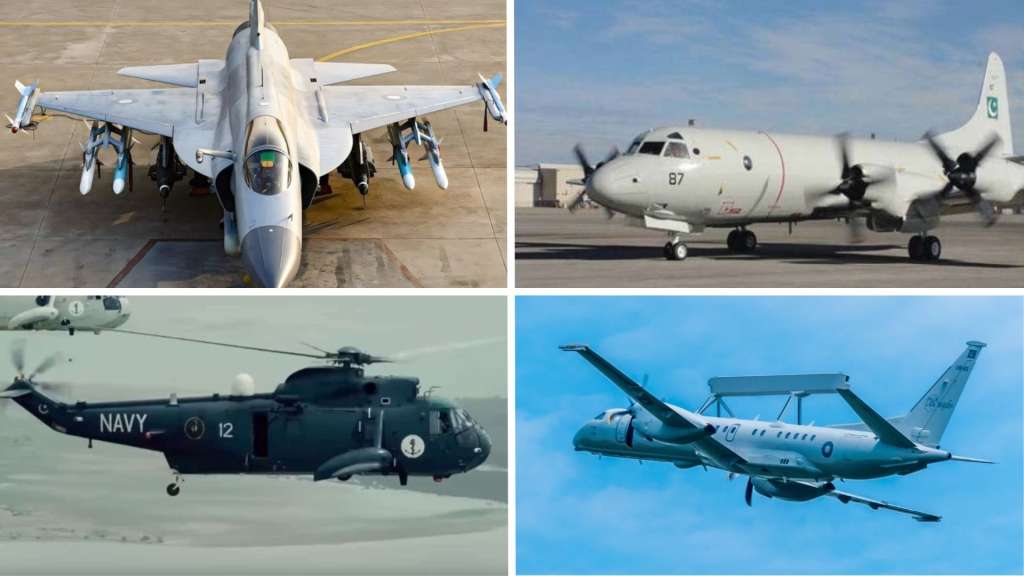
The work to build this airpower presence started in the early 1970s with the induction of the Breguet Atlantic long-range maritime patrol aircraft (LRMPA) and Sea King helicopter by the PN. The Atlantic was this force’s primary ISR platform through the 1970s, 1980s, and 1990s, providing the extended-range awareness of potential enemy activity and initiating a response mechanism. The latter was effected in two ways: First, through the Sea King, which could use both the Exocet ASCM as well as lightweight torpedo (LWT) for anti-submarine warfare (ASW) operations at lower altitudes (while the Atlantic could offer ASW at higher altitudes). Second, the PAF ordered 18 Dassault Mirage 5PA3 aircraft, a specially equipped version of the Mirage 5PA capable of firing the AM39 Exocet ASCM paired to the Thales Agave radar. The striking range of this maritime airpower force could reach up to 70 km (via the AM39 Exocet).
Naval Airpower Plans Derailed Due to Sanctions
While the qualitative aspect was now activated, the PN and PAF could not achieve the mass they had required. The main blocker to this was the Pressler Amendment, which stopped the PAF from growing its F-16A/B Block-15 fleet to the originally planned 100+ units; of these, a portion was likely to be allocated to Southern Air Command to offer the Mirage 5PA3s strong top-cover (via multirole platform) and, potentially, deter IN activity at farther ranges. In fact, this author was told by retired PAF officers that in the late 1980s, the PAF had sought the Penguin anti-ship missile for use from its F-16s, but it could not secure the approvals from the U.S. to use it in that manner. Likewise, the PN could not procure the P-3C Orion (until the first batch was released in the late 1990s) to augment its ISR and ASW capabilities. Finally, the striking capability was limited to AM39 and MM38/40 Exocet ASCMs, which did not exceed 100 km in range. Thus, while there was a deterrence capability, its credibility was being eroded.
Meanwhile, the IN had steadily worked to extend its airpower capabilities, especially through its carrierborne force, first through the Sea Harrier and later the MiG-29K. Generationally, the PAF was at a disadvantage over sea to the MiG-29K as it lacked enough multirole fighters in the 1990s and early 2000s. Moreover, the IN surface and sub-surface fleets also grew, both quantitatively and qualitatively, with the latter manifesting in new frigates and destroyers with multi-mission capabilities. These ships were also leveraging longer-ranged ASCMs that could exceed the <100 km reach of the PN/PAF’s own striking capability; thus, these new IN threats could begin targeting and engaging the PN at a stand-off range, away from PN/PAF threats.
The stagnation began to reverse again following 2001, when the U.S. resumed its military aid to Pakistan and, in turn, enabled the PN and PAF to secure new assets. The PN replaced its Atlantic aircraft and expanded its LRMPA fleet with the Lockheed P-3C Orion, which offered a major capability boost. The P-3C came configured with a more advanced and capable sensor suite consisting of a multi-mission surveillance radar, electro-optical/infrared (EO/IR) turret, an electronic support measures (ESM) suite, and magnetic anomaly detector (MAD).
Now, the PN could once again monitor for threats at stand-off range (via the radar), but it also applied other forms of ISR, notably electronic intelligence (ELINT) whereby it could also track enemy radar and communications emissions (to build a threat library for use in jamming later). In fact, the P-3Cs were so effective in the ISR role that they were also employed for a time as part of the Pakistani military’s longstanding counterinsurgency (COIN) efforts over land.
In addition, the P-3Cs could also be armed with LWTs and AGM-84 Harpoon Block-II for ASW and AShW, respectively; compared to the AM39, the Harpoon Block-2 offered a range of 124 km, exceeding the 100 km limitation of its older ASCMs. The PN had operated a total of nine P-3Cs at peak fleet size, with seven remaining in use today. Overall, the PN finally built some credible measure of scale in its ISR, ASW, and AShW capabilities, thanks in great part to the P-3C and, to a lesser degree, other assets like the Z-9EC naval helicopter from China.
Likewise, the PAF also began procuring F-16s again around this time, but its net-gains came through the JF-17 program. Not only did the latter offer quantitative mass, but it also delivered qualitative improvements in capability that arguably helped the PAF close gaps in the disparity of maritime airpower against the IN.
The Wellspring of Capability Growth Following 2010
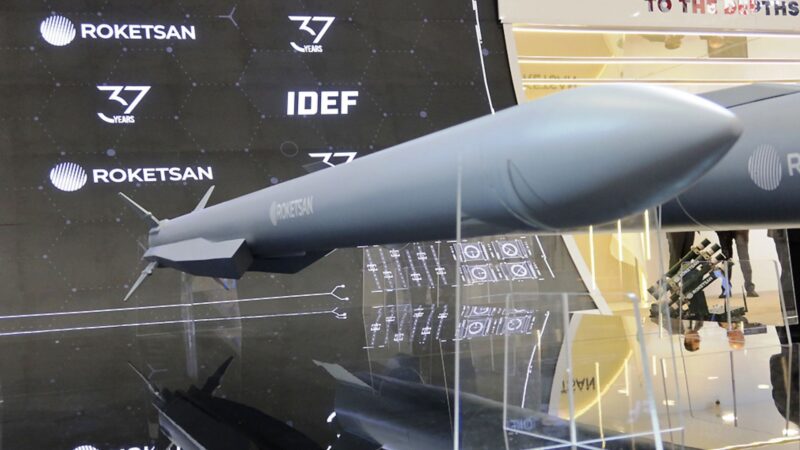
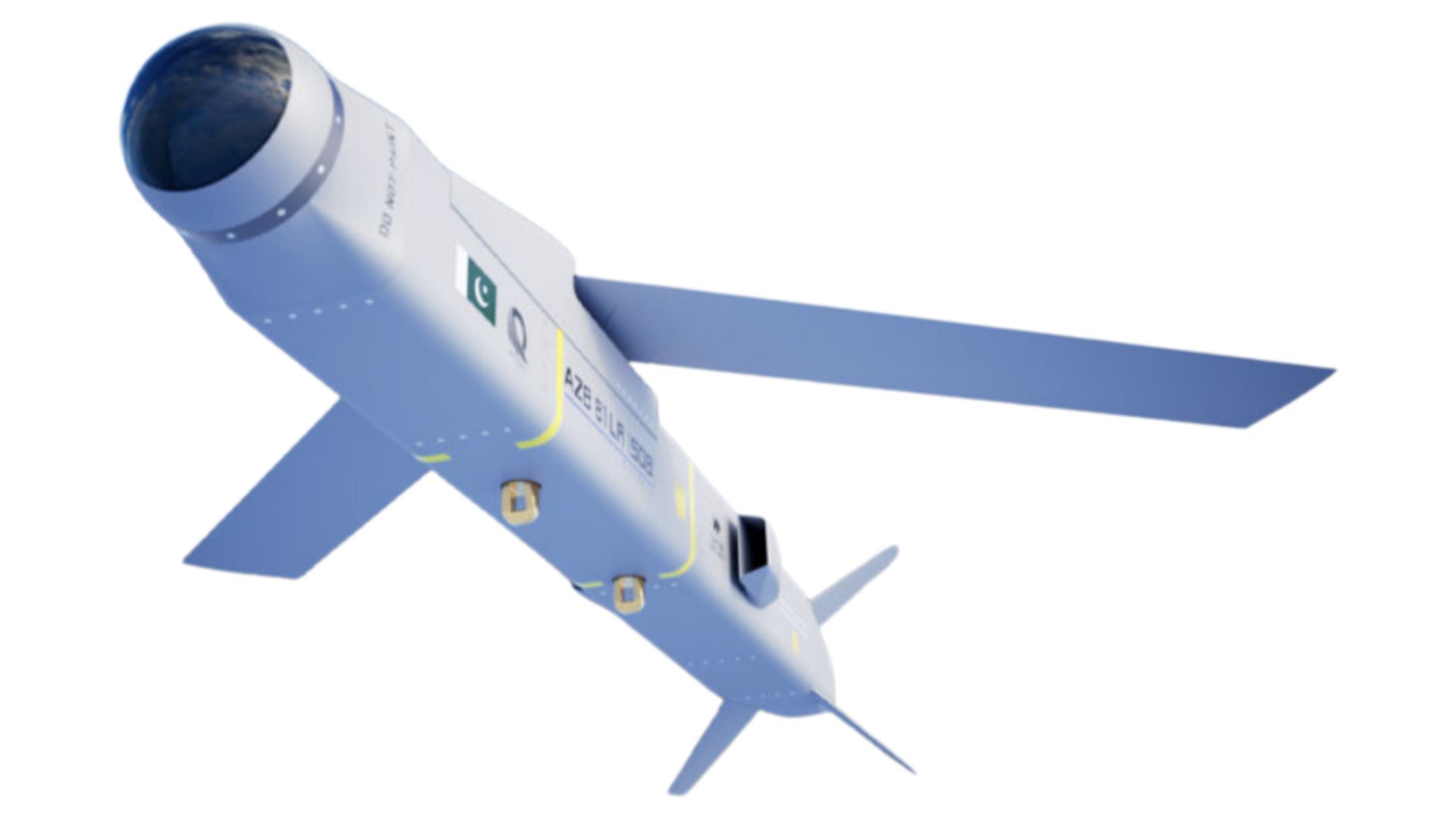
Inducted in 2010, the JF-17 Block-1 was envisaged as a baseline capability fighter, hence the PAF’s priority was to secure a viable BVR AAM capability (via the SD-10). However, this same baseline configuration was also capable of carrying the C-802A ASCM, which offered a range of 180 km, far exceeding the AM39 and AGM-84 on the Mirage 5PA3 and P-3C, respectively. Thus, the JF-17 came with a stand-off weapon (SOW) capability relatively early on; however, for the PAF’s maritime presence, this became a factor via the Block-2. In 2016, the PAF’s No. 02 Squadron was re-equipped with the JF-17 Block-2 and re-assigned to Masroor Air Base in Karachi. Not only does the JF-17 Block-2 offer a longer-ranged anti-ship strike element to the Mirage 5PA3, but it also has a self-contained air-to-air capability that can use BVR. Recently, the PAF built on this force with a JF-17C Block-3 unit via No.08 Squadron, also based out of Masroor Air Base. The Block-3 is a true qualitative driver as it brings an active electronically scanned array (AESA) radar capability plus, via the PL-15E, a longer-ranged BVR element, plus other capabilities such as a wider SOW compatibility (e.g., with the GIDS AZB-series).
Currently, the JF-17 units – notably the Block-3 – confer the PAF a qualitative edge over the IN’s MiG-29Ks. While the latter is an adept carrierborne fighter, the technology advantages of the KLJ-7A AESA radar and PL-15E AAM (which also uses an AESA-based seeker) provide, in theory, the JF-17s with the capacity to engage the MiGs at long range with reduced risk to themselves thanks to greater resiliency against electronic countermeasures (ECM) jamming and, when ‘wolfpack’ tactics are employed (e.g., where one JF-17 switches its radar off and relies on a networked fighter or other asset for radar-based situational awareness while also firing a PL-15E), reduced electromagnetic exposure. Likewise, the JF-17’s ECM pods (e.g., Panjnad) allow these fighters to jam incoming AAMs like the R-77, which leverage legacy mechanically-steered array seekers. Even in short range engagements, the JF-17C could leverage the PL-15E high off-boresight air-to-air missile (HOBS AAM) paired to its digital display-based helmet-mounted display and sight (HMD/S) system.
Through the 2010s and early 2020s, the PAF had networked the JF-17s to the Karakoram Eagle airborne early warning and control (AEW&C) aircraft, which used the ZDK03 passive electronically scanned array (PESA) radar. The AEW&C and JF-17s were connected using Link-17, the PAF’s in-house, proprietary tactical data link (TDL) system. Similar to Link-16, Link-17 was modelled as a ‘push the picture’ system; it allowed ‘shooter’ assets such as the JF-17 to leverage off-board sensor data (e.g., radar feeds) from the ZDK03 and even other JF-17s (enabling for ‘wolfpack’ tactics). While it allowed some ‘shooters’ to keep their radar systems off, Link-17 was a passive system in that it relied on the operator to view the data, decide on a course of action, and execute it. The advantage was that a JF-17 Block-2, for example, with its limited radar range could leverage the ZDK03 for greater awareness, or deploy a C-802A, but with a JF-17 Block-3’s longer-ranged and ECM-resilient KLJ-7A for missile guidance. In other words, Link-17 did not enable for full Cooperative Engagement Capability (CEC) whereby federated off-board sensors can seamlessly guide AAM, ASCM, and even surface-to-air missile (SAM) launches from other networked platforms. However, Link-17 still conferred significant capability gains for Pakistan’s maritime air presence and, arguably, set the groundwork for supporting longer-ranged cruise missiles that can reach in excess of 300 km, such as the surface-launched Harbah NG and air-launched Taimoor (i.e., conventional variant of the 650 km-ranged Ra’ad 2). Few surface platforms – and no aerial – platforms leverage radars to support ranges; thus, networked sensor feeds from AEW&C and, potentially, a future over-the-horizon (OTH) radar will be crucial. As of 2023 or 2024, the PAF phased the Karakoram Eagle out for additional Erieye AEW&C systems; the Erieye offers a detection range of 450 km.
Likewise, the PN also instituted its own similar TDL – i.e., Link-Green – with the support of the Turkish company MilSOFT. Link-Green’s architecture was designed to support a similar ‘push the picture’ system, but by networking fixed-wing and rotary-wing aircraft, surface warships, special mission ships (e.g., ELINT), submarines, and satellites together. Quwa was also told that the PAF’s JF-17s and AEW&C can also interoperate with Link-Green. Hence, in terms of weapon management and coordination, Link-Green allows the Azmat-class FAC to deploy the 300+ km-range Harbah NG, despite lacking its own long-range radar to support targeting (which it can instead acquire from an off-board sensor, like the high-output radars of the Tughril-class frigate or Babur-class corvette or even an Erieye AEW&C). Quwa infers that Link-Green is, by design, meant to be interoperable with other TDLs, be it Link-17, Link-16, or Link-11, the latter likely also still used by older PN platforms, e.g., P-3C.
Through the 2010s and early 2020s, the PN has worked to add mass to its fixed-wing as well as rotary and drone capabilities. It had lost two P-3Cs to a militant attack in 2011, which cut its Orion fleet to seven aircraft. However, the PN also added four RAS-72 Sea Eagle MPAs; using the ATR-72-500 as the basis, the RAS-72 brings a multi-mission support capability. Its primary sensor is the Seaspray 7300E (AESA-based surface surveillance and targeting radar) and it also uses a FLIR Systems Star SAFIRE III EO/IR turret and an ESM with ELINT. Thus, from an ISR standpoint, the RAS-72 readily fills in for the lost P-3Cs, if not exceed it in some respects (e.g., it is also equipped with a sensor fusion engine via the Aerodata AG AeroMission suite). The RAS-72 is technically capable of carrying LWTs and ASCMs for ASW and AShW, respectively, though it is unclear to what extent the PN will use these capabilities. That said, a domestic LWT alongside a new lightweight ALCM (Rasoob 250) are in development to potentially equip the RAS-72 as well as other future PN aircraft platforms.
The PN also expanded its Sea King helicopter fleet to around 20 units, thus achieving mass in terms of rotary platforms for low-level AShW and ASW operations. While legacy platforms, the addition of these mothballed/second-hand helicopters enabled the PN to leverage its existing operating infrastructure to rapidly induct and deploy the aircraft. That said, long-term viability is a serious concern with the Sea King and Alouette helicopters, and the PN will eventually need to develop a next-generation roadmap for its rotary needs.
Finally, both the PAF and PN have greatly improved their respective surface/ground-based air defence postures. The PN, in particular, has seen relatively significant improvements. In fact, its air defence posture had stayed stagnant from the 1980s into the 1990s. In the 1980s, the three Brooke-class frigates it leased from the U.S. came equipped with the RIM-66 Standard-1 surface-to-air missile (SAM). However, after these were returned, the PN replaced them with three Type 21s configured with the LY-60; it was a direct gapfiller to the capability lost from the RIM-66 and did not provide a net-new gain to the PN’s air defence posture. However, with the induction of the Tughril-class (Type 054A/P) frigate and Babur-class (MILGEM) corvette from China and Turkey, respectively, the PN’s integrated air defence posture has improved. Each surface warship (totalling four each) are equipped with a SAM with a range of around 40 km, but with different capability sets. The LY-80N equipped onboard the Tughril-class is an older semi-active radar-homing (SARH) system, but adept for targeting enemy fixed-wing aircraft and helicopters. The MBDA CAMM-ER fitted onboard the Babur-class, on the other hand, is capable of engaging aircraft and munitions, including supersonic-cruising missiles (SSCM). In fact, the PN seems to have opted to standardize on the CAMM-ER for most of its applications; the forthcoming Jinnah-class frigate will be equipped with this SAM, the Yarmouk-class Batch II OPVs will have the option to use the CAMM-ER, and the F-22P MLU for the Zulfiquar-class frigate will likely use it as well.
The intent of the PN’s air defence system is to primarily protect its surface warships and the surrounding operational bubbles (which may cover FACs, logistics vessels, etc.). However, these surface combatants will solely operate in the Arabian Sea, either to maintain a level of sea control (to secure sea lanes) or to monitor for enemy submarine activity. Thus, they will operate under the framework and protection of the PN-PAF air presence, not in isolation – a significant improvement to how they were essentially left alone and vulnerable (including, at times, to friendly fire) pre-1971.
Future Development Plans
In terms of future platforms, the PN also initiated the Sea Sultan program, a next-generation LRMPA designed to supplement and gradually replace its P-3Cs. The Sea Sultan utilizes the Embraer Lineage 1000E as its base aircraft; the Lineage is a VVIP variant of the E190 civilian airliner optimized for greater range and endurance. The latter is achieved through the addition of fuel tanks in the luggage bay; otherwise, the aircraft are identical. Thus, while there are just a few Lineage 1000E aircraft available to use, the PN can opt to procure and modify the E190 along similar lines, of which there are many platforms available in the market. One can expect the Sea Sultans to use a similar, if not identical, sensor and mission management package as the Sea Eagle, thereby ensuring continuity and commonality between platforms for simplified training, crew allocation, and maintenance/support. Like the P-3C, the Sea Sultan will have a clear AShW and ASW role through external hardpoints and an internal bay. As noted earlier, it is possible that the LWT and Rasoob 250 ALCM are being developed for the LRMPA. The PN intends to procure 10 Sea Sultans and, as part of this program, is planning to set up in-house depot-level maintenance, repair, and overhaul (MRO) facilities. One key attribute of the Sea Sultan, however, is that it is heavily based on commercially off-the-shelf (COTS) technology, from the base airframe to the sensors. Thus, if the PN could acquire the aircraft configuration and integration knowhow from the vendors (Paramount Group and Leonardo) it could actually continue inducting more aircraft past the initial 10 on an incremental basis.
Likewise, Quwa expects the PN to initiate its next-generation helicopter requirements in full earnest in the 2020s. This program may bifurcate into two distinct streams: a multi-mission helicopter capable of AShW and ASW operations to replace the Sea King, and a lightweight utility platform for search-and-rescue and support missions to replace the Alouette III. While there are several options available on the market, specifically from China and Europe, it is not clear how the PN intends to address this requirement. Based on the composition of the PN’s future and modernized surface fleet (around 20 major vessels) and its current rotary aircraft inventory, Quwa infers that the PN could seek 12~16 multi-mission helicopters to replace its Sea Kings and 12~14 lightweight helicopters to supplant the Alouette IIIs. It is worth noting that the PN’s in-house design bureau, the Platform Design Wing, signed a memorandum-of- understanding (MoU) with Turkish Aerospace Industries. Thus, there could be a possibility of the PN leveraging a platform like the T625 Gökbey for the lightweight requirement and, potentially, the T-70 (a license-built variant of the S-70i Black Hawk) for the multi-mission system. Alternative scenarios could involve the PN seeking the Chinese Z-20 or European AW101 or NH-90. It is also worth noting that National Engineering and Scientific Commission (NESCOM), the leading defence contractor in Pakistan, developed a miniaturized variant of its RIBAT ESM and a new SAR for drones. Thus, there could be scope for NESCOM to involve itself as a subsystems or input supplier for a future PN rotary program, especially if its munitions (e.g., domestic LWT or Rasoob 250) are sought for use on these new aircraft.
While it has an advantage today, the PAF will need to be wary of the IN’s development plans, which now involve the induction of 26 Dassault Rafale Ms to replace its MiG-29Ks. These new Rafales will likely be modelled after the F4 and, in turn, leverage many improvements, such as high-powered AESA radars, improved ECM, and compatibility with new munitions, such as the MBDA Meteor and SCALP, among others. Thus, the PAF will likely look to additional platforms that can build upon the technology gains conferred by the JF-17. Seeing how the PAF already operates the J-10CE, it could continue leveraging the existing operating overhead and readily add more aircraft to its fleet. Thus, one or two squadrons of the J-10CE could potentially make their way to Southern Air Command to reinforce the JF-17s, providing a platform with greater range, payload, and – ostensibly – radar output to share the BVR AAM and ASCM load.
The PAF could also look to ‘one-up’ the IN, so to speak, by procuring the J-35 and bringing a unit to Southern Air Command as well. That latter idea is contingent on the actual seriousness of the PAF in pursuing the J-35; however, one could argue that the J-35 is ideally suited for the maritime air presence role. The stealthy or low-observable (LO) platform may be more difficult to detect and engage on one end, but its larger twin-engine configuration would allow the PAF to operate much farther out at sea. When paired with compact ALCMs like the Rasoob 250, as an example, the striking range of the PAF would reach well into the Indian Ocean. In effect, the PAF could push its anti-access and area-denial lines into the IN’s domains and, in turn, disrupt the latter’s operations outside of the Arabian Sea. There is also a psychological impact where the IN would not necessarily feel they possess a definitive edge via the Rafale M due to J-35s and J-10CEs being present in the Arabian Sea. In this context, the JF-17s can be freed to fly much closer to the shores and provide a more point-defence capability, with the J-10CEs and J-35s flying much farther out and engaging the IN directly. However, even assuming that PAF planners are interested in the J-35, this would not materialize until well into the mid-2030s, if not later. The more immediate step would be to procure additional J-10CEs.
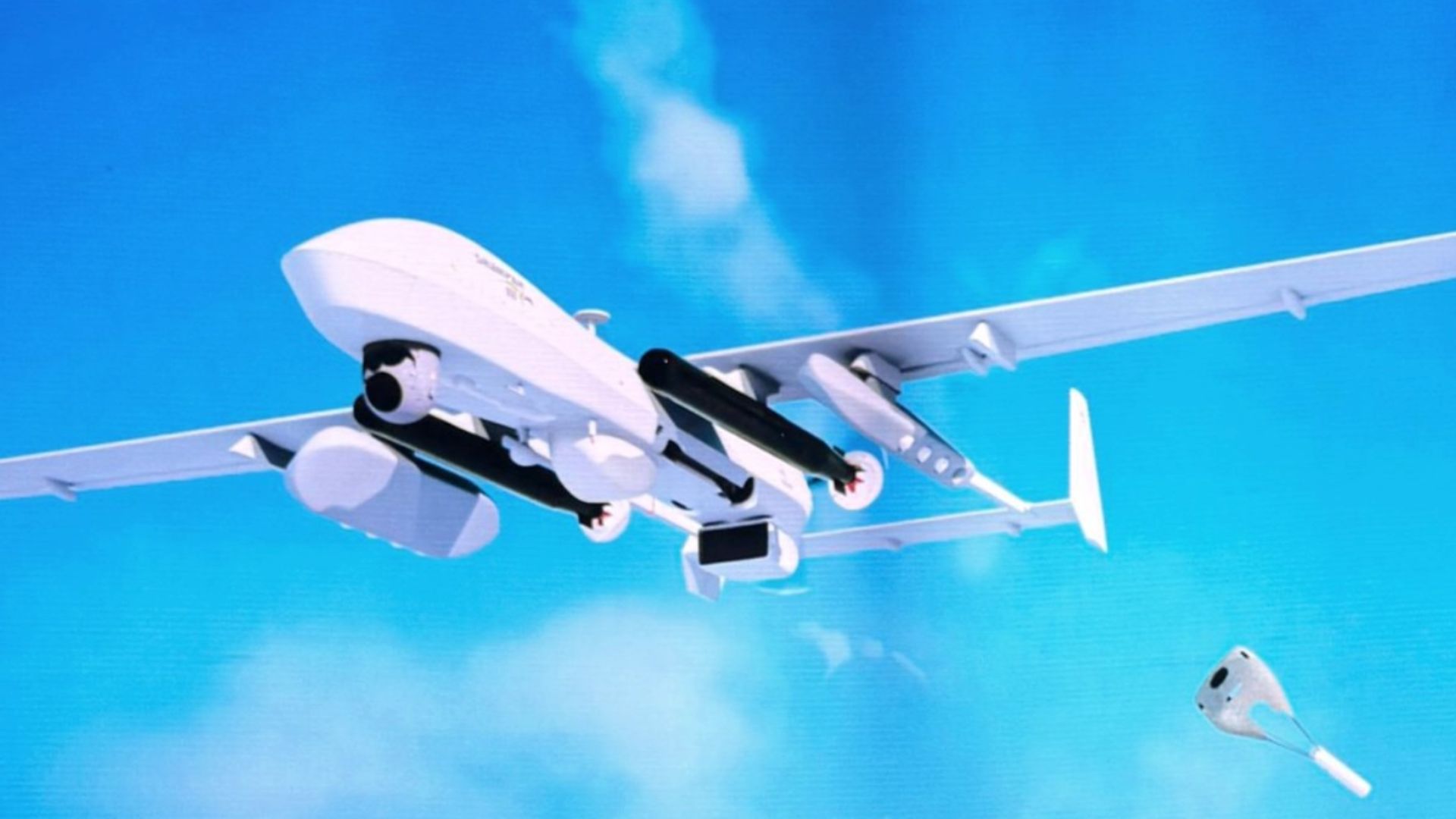
Finally, drones are expected to play a bigger role in the naval environment moving forward. In fact, as noted earlier, NESCOM developed a suite of sensors and weapon systems specifically for use on the forthcoming Shahpar-3 medium-altitude long-endurance (MALE) drone, such as a miniaturized version of the RIBAT ESM, a new SAR sensor, an ultra-lightweight torpedo, and new lightweight ALCMs like the Rasoob 250 and AZB-81LR. In other words, the Shahpar-3 – and drones more generally – could be leveraged to help add ‘mass’ to the PN/PAF’s ISR and ASW/AShW coverages at scale. For example, the Shahpar 3 is slated to offer an endurance of over 30 hours; given that it does not have an onboard crew, issues like fatigue are a non-factor as the operating officers on the ground could rotate their shifts. However, Shahpar 3 flights can provide pervasive ESM/ELINT, targeting, ISR, and combat coverages, be it independently or in larger task groups with other airborne and surface assets.
Fundamentally, the PAF and PN’s goal is to ensure that IN assets cannot operate freely near Pakistani waters, much less within them. The idea is to ensure that the environment is under an expansive, around-the-clock ISR net tuned to track surface and airborne threats. Once a target is identified, long-range elements – from SD-10A or PL-15E AAMs to various types of ASCMs – would be employed to attack those threats at the point they ingress into Pakistani SLOCs or other maritime spheres of interest. To maintain this capability at a credible level, both the PAF and the PN will need to pursue new-generation platforms and capabilities, as one could potentially see today through programs like the Harbah NG, Taimoor, Rasoob 250, Sea Sultan, and, possibly, new helicopters, among other assets. Ultimately, the IN will rectify the gaps on its end (e.g., lack of AESA radar-equipped fighters) and aim to regain the edge it could impose upon Pakistan at different points in history, which had been the norm until PAF and PN planners were able to overcome it after 2010.