Since the May 2025 conflict with India, the leaders of each of Pakistan’s tri-services – the Army, Navy, and Air Force – have championed the military’s adoption of multi-domain operations (MDO), which, in the words of Lt General Nauman Zakria, amounts to the “integrated use of cyber and electronic warfare, ISR, space-based capabilities, and synchronized maneuver generating cross-domain effects.”
In its most distilled form, Pakistan’s MDO is its capacity to deploy a single ‘enablement’ infrastructure – such as ISTAR – across the tri-services, allowing each service arm to tap into that infrastructure for its respective strike or attack operations; a straightforward example is the Army Rocket Force Command (ARFC) tapping into Space Command, stewarded by the PAF, for targeting information drawn from the country’s satellite constellation. There are many more aspects to this, but the basic point is that one service arm can now readily leverage systems managed by another.
Evolving Organizational Structures in the Tri-Services
Where it gets notably interesting is that beneath the terminology, an emerging organizational structure is also at play – i.e., ‘unified sub-commands.’ To be clear, the armed forces have not explicitly defined the term, so these insights are this author’s observations. The short of it is that each of the main service branches is beginning to employ a sub-service arm that would integrate deeply with a sub-service arm within another branch.
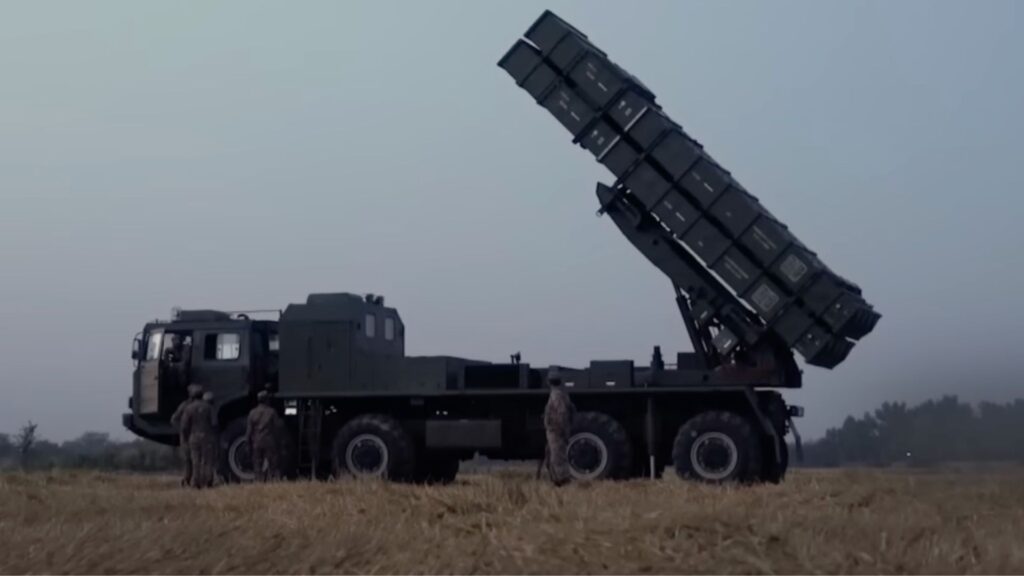
Returning to the earlier example, the ARFC operates under the Army but arguably serves as Pakistan’s primary surface-to-surface strike arm, using a growing mix of guided artillery rockets, tactical ballistic missiles, and subsonic and supersonic cruise missiles; yet for the ARFC to be as impactful as it could be, its ISTAR net requires input from the PAF’s Space Command, the steward – at least from a military perspective – of Pakistan’s growing satellite constellation (i.e., PRSC-EO1, EO2, EO3, S1, HS1, and, in the future, InSAR). The term ‘MDO’ implies that the ARFC is, or will be, directly connected at the technological level with Space Command.
Thus, if one views the traditional main arms as vertical silos, one now has – via the ARFC and Space Command – a horizontal line cutting across each of them, and where it gets particularly noteworthy is that adjacent to this horizontal line is, potentially, a command-and-control (C2) structure that takes ownership of that horizontal ‘kill-chain.’
Necessitating the CDF Role
This is the essence of Quwa’s thesis: that Pakistan is seemingly constructing ‘unified sub-service’ arms – i.e., MDO chains that operate horizontally across each of the main service arms but ultimately report to a well-defined chain of command, one that would likely, in this author’s assessment, feed directly back to the Chief of Defence Forces (CDF) – and understandably so.
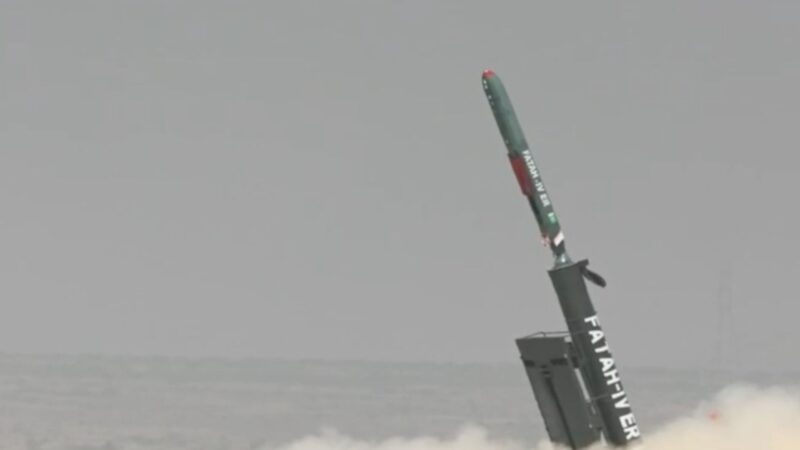
First, the ARFC’s capabilities are evidently evolving: not only are its attack modes growing – e.g., the recent announcement of the Fatah-3 as an apparent supersonic-cruising missile – but in all likelihood so is its reach, with a Pakistan Army officer recently disclosing that a ‘Fatah-5’ had been tested. Although details were not provided, one can infer from the trajectories of SSM and TBM programs in other countries that the minimum outcome for a ‘Fatah-5’ would be additional range.
How that translates is open to speculation – there could be an evolution of the Fatah-2 into a medium-range ballistic missile in the 1,000 km to 2,000 km range, a new hypersonic platform, or new longer-ranged subsonic-cruising missiles building on the Fatah-IV/Babur lineage – but even with the specifics unknown, one can safely infer that additional range is in the pipeline, since it meets the requirement. Pakistan’s military planners fully understand that India will keep pulling its most valuable assets away from the northwest border, so it stands to reason that the imperative – whatever the attack mode – to reach those targets will be there.
That growth in conventional strike capability, especially when paired with real-time or near-real-time ISTAR and compressed decision-to-response timeframes, means the decision to enable strikes must reside somewhere: if the decision to strike escalates the situation and risks war, who will be accountable for that choice, and who will take ownership of stopping strikes when the calls for talks enter the equation?
As one will recall, in the May 2025 conflict – and, in fact, the preceding February 2019 conflict – if the responsibility for carrying out offensive strikes were left solely to the PAF, there would be a delay, since the PAF would always need to prep its offensive air group(s), creating an actual buffer during which de-escalation or a truce can occur. In the context of the ARFC-led horizontal layer, however, that buffer need not exist; rather, Pakistan can theoretically strike at any point in the conflict, even preemptively, should it choose to do so, and the power vested in the ARFC will be far from trivial, as it could one day house long-range and/or hypersonic strike systems further complemented by a credible ISTAR enablement net.
In the ARFC-led context, chaining it to the CDF ensures strong controls to keep escalation in check, but it also invites discussion of whether that consolidation is beneficial: Pakistan is the smaller force in a fight with India, and in light of this asymmetry, speed of action – with a preemptive element – is one of the few advantages it can leverage. Iran played to this via its ‘mosaic defence’ strategy, disaggregating the C2 of its stand-off weapon (SOW) assets, thereby allowing it to fight nimbly while operating in the absence of its top leadership in the opening days and weeks of the war.
Quwa Pro
See Where Emerging Defence Markets are Moving
Quwa Pro goes beyond tracking programs and equipment by explaining the policies, incentives, industry dynamics, and competitive pressures shaping South Asia's defence markets.

Subscribe Already a subscriber?Sign in