
In the season premiere of Defence Uncut (S02E01), Bilal Khan and Arslan Khan examine the operational lessons emerging from the ongoing US-Iran war and what they mean for Pakistan’s defence planning.
The discussion spans three interconnected areas: the proven value of low-cost loitering munitions like the Shahed-136, the more limited returns from Iran’s ballistic missile investments, and the naval dynamics of the Strait of Hormuz crisis – particularly what they signal for the Pakistan Navy’s submarine and surface fleet strategy.
We also discuss counter-unmanned aerial system (C-UAS) solutions – from high-powered microwave (HPM) emitters to kinetic drone interceptors – and the case for a multinational defence consortium among middle powers like Pakistan, Turkey, and Saudi Arabia.
Listen to the full episode on YouTube or your favourite podcast platform.
Shahed Drones: Why Low-Cost Loitering Munitions Have Proven Their Worth
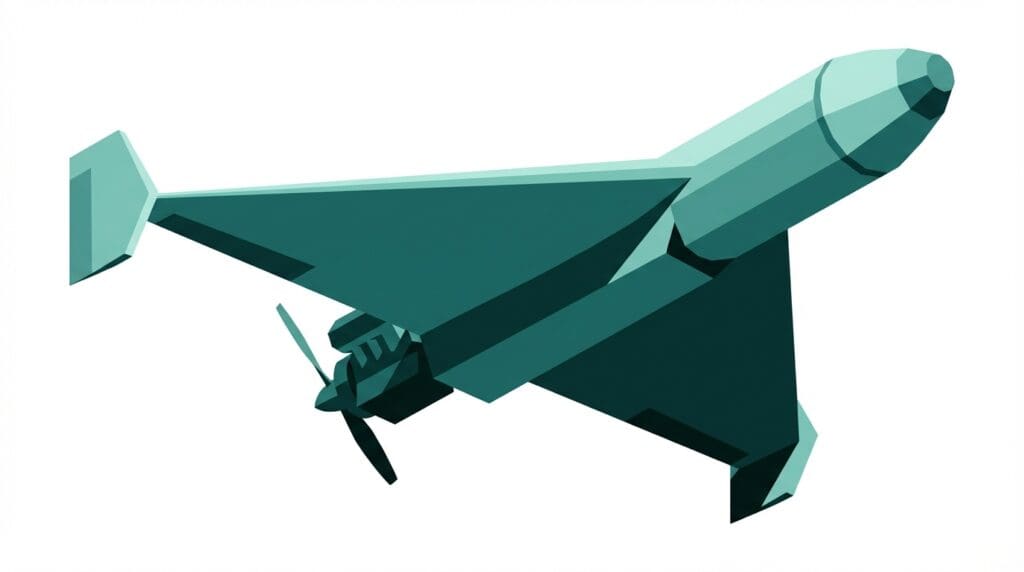
The Shahed-136 has become the defining loitering munition of this era. First deployed at scale by Russia against Ukraine, and now by Iran against US and Gulf targets, the Shahed has validated the attritional drone model – where the cost of each munition is negligible relative to the cost of intercepting it.
In the episode, Arslan unpacks why the Shahed design succeeded where more complex systems have struggled. The airframe is simple – a large, mostly hollow structure powered by a reverse-engineered piston engine derived from the German Limbach 550E. The engine does not need to last thousands of hours; it needs to survive a single 10-to-20-hour mission before the munition reaches its target. Internal components are largely commercial off-the-shelf (COTS), including Ublox satellite navigation receivers and standard commercial memory and video processing units.
Russia took this baseline design and iterated on it under sustained combat pressure. The resulting Geran variants now operate in swarms, with lead drones carrying sensors that map the electromagnetic environment – identifying radar emissions and air defence positions – before relaying updated flight paths to the trailing munitions. This bidirectional technology pipeline between Iran and Russia has accelerated the Shahed’s evolution beyond what either country could have achieved independently.
The cost estimates discussed in the episode range from $20,000 to $30,000 per unit – comparable to a single Joint Direct Attack Munition (JDAM) kit, but without requiring an aircraft to deliver it. Even if a significant proportion of a Shahed wave is intercepted, the attacker only needs a handful to reach critical infrastructure to achieve a disproportionate return. This cost-exchange problem has driven the US and Gulf states to urgently pursue low-cost drone interceptors and directed energy weapons to counter the Shahed threat.
For Pakistan, the implications are direct. As Arslan notes, the production threshold for Shahed-class drones is surprisingly low. Pakistan already mass-produces the CD70 motorcycle engine in significant numbers; while the engine itself may not be suitable for a loitering munition, the production facilities and machining capabilities behind it could be repurposed for piston-engine drone propulsion. The broader point is that Pakistan’s growing loitering munitions portfolio – including the GIDS Sarkash-I, Blaze-series, and NASTP KaGeM V3 – already draws on many of the same principles that made the Shahed effective: simplicity, scalability, and COTS components.
However, the discussion also raises a critical concern. India is developing its own loitering munitions at scale. Indian vendors have quoted the ability to produce 10,000 to 20,000 units per year – per vendor – and the Indian private sector has dozens of firms in this space. Pakistan cannot match India’s production scale vendor-for-vendor. Thus, the priority is to ensure that Pakistan’s own loitering munition strategy is oriented around jet-powered one-way effectors that can challenge advanced, multi-layered air defences, rather than slower piston and electric-powered designs alone.
The Limits of Ballistic Missiles: Fear Factor vs. Degradation
Iran’s ballistic missiles have generated dramatic imagery – cluster warheads penetrating Israeli air defences, fireballs captured on social media – but the discussion in the episode takes a more measured view of their actual operational utility.
The warheads on many of Iran’s medium-range ballistic missiles (MRBM) carry relatively small sub-munitions, in the range of four to five kilograms each. While the psychological impact of a ballistic missile strike is considerable, the physical damage inflicted by these small warheads has not meaningfully degraded the adversary’s ability to strike Iran. In other words, the ‘fear factor’ of ballistic missiles is real, but their use has not changed the operational trajectory of the conflict.
This is an important distinction for Pakistan’s own missile planning. Both Pakistan and India possess ballistic missile inventories, but the episode suggests that Pakistan should approach these weapons as tactical enablers – tools for destroying specific high-value targets like bridges, radar sites, and command nodes – rather than strategic instruments of coercion. The precedent from Ukraine is instructive: Kyiv used its limited ballistic and cruise missile stocks to degrade specific Russian logistics and command infrastructure, not to instil broad psychological pressure. Pakistan’s emerging Fatah-series tactical ballistic missiles and conventional cruise missiles align with this approach.
A Naval War Pakistan Cannot Ignore
Perhaps the most consequential – and least discussed – dimension of the US-Iran war is the naval equation, and the episode devotes significant attention to its implications for the Pakistan Navy (PN).
Iran’s naval assets were largely destroyed at port. Most, if not all, of its submarines and surface vessels were struck before they could sortie. This is a direct consequence of Iran’s decades-long underinvestment in its conventional navy and its failure to provide survivable basing infrastructure, such as underground submarine pens built into coastal mountain terrain.
For the PN, this is a clarifying lesson. The PN has already launched Operation Muhafiz-ul-Bahr to escort Pakistani merchant vessels through the Strait of Hormuz, demonstrating the immediate value of surface combatants in hybrid maritime security scenarios. However, in a full-scale conflict, the survivability of surface warships – particularly high-value frigates – is increasingly questionable.
The episode argues that the PN should reconsider the scale of its large surface combatant ambitions. The planned goal of 20 major surface vessels may need to give way to a more submarine-heavy force structure. The forthcoming Hangor-class (S26) submarines will significantly enlarge the PN’s sub-surface fleet, but the key operational lesson from Iran is that submarines are only effective if they are at sea – not trapped in port. Arslan argues that the PN should invest in hardened underground submarine pens, potentially built into the mountainous coastline near the planned Ormara naval base.
In this vein, one can see the PN potentially doubling down on its subsurface investment at the expense of additional large surface combatants. The shallow-water attack submarine (SWATS) programme and next-generation unmanned underwater vehicle (UUV) projects discussed in the episode align with this reorientation. A disproportionately large submarine fleet – complemented by coastal defence systems like anti-ship ballistic missiles and anti-ship cruise missiles – could give Pakistan meaningful asymmetric advantages in the western Arabian Sea, an area where Pakistan’s geographic position allows its submarines to threaten the sea lines of communication (SLOC) that India’s economy depends upon.
That said, the PN’s surface fleet still has a role, particularly in the escort and maritime security missions demonstrated by Operation Muhafiz-ul-Bahr. The discussion suggests that the PN may be better served by a larger number of smaller, well-armed corvettes – such as an expanded Damen Diamond-series or a reworked Babur-class (MILGEM) – rather than fewer, costlier Jinnah-class frigates. The Jinnah-class programme is not yet beyond the point of no return, and the episode notes that the PN has cancelled or scaled back ambitious surface ship programmes before.
Countering the Drone Threat: HPMs, Interceptors, and Airborne Patrols
The other side of the loitering munition equation is how to defend against them. The episode discusses three complementary approaches that could form the basis of Pakistan’s future counter-UAS architecture.
High-powered microwave (HPM) emitters are the preferred solution for area defence. Unlike lasers, which must engage targets one at a time, HPMs can disable multiple COTS-electronics-dependent drones simultaneously across a wide area. The cost per engagement is negligible, making them well suited for the cost-exchange problem that loitering munitions create.
Kinetic drone interceptors – exemplified by Ukraine’s Wild Hornets Sting – offer a complementary local-area defence capability at costs as low as $1,000 to $5,000 per unit. These are best deployed around high-value point targets such as air defence nodes, command centres, and critical infrastructure.
The episode also raises an unconventional concept: using slow-flying, low-cost manned or unmanned aircraft for airborne counter-drone patrols. Arslan discusses the SubSonex personal jet – a tiny experimental aircraft with a stall speed of around 60 knots, powered by PBS turbojets. Before the manufacturer went bankrupt, the design was converted into a twin-engine unmanned aerial vehicle (UAV) capable of sustained loitering on one engine and sprinting on two. At an airframe cost of approximately $55,000 (excluding engines), a fleet of such platforms could offer persistent airborne coverage against slow-moving drone swarms at a fraction of the cost of deploying fighter aircraft – which, at 120-to-130-knot engagement speeds against Shahed-class targets, are operating at the very edge of their flight envelopes.
The Case for a Multinational Defence Consortium
The final segment of the episode steps back from specific platforms to address a broader structural challenge: Pakistan’s inability to sustain high-intensity munition consumption beyond the first few days of a conflict.
Both Iran’s tapering of ballistic missile launches and the rapid depletion of Gulf states’ Patriot stocks illustrate the same dynamic. Countries with limited production capacity and single-source supply chains burn through their munitions faster than they can be replenished. For Pakistan, this is an acute risk across multiple categories – from air defence interceptors to precision-guided munitions to loitering munitions.
Arslan proposes what he terms an ‘Eastern MBDA’ – a multinational missile and munitions consortium linking Pakistan, Turkey, and Saudi Arabia. Each country has complementary industrial strengths and overlapping requirements, particularly in short-range ballistic missiles, air defence interceptors, and one-way effectors. A consortium would enable joint design to reduce unit costs, distributed production lines that provide redundancy in wartime, and the ability to draw on allied stockpiles during a conflict – much as the United States drew on Japanese and South Korean missile stocks during the current Strait of Hormuz crisis.
The practical barriers to such a consortium are real. Pakistan’s institutional preference for Chinese systems, driven in part by available credit lines, limits near-term diversification. Diplomatic ambiguity in the Saudi relationship – particularly regarding mutual defence obligations during the current Iran war – further complicates matters. And domestically, the concentration of programme authority in retired military officers rather than engineers and business development professionals constrains the kind of cross-border industrial partnerships that Turkey, in particular, has excelled at building.
However, the strategic logic is sound, and the US-Iran war has made the case more urgent. One can see the PN’s escort operations in the Strait of Hormuz, the broader disruption to Gulf energy supplies, and the growing relevance of Pakistani munitions at the World Defence Show in Riyadh all contributing to a political environment where such a consortium becomes more viable – provided Pakistan’s decision-makers can move beyond institutional inertia.
Listen to the Full Discussion


If you have any questions, comments, or news topic suggestions you would like to hear us discuss, then send us an email at [email protected].