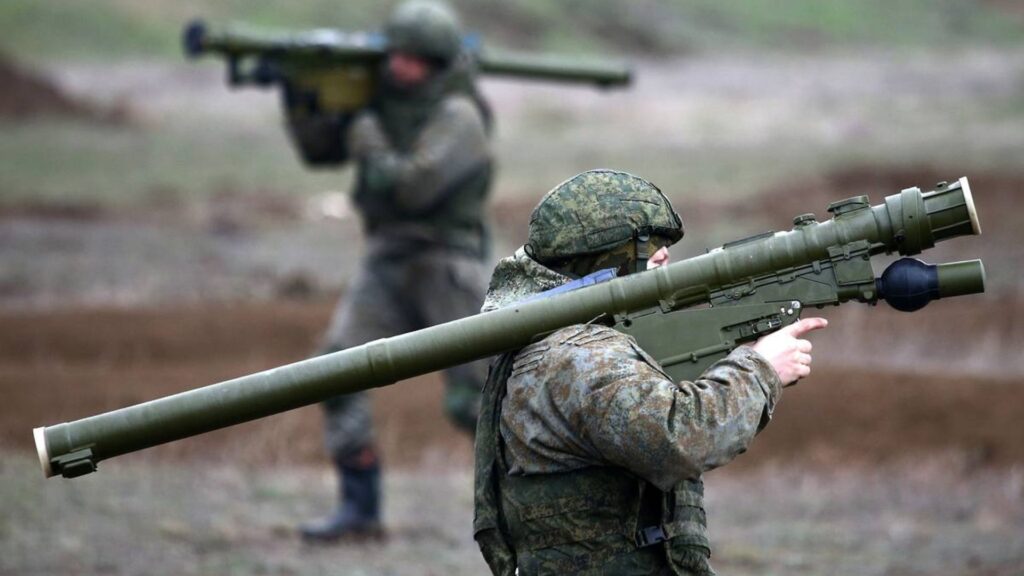
On May 27, 2026, Russia and the Taliban-led government in Afghanistan signed a military-technical cooperation agreement at a security forum outside Moscow, following talks between Russian Security Council Secretary Sergei Shoigu and the Afghan defence minister, Mullah Mohammad Yaqoob Mujahid. The specific terms were not made public, but the framework reportedly covers air defence equipment, including man-portable air-defence systems (MANPADS), along with ground hardware, training and maintenance support.
Within days, Yaqoob gave the agreement a harder edge, suggesting that Afghanistan was now working to ensure Pakistan could not strike Afghan territory from the air again. Coming after a year of Pakistani air and drone strikes into Afghanistan’s border provinces, the remark was widely read in Islamabad as a warning.
Get the Full Picture on Pakistan’s Defence and National Security
Get dedicated Pakistani defence news, force analysis, procurement tracking, and national security policy insight, backed by more than a decade of documented reporting and depth general news coverage cannot match.
Yet the most consequential dimension of the deal may not be the threat it poses to Pakistan Air Force (PAF) jets at all. Two risks loom larger: the proliferation of MANPADS across an already volatile region, and what the agreement reveals about a decade of Pakistani policy towards Moscow.


What the Agreement Covers
The deal is a military-technical cooperation framework rather than a formal alliance. Agreements of this kind typically cover arms transfers, manufacturing licences, technology exchange and joint development — broad enabling documents, not fixed delivery schedules. Russian officials have signalled their intent clearly enough: Shoigu has spoken of moving towards a “full-fledged partnership” with Kabul, and Russia was the first state to formally recognize the Taliban government after the 2021 withdrawal.
Several analysts, however, have cautioned against overreading the document. One assessment described it as a largely symbolic move to formalize an existing relationship rather than the start of a deep partnership, with regional specialists playing down the prospect of a full military alliance or mutual-defence pact emerging from it. The likeliest near-term content appears modest: refurbishment of Soviet-era stocks, helicopter and aircraft maintenance, and a batch of MANPADS. Yaqoob himself has sought to temper speculation about advanced systems such as the S-300 or S-400, stressing the maintenance and repair elements.
Why the Timing Points to Pakistan
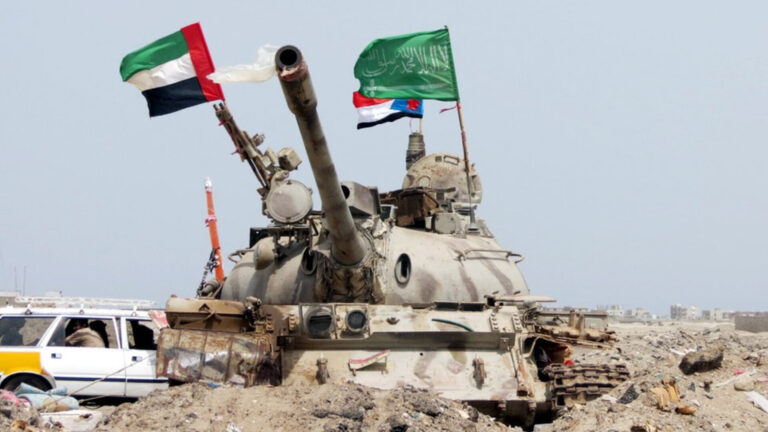
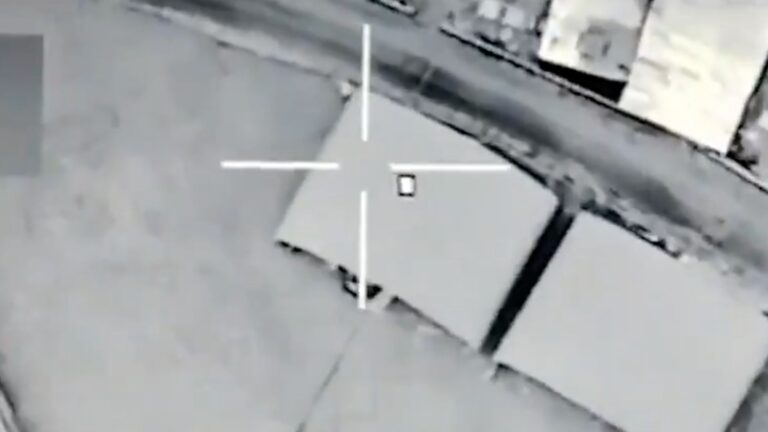
The context matters more than the paperwork. Over the past year, the PAF has conducted repeated air and drone strikes on militant targets inside Afghanistan’s border provinces, with Kabul unable to mount a meaningful response. Despite inheriting billions of dollars of equipment from the former Afghan National Army, the Taliban administration has no functioning air defence doctrine to speak of, and by its own account the turn to Russian systems is a direct response to Pakistani air superiority.
That framing helps explain Yaqoob’s claim that the deal will deter future strikes. The statement reads, above all, as a message to a domestic audience — a signal that the leadership is acting on a visible humiliation, whether or not the hardware can ultimately deliver on the promise.
The Pakistan Air Force is Not the Core Concern
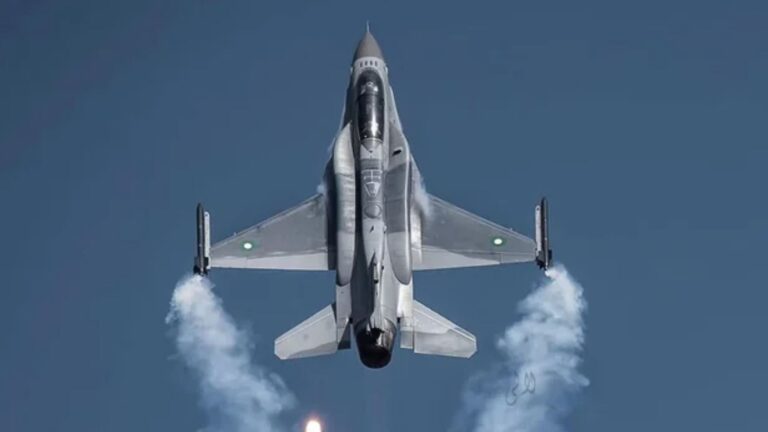
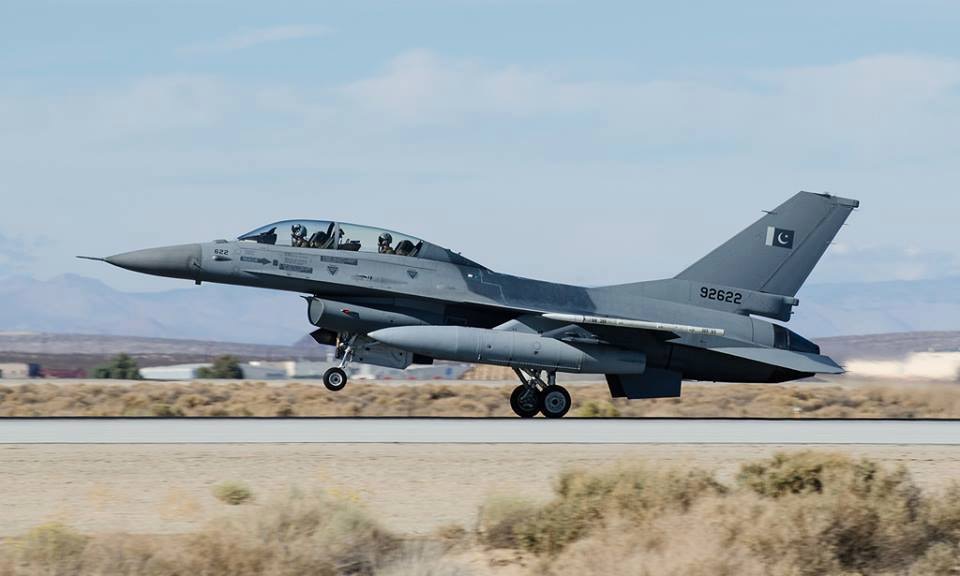
On a technical reading, the threat to PAF combat aircraft is limited. The air force has operated in air defence environments far denser and more sophisticated than anything the Taliban could assemble from shoulder-fired missiles and a handful of short-range launchers. During the May 2025 confrontation with India, Pakistan claimed to have struck Indian air defence assets — including a reported engagement against an S-400 battery — while operating against one of the most layered ground-based networks in the region. A MANPADS-centric Taliban inventory does not approach that level of complexity.
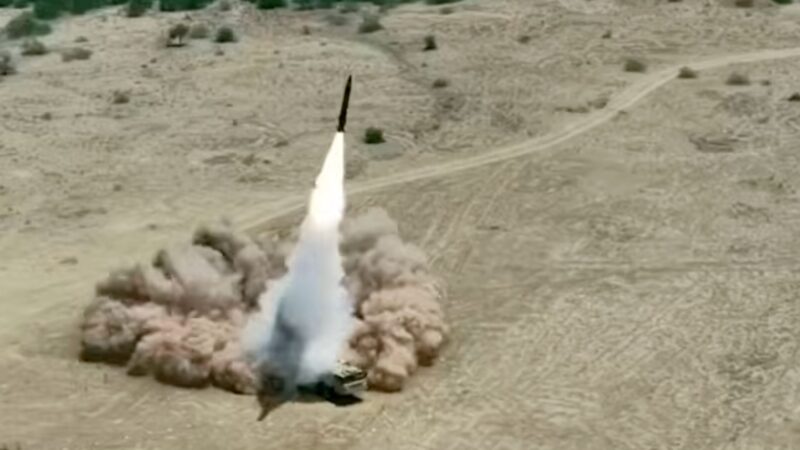
Were Kabul to field a more capable system over time, Pakistan retains suppression and destruction of enemy air defences (SEAD/DEAD) procedures, and could pair them with land-based strikes through its Army Rocket Force Command, dismantling fixed radar and launcher sites before committing manned aircraft. The conventional military problem, in short, is containable. The harder problem lies in what becomes of the missiles once they are inside Afghanistan.
A Proliferation Risk with a Long Precedent
The deeper concern is proliferation — and the precedent is one Pakistan helped create. During Operation Cyclone in the 1980s, the CIA supplied roughly 1,000 FIM-92 Stinger MANPADS to the Afghan mujahideen. Recovering them afterwards proved nearly impossible: a CIA buyback program was paying $100,000 or more per launcher by the mid-1990s and still left an estimated 600 of around 2,000 systems unaccounted for. Many were never confined to Afghanistan, later surfacing on black markets from Iran and the Gulf to North Korea and Somalia.
The principal danger from MANPADS is not to fast jets, which can fly above their reach, but to slow, low-flying traffic — above all civil airliners on approach and departure. The risk is well documented. In November 2003, a DHL Airbus A300 freighter was struck by an SA-7-type missile while climbing out of Baghdad, and in 2002 al-Qaeda attempted to bring down an Israeli airliner leaving Mombasa. It was this threat that drove the CIA’s costly buyback effort and, later, a G-8 nonproliferation push. For Pakistan, the exposure is direct: a single smuggled launcher could threaten an airliner on approach to Karachi, Gwadar or Islamabad.
What makes proliferation so difficult to contain is the structure of the networks involved. Insurgent and militant groups lack the custody controls of a conventional army and operate through cross-border personal ties, making it plausible for a single commander with access to a storage site to sell a launcher quietly. Fresh MANPADS entering Afghan stocks could filter to the Tehreek-e-Taliban Pakistan (TTP) or to Baloch separatist groups, or drift further afield into Kashmir. As the CIA found, tracking a shoulder-fired missile is a far harder task than tracking a radar or a launcher vehicle.
Why a Large System Would Pose a Smaller Threat
Much of the public reaction has focused on whether the Taliban might acquire an S-300 or S-400. A large strategic system would, paradoxically, be the lesser worry. Medium- and long-range air defences are visible, detectable and trackable: they emit, they are physically large, and they can be located and destroyed by a capable air force. MANPADS are the opposite in every respect — small, passive until the moment of launch, easily concealed and moved — which is precisely what makes a proliferation network built around them so hard to dismantle. The inversion is straightforward: the more headline-grabbing the system, the more manageable the threat; the more mundane the missile, the more dangerous its spread.
The Russia miscalculation, and an underused Ukraine
The agreement has also revived scrutiny of Pakistan’s longer-term policy towards Moscow. Russia has, for decades, been a principal arms supplier to India, including collaboration on advanced strike systems such as the BrahMos supersonic cruise missile. Pakistani officials have long understood that India pays Moscow in hard currency, and the commercial logic of that relationship is not in dispute. The failure lies with Islamabad’s own response: having recognized that Moscow would consistently favour Delhi, the logical course was to counteract Russian interests where it could — and the clearest avenue was Ukraine.
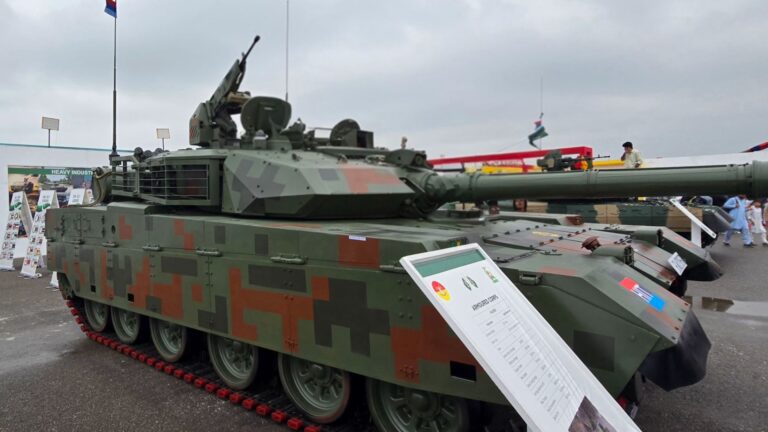
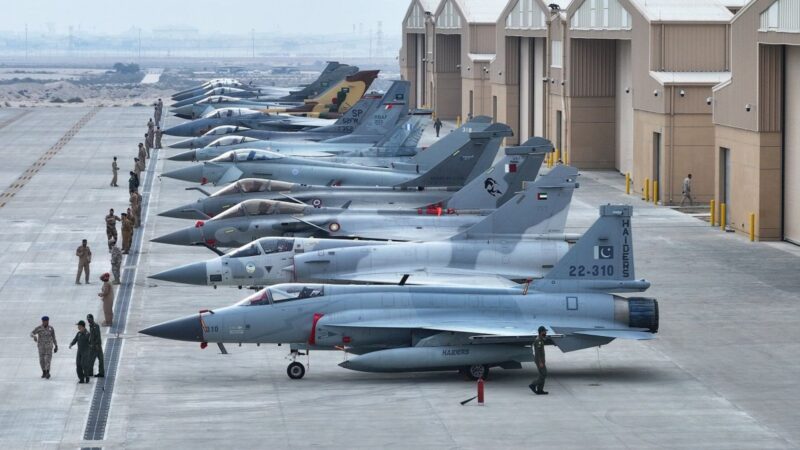
The case is not abstract. Ukraine has been among Pakistan’s most consistent defence partners for nearly three decades. Kyiv supplied around 320 T-80UD main battle tanks in the late 1990s and has overhauled them since, including an $85.6 million contract signed at IDEX 2021. Ukrainian industry underpins the Al-Khalid tank through its 6TD engine family, and Ukrainian firms won a contract to overhaul Pakistan’s Ilyushin Il-76 transport and tanker fleet. Crucially for the air force, Ukraine retains deep expertise on the RD-93 — the engine family that powers the JF-17 — and has continued to support Pakistani aircraft programs even while fighting its own war against Russia. Closer alignment with Kyiv would also have carried goodwill in Europe, home to a large Pakistani diaspora, substantial remittances and a major trading relationship.
Instead, for much of the past decade, Islamabad held to a non-aligned posture between Moscow and Kyiv. The Afghan air defence deal can be read as part of the cost of that ambiguity. Russia is now arming Pakistan’s principal adversary and underwriting a Taliban capability that, through proliferation, could rebound onto Pakistani territory — and any Russian systems delivered would, in many cases, be operated and crewed by Russian contractors, given the Taliban’s limited technical capacity to run anything beyond MANPADS.
What Comes Next
The lesson is not that Pakistan should exchange one patron for another, but that it needs to pursue its own interests rather than attach itself to a bloc — whether an Eastern grouping of Russia, China and Iran, or a Western alliance. A credible posture requires enforceable red lines and a cost attached to actions that cross them; a state that absorbs strikes on its territory, or tolerates partners hosting hostile proxies, without response invites more of both.
In practice, that points to treating Ukraine as the reliable partner it has been, drawing on Kyiv’s engine, propulsion and air defence expertise, and using the leverage Pakistan does hold — its geography, its manpower and its willingness to underwrite Gulf security — to extract tangible returns rather than warm words. The Afghan air defence file is likely to become a recurring test of whether Islamabad adjusts. Ultimately, the hardware Russia sends to Kabul may matter less than whether Pakistan begins to base its foreign policy on demonstrable benefit rather than alignment alone.
Quwa Plus · In-Depth Pakistan Coverage
Understand Pakistan’s Defence and National Security in Unmatched Depth
Understand what Pakistan is acquiring, how its armed forces are evolving, and where national security policy is heading through dedicated defence news, force analysis, procurement tracking, Pulse Check briefings, and more than a decade of documented reporting.
Featured & Trusted By