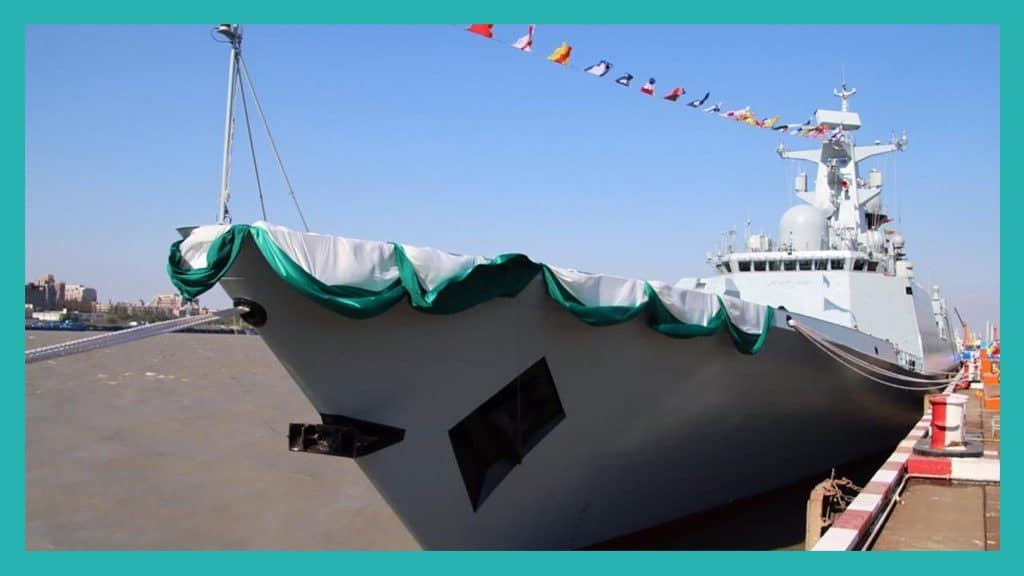
On November 08, the Pakistan Navy (PN) commissioned its first Type-054A/P frigate. Designated as the PNS Tughril, the ship is the first of four frigates on order from China.
Pakistan ordered the Type 054A/P from China Shipbuilding Trading Co. Ltd (CSTC) in two batches in 2017 and 2018. Currently, the second Tughril-class frigate is undergoing sea trials, while the Hudong-Zhonghua Shipbuilding Group is building the third and fourth ships.
Alongside the Babur-class corvette and Jinnah-class frigate, the Tughril-class frigate is a major piece of the PN’s surface fleet modernization program. Of the three new surface combatants, the Tughril-class would be the largest ship; it has a displacement of 4,000 tons and a length of 134 metres.
Compared to the Type 054A frigates in service with the People’s Liberation Army Navy (PLAN), the Tughril-class has a number of key differences in its sensor-suite and armament package.
For example, the Tughril-class frigate is equipped with the SR2410C 3D electronically scanned array radar, which is similar in design and concept to the Thales SMART-S Mk2. In contrast, the PLAN Type 054As are equipped with the Type 382 radar. Likewise, the armament set-up of the Tughril-class draws on a selection of export-oriented versions of the PLAN’s weapons, such as the LY-80N surface-to-air missile (SAM), which is the export variant of the HQ-16, for example.
One noticeable difference change in the Tughril-class frigate is its surface-to-surface missile (SSM) system. It is unclear exactly what this SSM system is, but analysts observed that it could be either the CM-401 anti-ship ballistic missile (ASBM) or CM-302 supersonic anti-ship cruising missile (ASCM). The PN said that it is working on a hypersonic ASBM under the designation, “P282.” However, the PN did not officially confirm if it would equip the Tughril-class with the P282 ASBM.
However, the Tughril-class is certainly not fitted with a standard subsonic ASCM like the C-802. Thus, the Tughril-class does signal a sea change in the PN’s approach to anti-ship warfare (AShW). Realizing that the task of defending against the Indian Navy’s (IN) supersonic-cruising BrahMos is not currently feasible, the PN opted to emulate the capability with supersonic and hypersonic solutions of its own.
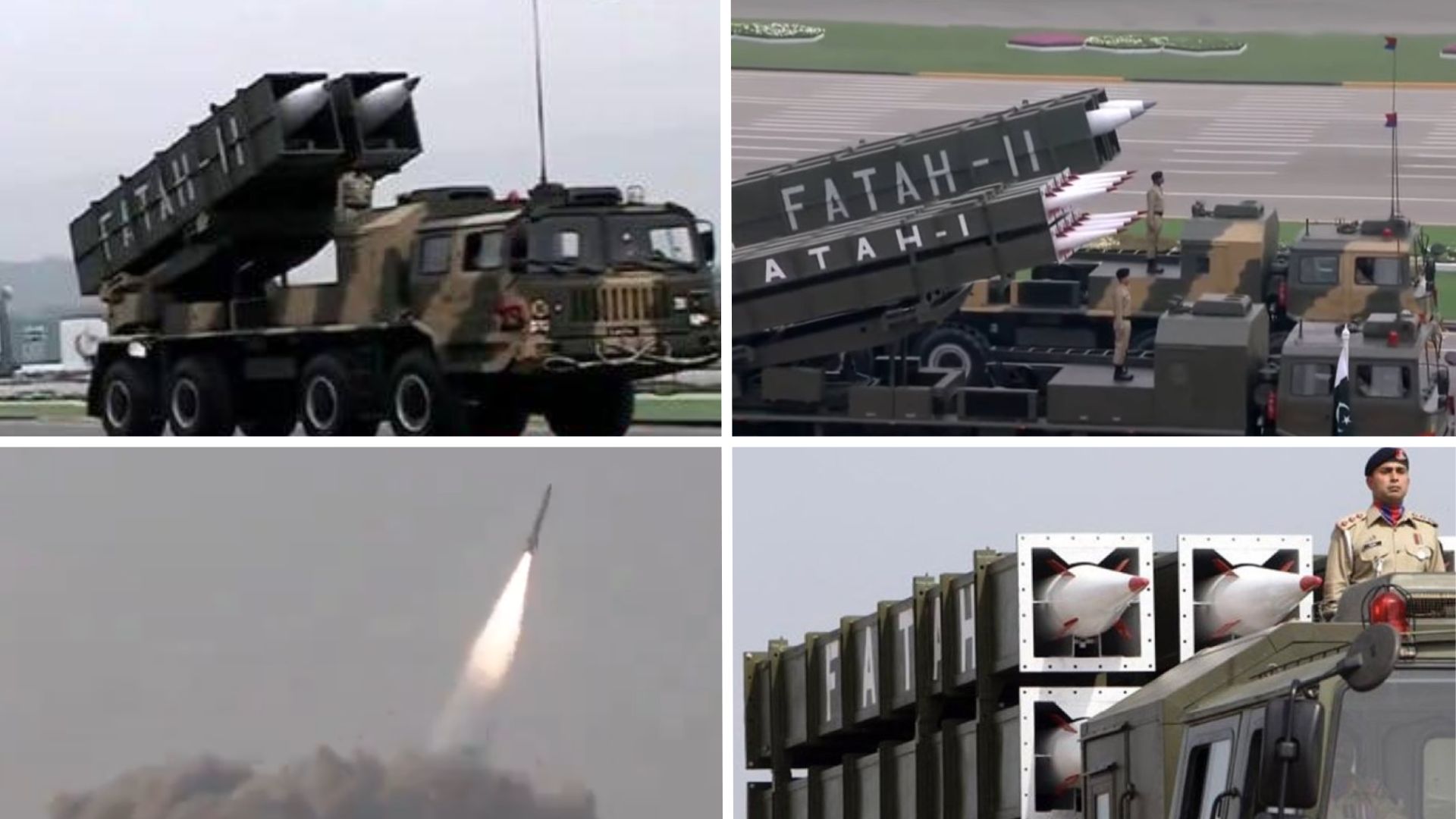
Based on the information available, it seems that the PN is working towards distinct capabilities. The P282 ASBM forms up the ‘hypersonic’ capability, while there’s a yet-to-be-announced supersonic missile under development since 2017-2018. The latter may be a supersonic-cruising ASCM similar to India’s BrahMos.
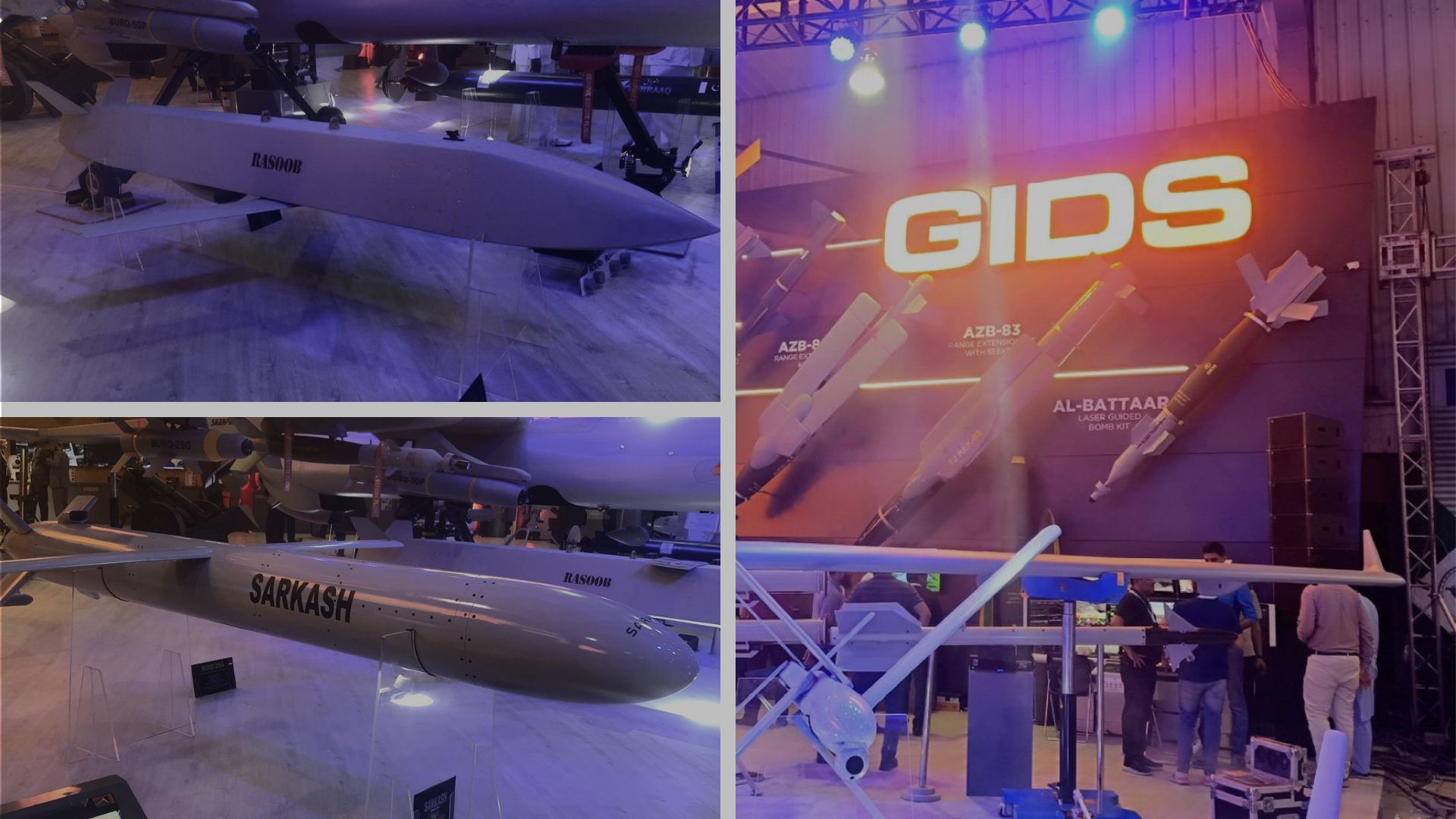
Combined with the subsonic-cruising, long-range Harbah, the PN is working towards a varied inventory of AShW solutions. Based on its known procurement roadmap, the PN will have hypersonic, supersonic, and subsonic attack capabilities. Moreover, the PN will likely configure these missiles to work from numerous platform types, e.g., large frigates to corvettes to small fast-attack crafts (FAC).
Quwa Plus
Go Beyond the Headlines on Pakistan’s Defence and Security.
Quwa Plus gives you deeper reporting, briefings, and analysis on Pakistan’s defence programs, foreign policy, national security, and regional strategy. Follow the developments that matter to professionals, analysts, and serious readers tracking Pakistan’s security landscape.
Join ($29.99/Year) Already a subscriber?Sign in