
The Pakistan Navy (PN) is building an autonomous underwater vehicle (AUV) capability as part of a broader push toward unmanned maritime systems. The program is in its early stages compared to the PN’s manned submarine fleet, but the evidence base is growing: Pakistani companies have demonstrated AUV prototypes at defence exhibitions, the PN leadership has publicly committed to pursuing uncrewed systems across surface, sub-surface, and airborne domains, and foreign defence suppliers are actively pitching AUV and unmanned underwater vehicle (UUV) solutions to the PN.
As Quwa’s exclusive reporting on how local startups are arming the Pakistan Navy documented in January 2026, the PN is working with both private companies and state-owned enterprises (SOEs) to design and deploy a range of unmanned platforms. Sources told Quwa that the PN intends to “greatly expand its surveillance coverage via autonomous USV, autonomous underwater vehicle (AUV), and unmanned aerial systems (UAS)” and deploy “heterogeneous swarming capabilities” through these programs. The AUV track is one component of that wider architecture.
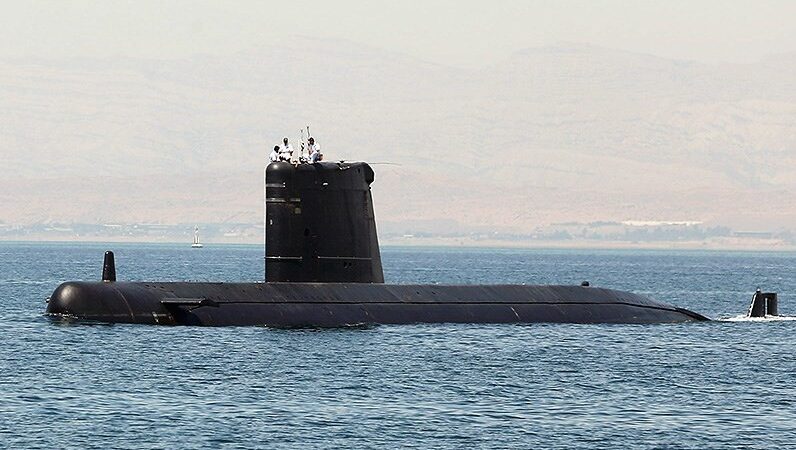
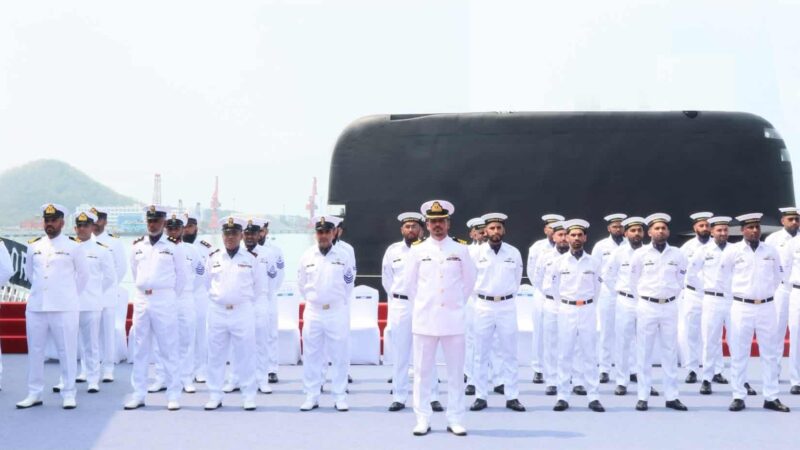
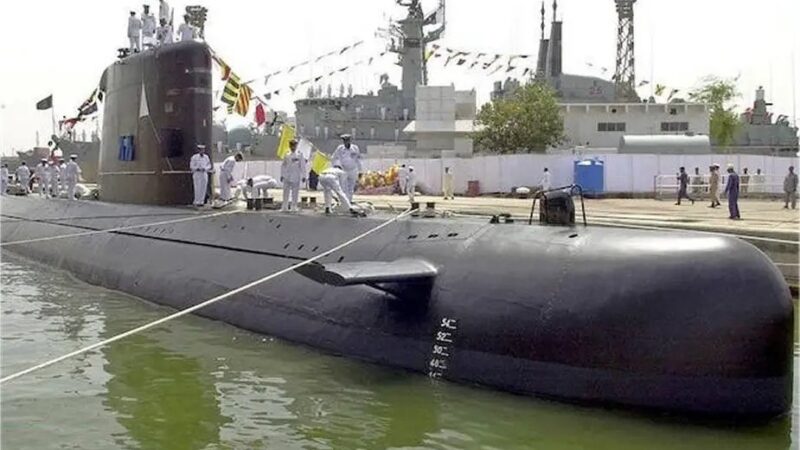
The AUV program is part of the Pakistan Navy’s broader submarine fleet.
The Israr AUV
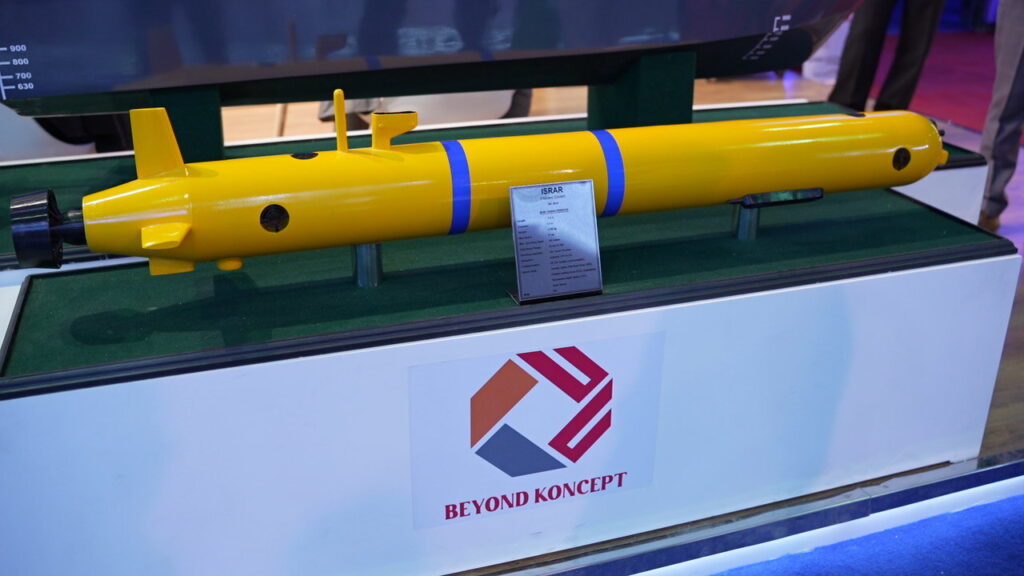
The most publicly documented Pakistani AUV is the Israr, developed by Beyond Koncept and unveiled at the 2025 Pakistan International Maritime Expo and Conference (PIMEC 2025). As Quwa reported in its coverage of PIMEC 2025, Beyond Koncept is a commercial arm of a bureau within the National Engineering and Scientific Commission (NESCOM) — Pakistan’s leading state-owned defence research, development, and production entity.
The Israr’s published specifications, per Quwa’s PIMEC 2025 reporting, place it in the small coastal AUV category. It measures 3.0 m in length and 0.3 m in diameter, reaches speeds of up to 7 knots, and dives to a maximum depth of 300 m. Endurance is four hours on rechargeable lithium-ion batteries. Navigation relies on an autopilot using GPS and a Doppler Velocity Log (DVL).
The sensor payload includes a camera with lights, side-scanning and forward-looking sonars, a CTD (conductivity, temperature, depth) probe, a water ingress detector, and TPM (temperature-humidity-pressure) sensors. Beyond Koncept lists the Israr’s roles as intelligence, surveillance, and reconnaissance (ISR), underwater exploration, harbour and channel monitoring, ocean-floor mapping, bathymetric survey, and seawater profiling.
As Quwa’s analysis noted, this configuration is comparable to small Western AUVs such as Hydroid’s REMUS 100 and L3Harris’s Iver3 — platforms positioned for coastal ISR and hydrography work. The Israr is not a combat system; it does not carry weapons or deploy countermeasures. Its value lies in data collection: getting sent on pre-programmed missions, running autonomously, returning with sonar imagery and environmental data, and feeding that information into the PN’s operational picture.
However, the Israr’s side-scanning sonar also gives it a mine countermeasures (MCM) application. As Quwa assessed, the sonar could detect mine-like objects on the seabed and mark them as suspicious — enabling follow-on inspection by another system (potentially a second AUV or a dedicated mine-disposal vehicle). This is consistent with how Western navies employ small AUVs in the MCM role: the AUV conducts the initial survey; a separate asset handles classification and neutralization.
Beyond the ISR and MCM roles, Quwa’s reporting identified a harbour security application. AUVs like the Israr could patrol around piers, submarine pens, and undersea cables or pipelines — looking for unusual objects or tampering. Being uncrewed and autonomous, the Israr could be deployed for these missions far more frequently than crewed assets, giving the PN higher-fidelity, more up-to-date awareness of its sub-surface infrastructure.
The Broader Unmanned Maritime Ecosystem
The Israr does not exist in isolation. Quwa’s PIMEC 2025 reporting documented at least four different unmanned platforms in development specifically for maritime purposes — three combat-capable unmanned surface vessels (USVs) and the Israr AUV. These include:
The Beyond Koncept “Muhassir” USV — an ISR-focused surface platform from the same NESCOM bureau that produces the Israr. The Stingray Technologies USV — an intercept-capable armed surface vessel developed by another NESCOM entity. And the Woot-Tech USV — a joint program between Woot-Tech and the Naval Research & Development Institute (NRDI) Platform Design Wing (PDW), the PN’s in-house design bureau. As Quwa reported exclusively, the Woot-Tech USV was developed in response to an urgent PN requirement and was integrated and tested within two months.
In July 2025, the PN leadership stated publicly — via the DGPR (Navy) — that it will pursue uncrewed systems for its surface, sub-surface, and airborne requirements. As Quwa noted in its PIMEC analysis, the fact that four distinct unmanned platforms are in development for the maritime domain — from four different entities — is proof that Naval Headquarters (NHQ) is serious about this trajectory.
The airborne layer is also relevant to the AUV mission. GIDS is developing a maritime variant of the forthcoming Shahpar-III UAS, unveiled at PIMEC 2025 with a redesigned front fuselage, a miniature synthetic aperture radar (SAR), an ESM suite with ELINT capability, sonobuoy pods, and lightweight ASW torpedoes. The Shahpar-III maritime variant could work in concert with AUVs: the UAS provides wide-area surveillance and sonobuoy deployment from the air, while the AUV conducts sub-surface survey and mapping in specific areas of interest. This multi-domain approach — air, surface, and sub-surface unmanned systems operating in concert — is the operational concept the PN appears to be building toward.
Foreign Solutions and Partnerships
The PN is not developing AUV capability in a vacuum. Foreign suppliers are actively promoting sub-surface unmanned systems.
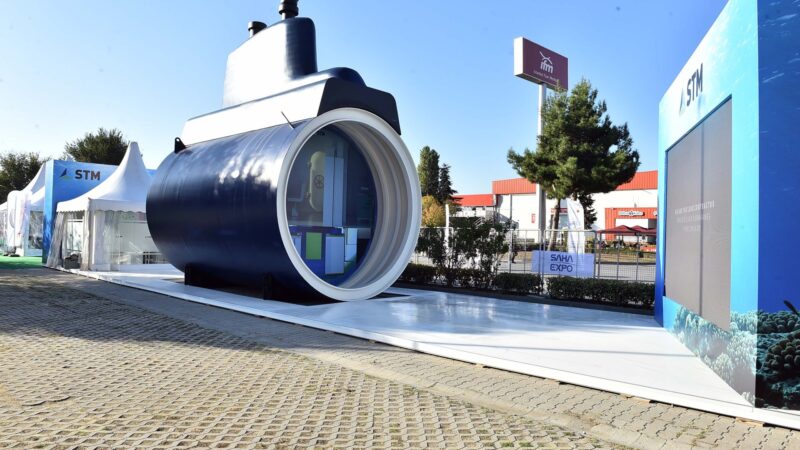
Türkiye’s STM has developed the NETA autonomous underwater vehicle — an indigenous UUV showcased at SAHA EXPO 2024 alongside the STM500 submarine. Given STM’s deep existing relationship with the PN — spanning the Agosta 90B mid-life upgrade, the Babur-class corvettes, and the Jinnah-class frigate — one can see the NETA or its successors being offered as part of a broader STM sub-surface package. As Quwa’s SAHA 2026 coverage noted, STM exhibited the STM500 and STM NETA together at DSA 2026 — positioning them as complementary solutions.
Turkey’s Dearsan has also been promoting sub-surface solutions to the PN, as Quwa’s naval drone reporting noted.
Germany’s Atlas Elektronik — which already supplies the ISUS-100 sonar and DM2A4 torpedo to the PN via the Agosta 90B MLU — offers the SeaCat family of UUVs, designed for MCM and ISR. Quwa’s coverage of Germany’s BlueWhale autonomous USV highlighted the broader German push into autonomous naval systems.
In addition, Damen, Fincantieri, and Turkey’s ASFAT A.Ş. are engaged with the PN through the Pakistan Maritime Science and Technology Park (PMSTP) — a facility designed to support naval technology development. As Quwa noted in its PIMEC 2025 analysis, foreign assistance could enable Pakistan to develop larger AUV and extra-large UUV (XLUUV) designs beyond the Israr’s coastal survey scope.
Operational Concepts for the Pakistan Navy
The PN’s littoral operating environment — the Arabian Sea approaches to Karachi and Gwadar, the Makran coast, and the shallow waters of the northern Arabian Sea — is well suited to AUV employment. Warm, shallow waters with high ambient noise favour small, quiet unmanned platforms for certain mission sets. Quwa identified four primary operational concepts for AUVs in the PN’s context:
Mine countermeasures — AUVs can conduct route survey, mine detection, and minefield mapping in the approaches to Karachi and Gwadar. The PN’s surface MCM capability is limited, and AUVs offer a way to extend underwater survey coverage without exposing crewed platforms to mine threats.
ISR and seabed mapping — pre-conflict seabed survey of the Makran coast and approaches to naval bases. This data is essential for submarine operations (the Hangor-class needs accurate bathymetric data for littoral navigation) and for detecting adversary activity near critical infrastructure.
Harbour and infrastructure security — autonomous patrol of piers, submarine pens, undersea cables, and the Gwadar port complex. The PN’s growing submarine fleet increases the number of high-value assets that need protection in port.
Manned-unmanned teaming — deploying AUVs from Hangor-class submarines or from the planned SWATS to extend the manned platform’s sensor reach without exposing it to detection. This is the most ambitious application and the one that would require the largest, most capable AUVs — potentially XLUUV-class platforms that could be deployed from torpedo tubes.
As Quwa’s PIMEC 2025 analysis concluded, the PN’s current AUV track is focused on coastal ISR and MCM. However, Quwa is “confident that the PN will look to developing or securing larger AUVs, potentially Extra Large UUV (XLUUV) designs or AUVs with greater pressure resistance” — systems that could extend the capacity of crewed submarines by providing off-board sensor options that dive deeper and operate in contested areas.
Outlook
The AUV program is at an early stage. The Israr is a prototype-class platform comparable in capability to entry-level Western AUVs. The PN has not announced a production contract, a fleet requirement, or a specific operational deployment timeline.
However, the trajectory is clear. The PN leadership has publicly committed to unmanned sub-surface systems. Multiple Pakistani entities — Beyond Koncept, Woot-Tech, Stingray Technologies, NRDI PDW — are developing maritime unmanned platforms with PN sponsorship. And foreign suppliers with existing PN relationships — STM, Atlas Elektronik, Dearsan — are positioning AUV and UUV products for the Pakistani market.
The critical path runs through industrial capacity. Whether Pakistan’s defence electronics sector can produce a reliable, militarily useful AUV at scale — or whether the PN will procure from external suppliers — remains an open question. The most likely near-term outcome is a hybrid: an indigenous small AUV (based on the Israr) for coastal ISR and MCM, supplemented by a foreign-sourced larger AUV or XLUUV for submarine-deployed operations, potentially from STM or a Chinese partner.
Learn More
How Local Startups Are Quietly Arming the Pakistan Navy — Quwa’s exclusive reporting on the Woot-Tech USV, Sysverve Aerospace Mudamir-LR, and the PN’s broader unmanned platform strategy.
Pakistan’s New Naval Drones: Do They Signal a Shift? — PIMEC 2025 coverage including Israr AUV specifications, Beyond Koncept, Stingray Technologies, and the maritime Shahpar-III.
SAHA 2026: Loitering Munitions, Naval Autonomy, and Exports — STM’s NETA UUV and STM500 exhibited together as complementary sub-surface solutions.
Germany’s AI BlueWhale Is Hunting Submarines Without a Crew — The global context for autonomous ASW platforms.
Extending Deterrence: How the Hangor-Class Reshapes Pakistan’s Maritime A2/AD Posture — The fleet architecture that AUVs would complement through manned-unmanned teaming.
Note: Quwa will update this page as the PN’s AUV program progresses.