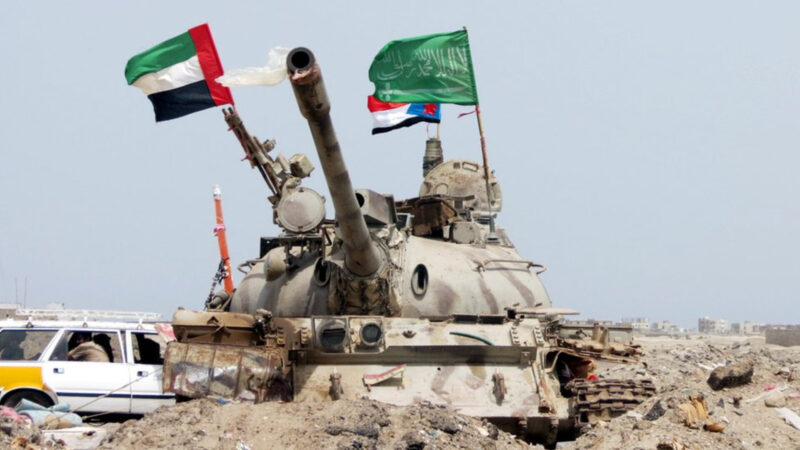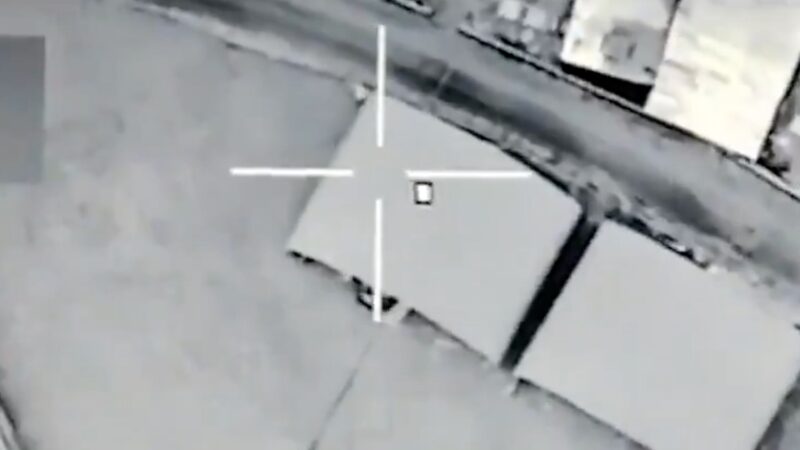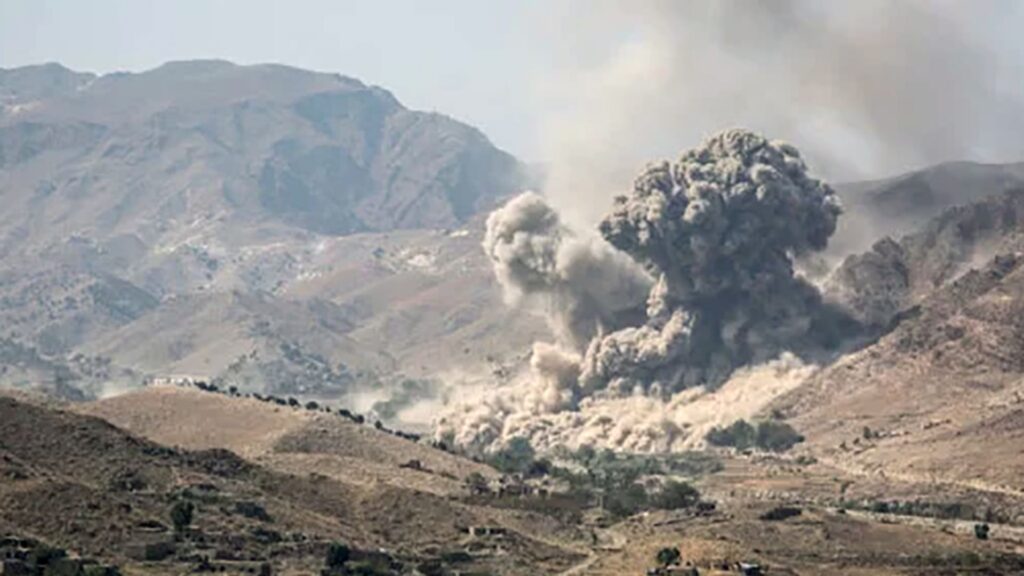
Pakistan’s military said it carried out a ground operation and cross-border strikes along the Afghanistan frontier on the night of 28/29 June, killing 29 militants in response to a series of attacks across the country. Information Minister Attaullah Tarar announced the operation in a post on X on Sunday.
The action came in two parts. Security forces first ran an intelligence-based ground operation against a group of fighters near the border in Bajaur, in Khyber Pakhtunkhwa, where a “high-value” commander named Khan Farosh was killed along with three others.
Get the Full Picture on Pakistan’s Defence and National Security
Get dedicated Pakistani defence news, force analysis, procurement tracking, and national security policy insight, backed by more than a decade of documented reporting and depth general news coverage cannot match.
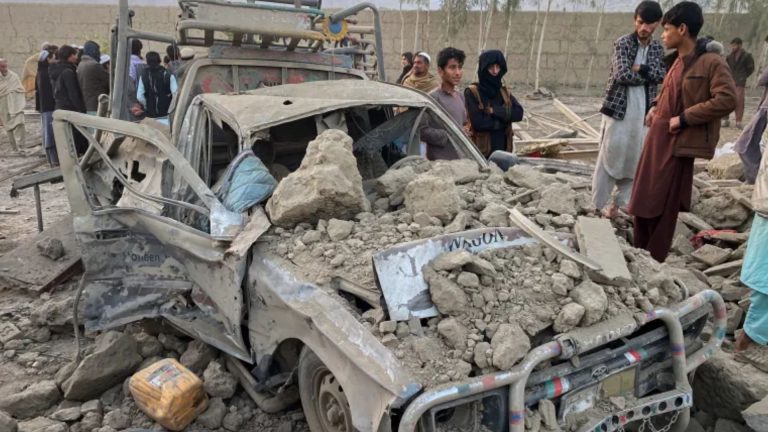
Tarar then said precision strikes hit three targets inside Afghanistan. Three sites in Paktia, Paktika and Kunar provinces were destroyed and 25 fighters killed, with weapons and ammunition stored at the hideouts destroyed alongside them.
Islamabad named the targets directly. The strikes hit camps belonging to Jamaat-ul-Ahrar and Tehrik-i-Taliban Pakistan (TTP).
Tarar framed the operation as defensive. Pakistan “shall not compromise on the safety and security of our citizens, which remains our top priority,” he said, while stating that the country had always sought stability in the region.
The trigger was an attack in Karachi the night before. Militants armed with guns and explosives struck the regional headquarters of the paramilitary Rangers on Saturday night, killing three soldiers, while security forces killed three attackers and captured a fourth, wounded, whom the military identified as an Afghan national.
Jamaat-ul-Ahrar, a breakaway faction of the Pakistani Taliban, claimed the Karachi attack in a statement on Saturday night, and the Inter-Services Public Relations (ISPR), the military’s media wing, said it would carry out “retribution operations” against those responsible.
Pakistan did not formally declare a link between the two events. The government drew no direct operational line, though the cross-border action followed the Karachi attack within a day.
The casualty figures remain Pakistan’s account alone. No independent verification of the numbers or the identities of those killed was available when the strikes were reported.
The operation broke roughly three weeks of relative calm. It was followed by less than a month, the 10 June strikes on Khost, Kunar and Paktika, after which Pakistan claimed 26 militants killed while Kabul reported 13 civilian deaths, most of them children.
Both rounds sit inside a war that opened in late February. Islamabad declared “open war” after Pakistani airstrikes on eastern Afghanistan drew a Taliban retaliation, and its aircraft bombed Kabul and Kandahar, with the United Nations reporting at least 372 Afghan civilians killed and 397 wounded in the first three months of 2026.
There was no immediate response from Kabul. Afghanistan had not commented on the statement, and international efforts to broker a lasting peace, including talks in Istanbul, had already broken down.
Pakistan’s position is consistent across each round. Islamabad accuses the Afghan Taliban government of sheltering the TTP and other militants who attack inside Pakistan, a charge Kabul denies. It has run similar operations along the border and inside Afghanistan since last year on the same stated grounds.
Related reading

Notes and Comments
This strike belongs to the longer reorientation that Quwa has been tracking on Pakistan’s western border. For several decades, the Pakistani defence establishment built its force posture, its major procurement, and its deterrence architecture around the eastern front with India, and it managed the western frontier as a secondary, episodic problem through paramilitary forces, tribal intermediaries, and periodic operations.
That assumption has been eroding for some time as the events of the past several months – e.g., the February escalation, Operation Ghazab Lil Haq, and now this latest round – suggest the erosion has become structural, with the western border settling into the position of a standing, primary defence requirement.
At the level of intent, this shift is already a deliberate choice. Pakistan’s current national-security leadership has, for more than a year, signalled a preference for treating the western border as an enduring requirement, a position Quwa examined in its Look West, Not East assessment in December and developed in the Look West shift analysis this spring.
A Tehreek-e-Taliban Pakistan (TTP) that has found sanctuary under a Taliban-governed Afghanistan, combined with a sustained rise in militant activity, has made the western frontier the more active of Pakistan’s two fronts, even as the eastern front remains the more consequential in conventional and nuclear terms.
Yet a leadership preference becomes policy only once the wider establishment shares it, and that is where escalation does the work. Each high-profile attack – e.g., the Karachi assault on the Rangers headquarters, the most recent – narrows the internal debate over how seriously the western front should be taken.
The Armed Conflict Location and Event Data (ACLED) project recorded 2,425 militant incidents across Pakistan in 2025, close to four times the 2022 figure. As these incidents accumulate, one can see the wider establishment, including the arms of the security apparatus that have long oriented on India, gravitating towards the leadership’s view that the western border now constitutes a standing strategic threat in its own right.
One could see Pakistan progressively weighting its force dispositions – e.g., forward basing, intelligence, surveillance and reconnaissance (ISR) coverage, and quick-reaction strike assets – towards the western sectors, a reorientation of posture that would precede any new acquisitions and rely, at least at first, on existing platforms redirected from other tasks.
A sustained campaign of the kind now taking shape generates demand for a fairly specific basket of capabilities: high-volume stand-off precision munitions, persistent ISR, affordable armed and loitering munitions for continuous coverage of dispersed border sectors, counter-unmanned aerial system (C-UAS) provisions for forward outposts, mine-resistant ambush-protected (MRAP) vehicles to protect troops from improvised explosive devices and ambushes along the border roads, and attack helicopters for responsive close support across the border’s mountainous sectors.
Such a campaign rewards volume, persistence, and affordability – e.g., as demonstrated by the JF-17 and its range-extension-kit pairing – and the requirement leans towards scalable systems that can be produced and sustained at quantity.
That said, the shift carries a real cost, and it is the same tension Quwa has flagged from the outset.
Resources committed to the western front – e.g., munitions expended, unmanned systems attrited, forward bases hardened – are resources withheld from eastern-front modernization, and Pakistan’s fiscal position does not permit both modernization tracks to run at full pace. This constraint creates a strong incentive towards dual-use platforms and munitions capable of serving both theatres, which is one reason the procurement signal points consistently towards affordable, scalable systems.
Ultimately, the chief constraint is time. Institutional consensus, force deployment, and procurement move in sequence, and each lags the one before it, so the hardware consequences of the western reorientation will trail the politics by years.
It remains to be seen whether the current escalation proves the inflection point that consolidates the establishment behind the western front, or simply another chapter in a long cycle of cross-border violence. On the evidence available so far, however, the direction of travel is consistent with the Look West reading, and each attack of the kind seen in Karachi appears to push the establishment a step further along it.
Quwa Plus · In-Depth Pakistan Coverage
Understand Pakistan’s Defence and National Security in Unmatched Depth
Understand what Pakistan is acquiring, how its armed forces are evolving, and where national security policy is heading through dedicated defence news, force analysis, procurement tracking, Pulse Check briefings, and more than a decade of documented reporting.
Featured & Trusted By