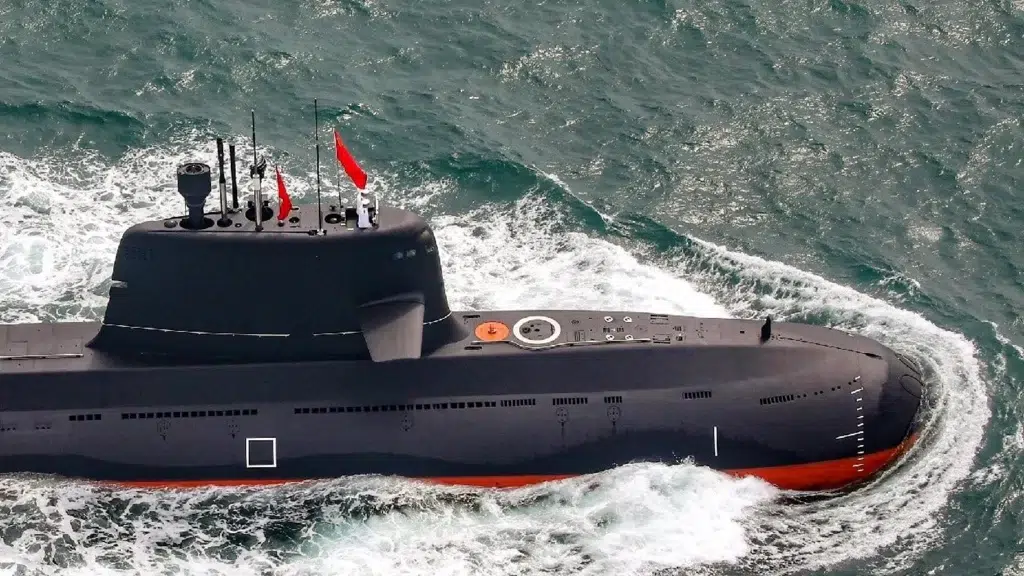
In April 2015, Pakistan’s Ministry of Defence Production (MoDP) approved the purchase of eight air-independent propulsion (AIP)-equipped submarines (SSP) from China. Under the contract, Pakistan would manufacture four of the boats at Karachi Shipyards and Engineering Works (KSEW), while the rest will be produced by China Shipbuilding Industry Corporation (CSIC).
Christened as the Hangor program (in honour of the original Hangor-class diesel electric submarine in service from 1967 to 2006), the first four boats were to be delivered by 2023, with the last four (from KSEW) due by 2028. However, the Pakistan Navy (PN) has not yet received the first of these boats, confirming a clear delay in the program, likely due to a combination of supplier-side issues and fiscal challenges with China and Pakistan, respectively.
Nevertheless, the Hangor program is progressing and based on current projections, will factor into the PN’s fleet by the late 2020s and early 2030s. Upon completion, the program will expand the PN’s sub-surface fleet to 11 AIP-equipped boats, joining the PN’s three upgraded Khalid-class (i.e., Agosta 90B) submarines. The PN is also seeking an unspecified number of shallow-water attack submarines (SWATS), potentially giving Pakistan one of the largest sub-surface fleets in Asia.
Hangor Submarine Design and Capabilities
The Hangor submarine is a variant of the China Shipbuilding & Offshore International Co. Ltd (CSOC) S26, a design based on the Yuan-class submarine, but developed for the export market. However, in comparison to the standard-grade S26, the Hangor carried several design changes, notably a heavier displacement (2,800 tons to the S26’s 2,550 tons) and slightly shorter hull (76 m to the S26’s 77.7 m). Otherwise, the Hangor was largely the same as the S26, especially in terms of its payload capacity of six torpedo tubes and Stirling-based AIP system.
Initially, the S26-series was apparently marketed with the German MTU 12V 396 SE84 diesel engine, but the German government withheld export licenses for the powerplant. Consequently, the PN had to pivot and procure the Chinese CHD-620 diesel engine in place of the MTU systems, hence causing a delay in the program. However, it is unclear if the entirety of the delays were due to the engine swap or, as plausibly, if Pakistan’s ongoing fiscal difficulties are also contributing to the friction.
It is not known if the Hangor submarine is using Chinese or – like the PN’s upgraded Agosta 90Bs – a mix of domestic, Turkish, and Western subsystems. Either scenario is plausible. For example, the PN may find that going all-in with a ‘stock’ Chinese configuration is easier to integrate, less costly to buy, and less prone to further delays. Alternatively, designing a subsystem build similar to the Agosta 90B could allow for greater standardization across the submarine fleet, which can streamline training.
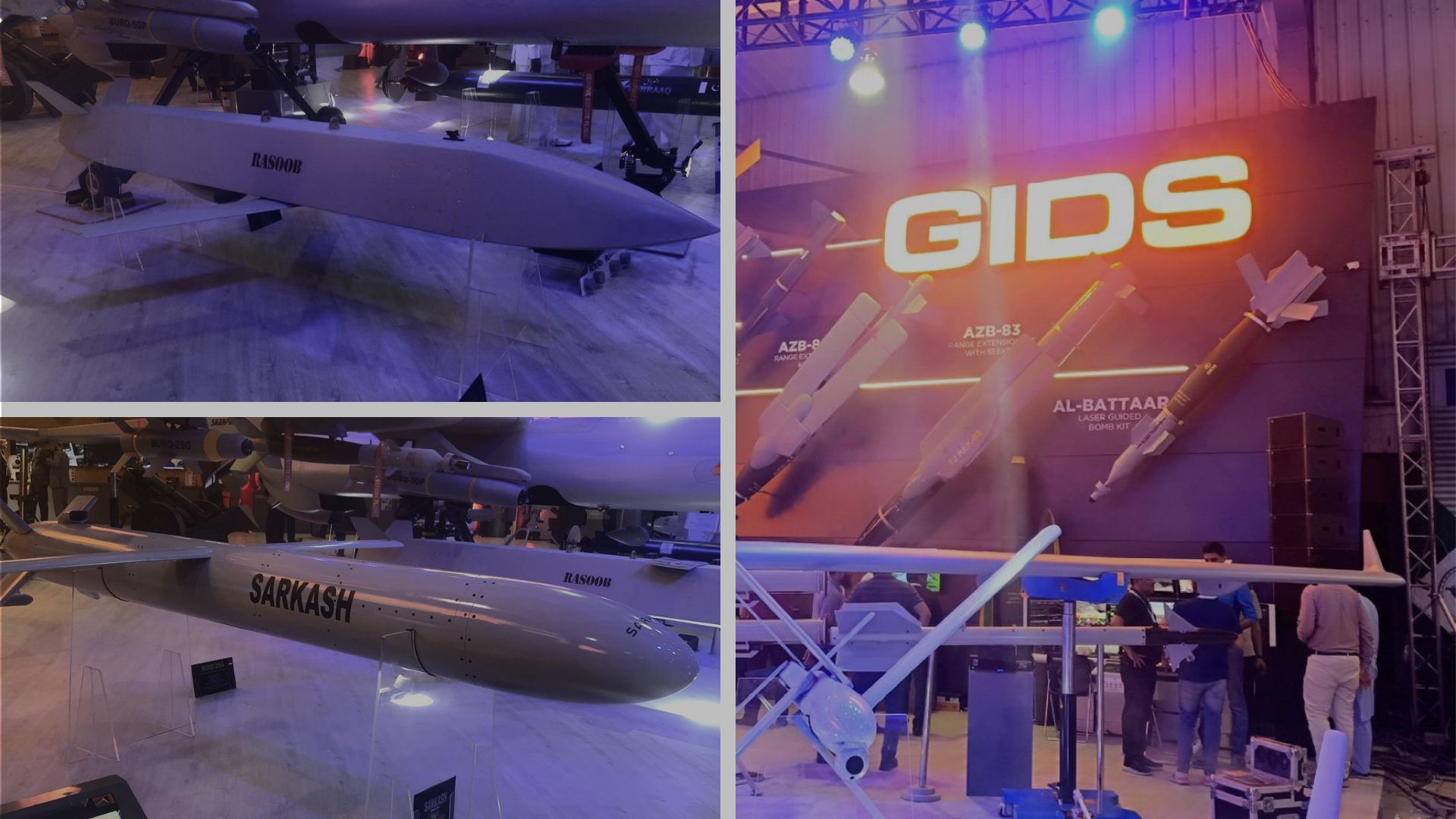
However, it should be noted that the PN is localizing subsystems for both its surface and sub-surface systems. According to Global Industrial and Defence Solutions’ (GIDS) product roadmap, Pakistan is developing an automated deployment and retrieval system (ADRS) and electronic support measures (ESM) system for submarines. Thus, one can expect the PN to configure these systems to the Hangor-class and, potentially, the new shallow-water attack submarine (SWATS).
From a weapons capability standpoint, the Hangor-class submarine will be equipped for anti-surface warfare (ASuW), anti-submarine warfare (ASW), and land attack cruise missile (LACM) deployment. The design is not equipped with vertical launch system (VLS) tubes for LACM deployment; hence, the entire weapons element will be deployed from the submarine’s six (likely 533 mm) torpedo tubes. It is unclear if there are any provisions for swimmer delivery vehicles (SDV) for special operations forces (SOF) missions. However, the PN could defer that requirement to the more specialized SWATS.
In terms of ASW, the PN could equip the Hangor with one of the DM2A4 or Yu-6. The DM2A4 offers a range of 50 km and top speed of 50 knots. Official specifications of the Yu-6 are not available, though it is likely comparable in range and maximum speed to the DM2A4.
In terms of anti-ship and land-attack missions, the PN could opt for a dual-role solution based on the technology of the Babur and Harbah-series of cruise missiles. In its effort to build a nuclear triad, the PN tested the Babur-3 submarine-launched cruise missile (SLCM) in 2017. The Babur-3 SLCM had a stated range of 450 km. The Harbah/NG surface-launched cruise missile likely has a range of at least 450 km, possibly longer. The PN could opt to deploy a single dual-role cruise missile from the Hangor for both anti-ship and long-range land-attack operations. This approach could offer a higher level of flexibility than allocating separate missiles for anti-ship and land-attack missions.
Don't Stop Here. Unlock the Rest of this Analysis Immediately
To read the rest of this deep dive -- including the honest assessments and comparative analyses that Quwa Plus members rely on -- you need access.