Quwa released the eleventh episode of Pulse Check on 20 August 2026, in which Bilal Khan and Aseem work through whether Pakistan and Ukraine have a workable basis for defence-industrial collaboration.
The conversation follows Quwa’s 13 August report that Kyiv-headquartered Fire Point is engaging Pakistani private companies for technology exchange and access to the Pakistani military market.
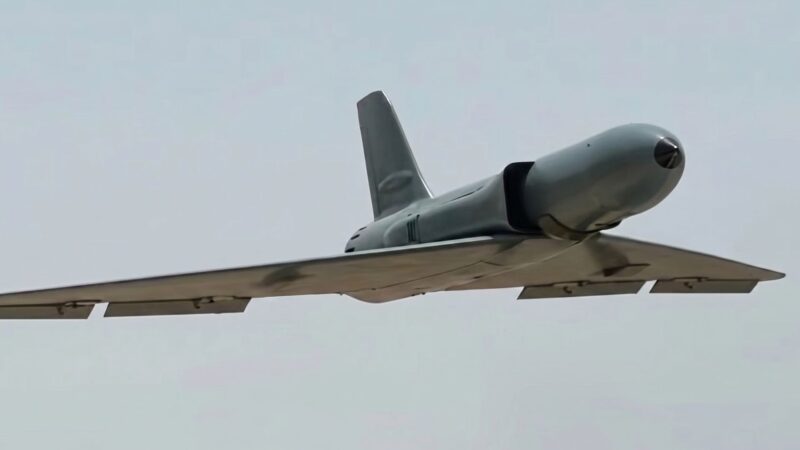
Fire Point was founded in 2022 and produces loitering munitions and guided missiles, and the two systems it is promoting in Pakistan are the FP-1 Deep Strike, with a stated range of 2,600 km, and the FP-2 Front Strike at up to 200 km.
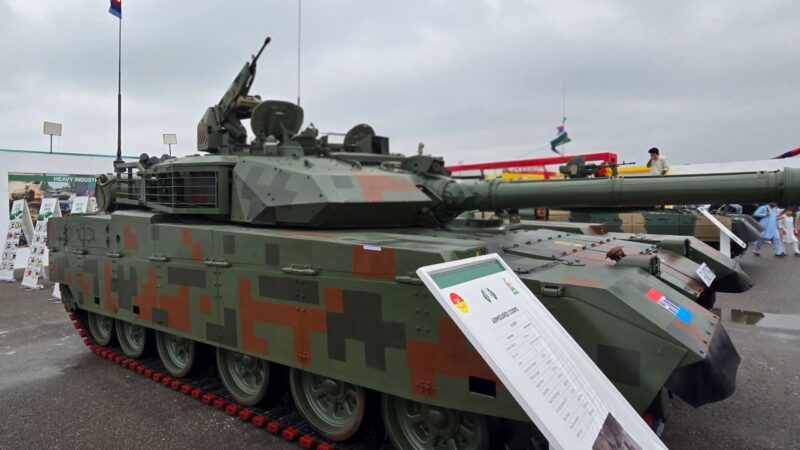
Those figures land against a requirement the Pakistan Army has already made visible, most recently when Heavy Industries Taxila (HIT) revealed the D-248 and S-369, the longest-ranged loitering munitions Pakistan has shown in public.
The episode is not a specifications walkthrough, and the numbers are settled inside the first few minutes.
What occupies the rest of it are the questions that follow – why a foreign original equipment manufacturer (OEM) would route into Pakistan through a private company rather than one of the state-owned enterprises, and which parts of an FP-1 class airframe Pakistani industry is genuinely equipped to build today.
Underneath both sits the harder question of what a design-led Ukrainian house and a design-led Pakistani institution such as the National Engineering and Scientific Commission (NESCOM) could each realistically take from the other.
Bilal and Aseem do not agree on that one, and the disagreement is the episode.
From there the discussion widens into the export controls that have pushed European and Ukrainian developers toward rocket-derived interceptors, and into the division of industrial labour between Pakistan Ordnance Factories (POF) and the private firms now entering the market.
It closes on what a saturation exchange between India and Pakistan would demand of both sides in a conflict measured in days rather than years, and on the written interviews Quwa has put to Fire Point and the Pakistan Navy, both of which are pending and both of which will go to subscribers.
Episode 11 sits in a run that has taken on much the same territory from different angles.
Episode 10 asked why Pakistan turned down a seat on KAAN in 2016 and pursued Project AZM instead, while an earlier episode traced the first steps Pakistan’s private sector has taken into the drone boom.
Others have covered what Pakistan’s nuclear program was actually built to do, how Pakistan could build a stealth loyal wingman drone, and why Türkiye’s defence industry is real but will be slowed by scale.
Pulse Check is exclusive to Quwa Plus and Quwa Pro subscribers.
Quwa Plus runs at $29.99 per year and carries two evidence-led reports every week, the full Pulse Check run, and the complete Plus archive through 31 December 2025 – the tier for readers who want Pakistan’s defence file explained properly and consistently.
Readers who need the market underneath it take Quwa Pro, which adds three market intelligence reports a week, an archive of more than 2,400 program reports reaching back to 2007, and a machine-readable research database with Model Context Protocol (MCP) connectors now in development.
Pro is where the reporting behind this episode sits, alongside recent assessments of how Pakistan’s private and state-owned defence companies could work together, why foreign arms makers are quietly walking away from Pakistani deals, and why the bet on NESCOM in the drone sector is starting to pay off.
Pro is priced at $149.99 per year, and Quwa is holding that rate for the life of the subscription for anyone who joins before 30 September 2026, after which the standard rate applies.