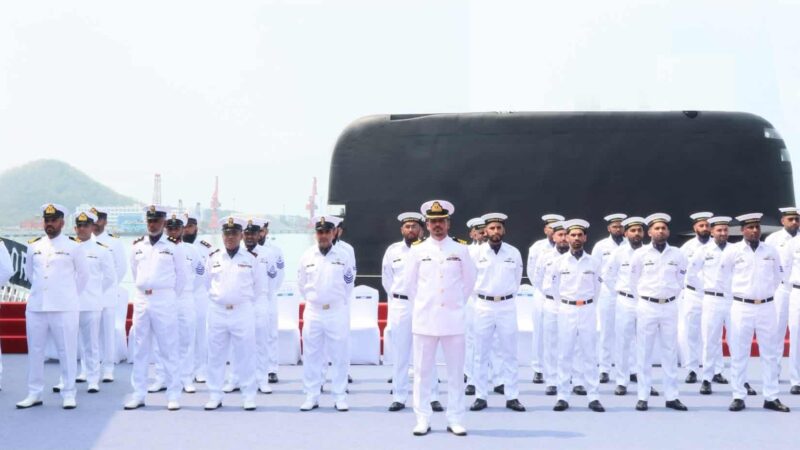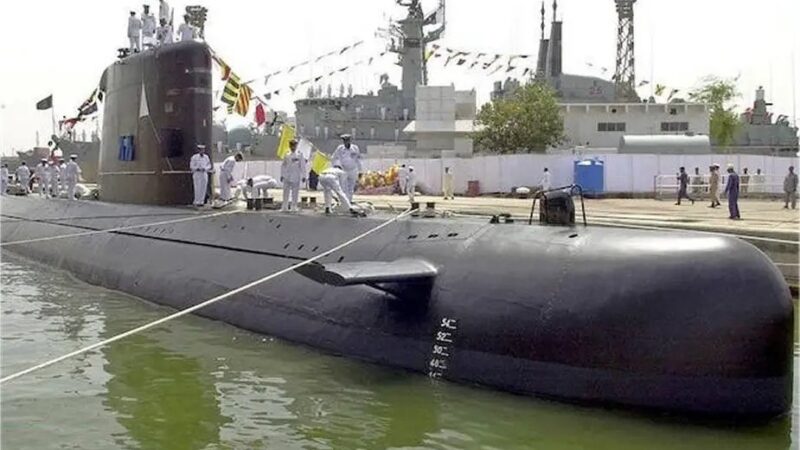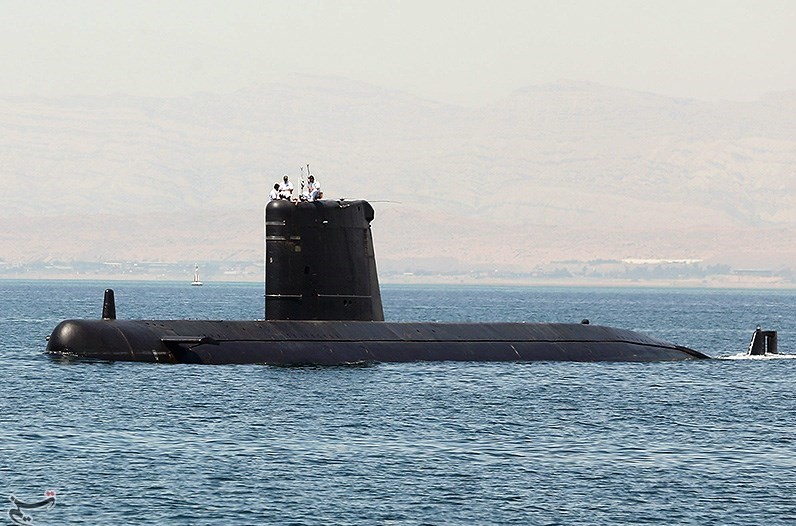
The Pakistan Navy (PN) operates two Agosta 70 diesel-electric submarines — PNS/M Hashmat (S-135) and PNS/M Hurmat (S-136). These boats were not originally built for Pakistan. They were constructed by Dubigeon-Normandie at Nantes, France, in the late 1970s for the South African Navy, designated SAS Astrant and SAS Adventurous respectively. The sale was blocked by the United Nations Security Council Resolution 418 of November 1977, which imposed a mandatory arms embargo on South Africa. France subsequently sold both boats to Pakistan, with PNS/M Hashmat commissioned on 17 February 1979 and PNS/M Hurmat on 18 February 1980. (Wikipedia — PNS Hashmat; Wikipedia — PNS Hurmat)
The Agosta 70 has been in continuous PN service for over 45 years — the longest-serving submarine type in the fleet’s history. The two boats predate the Khalid-class (Agosta 90B) by two decades and the Hangor-class (S26) by nearly half a century. They are approaching the end of their operational lives, though the PN has not formally announced a retirement date. The Agosta 70 is one of several submarine types in the Pakistan Navy’s fleet.
Design and Specifications
The Agosta 70 is a conventional diesel-electric submarine based on the French Agosta-class design developed by DTCN (now Naval Group) in the early 1970s. France, Spain (Galerna-class), and Pakistan operated variants of the design.
According to Wikipedia and Global Security, the class displaces 1,510 tons surfaced and 1,760 tons submerged. Length is 67 m, beam 6 m, and draught 5.4 m. Surfaced speed is 12 knots; submerged speed reaches 20 knots — comparable to the Khalid-class’s 20.5 knots submerged. Range is 8,500 nautical miles at 9 knots, and the test depth is 300 m. The crew complement is 54 — 7 officers and 47 enlisted — substantially larger than the Hangor-class’s estimated 38, reflecting the Agosta 70’s analogue-era design with fewer automated systems.
Propulsion comes from two SEMT-Pielstick 16 PA4 V 185 VG diesel engines driving two alternators and a single shaft. The Agosta 70 does not have air-independent propulsion (AIP) — it relies entirely on conventional diesel-electric power, requiring the boat to snorkel regularly to recharge its batteries. This is the fundamental capability distinction between the Agosta 70 and the PN’s newer submarines: the Khalid-class has MESMA AIP, and the Hangor-class uses Stirling AIP. Without AIP, the Agosta 70’s exposure to detection during snorkelling is significantly greater.
The class is armed with four 550 mm bow torpedo tubes — notably a different calibre from the 533 mm standard used by the Khalid-class and Hangor-class. The original torpedo fit included the French ECAN L5 Mod 3 and ECAN F17 Mod 2, and the boats were later qualified to fire the UGM-84L Harpoon Block II anti-ship missile — an American weapon that gave the Agosta 70 a standoff anti-ship capability it did not have in its original French configuration. (Wikipedia — PNS Hurmat)
The sensor suite reflects late-1970s French technology: a Thomson CSF DRUA 33 radar, Thomson Sintra DSUV 22 sonar, DUUA 2D and DUUA 1D sonars, and a DSUV 62A towed array. These systems have not received the comprehensive sensor upgrade that the Khalid-class is undergoing through the STM mid-life upgrade program.
Operational History
PNS/M Hashmat and PNS/M Hurmat were the PN’s primary submarine capability through the 1980s and 1990s — the period between the retirement of the Daphné-class boats and the arrival of the first Khalid-class submarine in 1999. The Agosta 70s were the only submarines in the PN’s inventory during the 1999 Kargil crisis, one of the most significant India-Pakistan military confrontations since 1971.
The boats have undergone periodic overhauls and maintenance at the PN Dockyard in Karachi to extend their service lives. However, by the 2020s, both boats were showing their age. The Centre for Land Warfare Studies (CLAWS) — an Indian Army think tank — reported in June 2025 that PNS/M Hurmat “suffers from a faulty starboard engine and electronic warfare system, rendering it completely non-operational.” While this assessment comes from an adversarial source and should be weighed accordingly, the broader point — that the Agosta 70s are nearing the limits of their hull life — is consistent with the boats’ age and the PN’s own emphasis on fleet expansion through the Hangor program.
The PN Dockyard’s experience maintaining the Agosta 70 over four decades — including hull repairs, engine overhauls, and sensor maintenance — built the institutional expertise that KSEW later drew upon when assembling the Khalid-class PNS/M Hamza in the 2000s. As Quwa’s analysis of Pakistan’s pivot from kit assembly to defence design documented, the industrial lineage runs from Daphné-class maintenance through Agosta 70 sustainment through Agosta 90B assembly to the Hangor ToT program at KSEW. Each step built on the previous.
The South African Connection
The Agosta 70’s origin as a South African order is more than a historical footnote — it shaped the boats’ availability and the PN’s opportunity. The UN arms embargo on South Africa (Resolution 418) was imposed in response to apartheid-era policies and the country’s nuclear weapons program. France had already laid down both boats when the embargo took effect, leaving Dubigeon-Normandie with two orphaned submarines.
Pakistan, which had been operating the French Daphné-class since the late 1960s and was familiar with French submarine technology, was a natural buyer. The acquisition gave the PN two relatively modern submarines at a time when Pakistan’s defence budget was constrained and alternative suppliers were limited. The boats arrived in Pakistani service pre-built and fully equipped — no ToT, no local assembly. The industrial participation that characterised the later Khalid-class and Hangor programs was not part of the Agosta 70 deal.
Retirement and Replacement
The Agosta 70 is being retired from frontline service as the Hangor-class fleet enters the fleet. The Hangor’s 2,800-ton displacement, Stirling AIP, and modern sensor suite make it a qualitatively different platform from the 1,760-ton, non-AIP Agosta 70.
However, the PN has not formally decommissioned either Agosta 70 boat as of May 2026. Given that the KSEW-built Hangor batch is not expected to complete until the early 2030s, the PN may retain the Agosta 70s — even in a reduced-readiness or training role — until enough Hangor-class boats are in service to fully cover the fleet’s patrol requirements. As Quwa’s Silent Service analysis noted, the PN’s current fleet of five submarines cannot sustain a meaningful number of boats on patrol simultaneously. Retiring the Agosta 70s before the Hangor fleet is complete would widen that gap.
The Agosta 70’s eventual retirement will also remove the last non-AIP submarines from the PN’s fleet, making it an entirely AIP-equipped force — a transition that began with PNS/M Hamza’s MESMA integration in 2008 and concludes with the Hangor induction.
The Naming Lineage
The PN’s submarine naming conventions create a thread connecting the Agosta 70 to both its predecessors and successors. The Daphné-class boats — PNS Hangor, PNS Shushuk, PNS Mangro, and PNS Ghazi — carried names that the PN has now reused for the four Chinese-built Hangor-class submarines. The Agosta 70 boats (Hashmat and Hurmat) and the Khalid-class boats (Khalid, Saad, Hamza) drew their names from Islamic military history. The naming pattern reflects the PN’s approach to institutional continuity: new boats inherit the legacy of the classes they replace.
Learn More
Khalid-Class (Agosta 90B) Submarine: Pakistan Navy’s Backbone Since 1999 — The class that succeeded the Agosta 70 as the PN’s frontline submarine.
Hangor-Class Submarine: Pakistan Navy’s S26 Program — The fleet that is replacing both the Agosta 70 and complementing the Khalid-class.
Inside Pakistan’s Pivot From Kit Assembly to Defence Design — The industrial lineage from Agosta 70 maintenance through Khalid-class assembly to Hangor construction.
The “Silent Service” is Still the Future of Pakistan’s Navy — Why the PN’s submarine fleet remains its most consequential capability investment.
Note: Quwa will update this page as the PN discloses the Agosta 70’s decommissioning timeline.