At the 2026 World Defence Show (WDS 2026) in Riyadh, Pakistan’s defence industry openly began delivering the right message about its capabilities and what it truly has to offer the wider world – i.e., design and integration, not turnkey manufacturing.
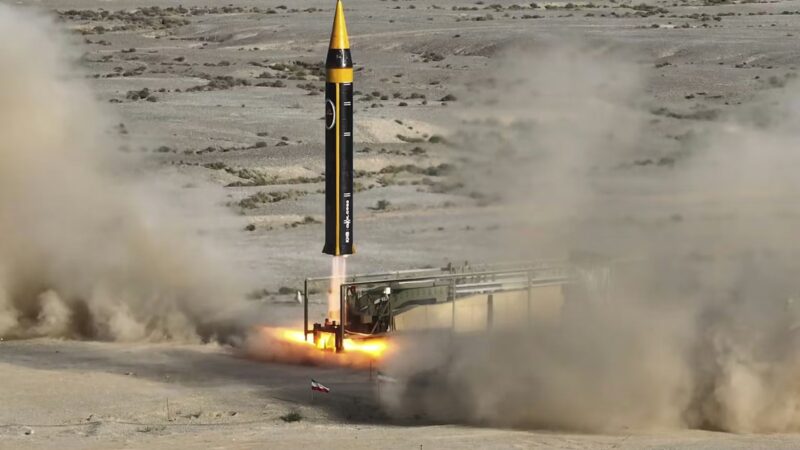
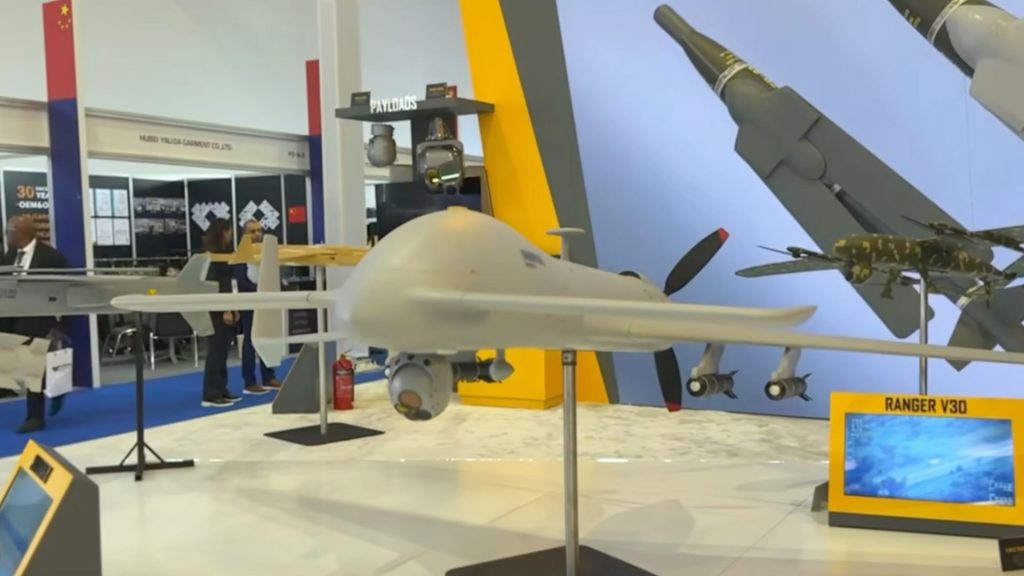
Global Industrial and Defence Solutions (GIDS) displayed its wide range of unmanned aerial systems (UAS) – from the Shahpar II and Shahpar-III drones to the Yalghar- and Blaze-series of loitering munitions – and stand-off range weapons (SOW), be it stealthy air-launched cruise missiles (ALCM) like the Taimur and AZB-81LR, land-launched Fatah and shipborne SMASH, and AZB-series range-extension kits, among others.
Separately, Heavy Industries Taxila (HIT) began overtly marketing the fact that it fully designed, developed, and tested an original 155 mm/52-calibre wheeled self-propelled howitzer (SPH) for Saudi Arabian Military Industries (SAMI), and that the core design is now available for sale to the Pakistan Army and to third parties.
Finally, Karachi Shipyard & Engineering Works (KSEW) received the contract to build the first Jinnah-class frigate, an original naval warship designed in collaboration with Türkiye’s Askeri Fabrika ve Tersane İşletme AŞ (ASFAT).
The common thread across all of these solutions is that Pakistan has designed (or, with partners like Türkiye and China, co-designed) products for which it owns the intellectual property (IP) and understands how to leverage that IP to make decisions on the inputs – such as alloys, subsystems, and propulsion – as a way to control costs, avoid sanctions, and adapt to potential end-user/customer requirements.
This is a break from the previous era of Pakistan’s defence industry, where key vendors such as Pakistan Aeronautical Complex (PAC), KSEW, and HIT were answerable to and reliant on foreign original equipment manufacturers (OEMs).
Thus, if the OEMs (or their governments) were not supportive of their Pakistani partners, then products such as the JF-17 fighter, Agosta 90B submarine, or al-Khalid tank would not develop or matter past the limits set by the OEMs.
Join Quwa Plus
Get the latest defence news and analysis on South Asia and the Middle East.
Already a subscriber? Sign in