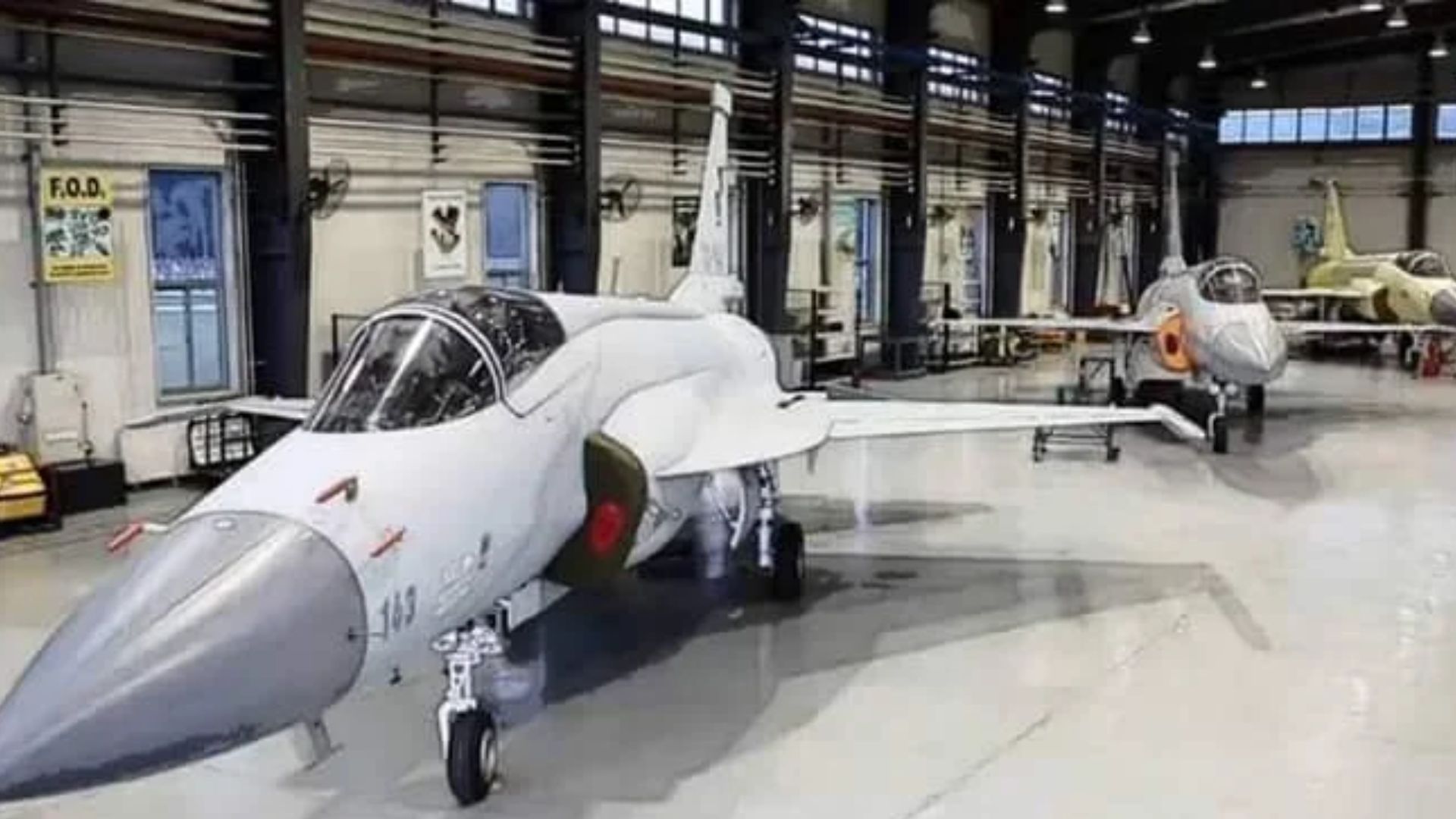

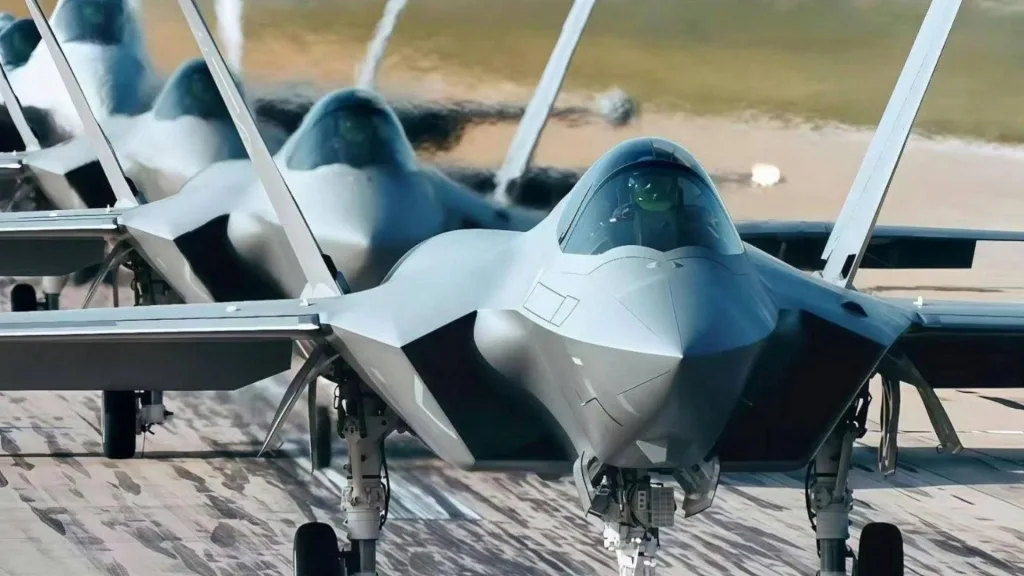
Shortly after Pakistan’s brief, but intense, conflict with India from 07-10 May 2025, the Government of Pakistan had posted on the social media platform X, revealing that the Chinese proposed a major arms package of 40 J-35AE next-generation fighter aircraft (NGFA), the KJ-500 airborne early warning and control (AEW&C) system, and HQ-19 ballistic missile defence (BMD) system.
The post was withdrawn shortly thereafter, but its details largely aligned with Quwa’s forecasting of the Pakistan Air Force’s (PAF) procurement roadmap.
The thesis was that the PAF had long sought a fighter aircraft optimized for offensive missions and would seek a platform to both own this role and gradually supplant the F-16A/B Block-15s, which would start reaching 50 years of age from 2030.
In Quwa’s Report on Pakistan’s Air Warfare Plans for 2020-2030, this author stated that the PAF will seek to build dedicated offensive air wings comprising the NGFA, a new AEW&C (providing much higher radar output than the Erieye), and unmanned combat aerial vehicles (UCAVs). The current PAF leadership stated that it will seek the J-31/J-35 platform for the NGFA piece, but the government’s post on X outlined that the AEW&C input could also be packaged with the fighters.
Given the facts, one could reasonably infer that the PAF would seek a new fighter to supplant the F-16s, and that the J-35AE would be a natural option from the framing that it represents a true generational leap. Furthermore, one could infer that, for the PAF to build next-generation air warfighting capacities, such as real-time cooperative engagement capability (CEC), it would need to upgrade the wider stack, therefore underscoring the apparent need for a new AEW&C system.
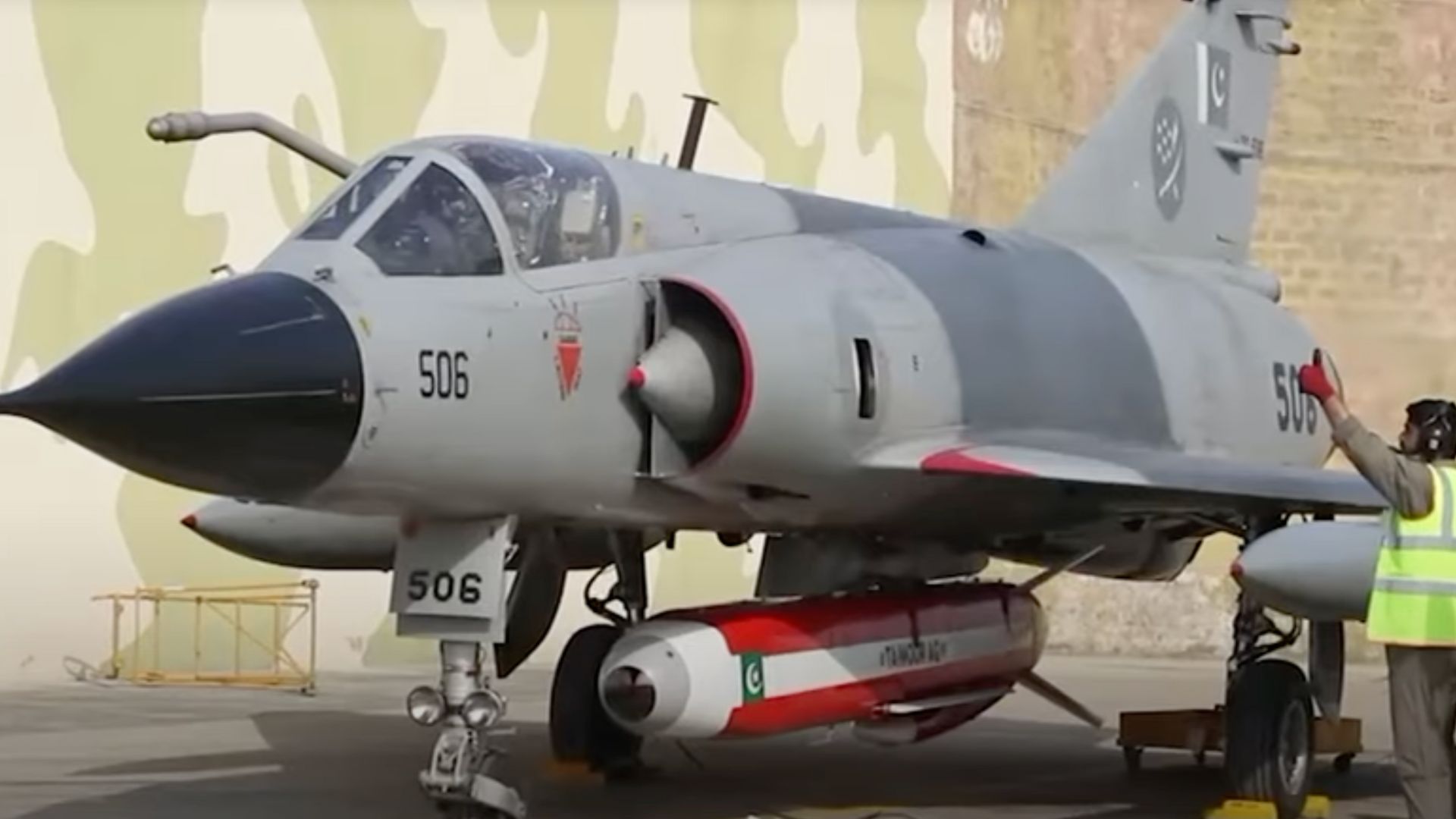
However, interestingly, the U.S. State Department’s recent approval of an upgrade package for the PAF’s F-16s also reveals another key detail: the actual date by which this new air-warfighting package must be inducted: 2040. In its proposal to Congress, the U.S. State Department stated that the contract to upgrade the PAF’s F-16s would “extend the aircraft life through 2040 while addressing critical flight safety concerns.”
Thus, by connecting these details – i.e., the pulled X post about the Chinese proposal and the F-16 upgrade program – one can see the outline of a concrete requirement to upgrade what the PAF traditionally termed as its “tip of the spear.”
It is possible that the requirement calls for around 40 new-generation fighters, as well as a compatible ‘stack’ – i.e., next-generation tactical data links, an offboard sensor and management system via an AEW&C, and a munitions stockpile. Finally, it seems the PAF wants to induct this package by 2040, likely coinciding with the timeframe of replacing its oldest F-16A/B Block-15s, which were inducted in the 1980s.
This requirement will certainly amount to a major multi-billion-dollar program once one factors in the upfront acquisition price, the necessary changes in the PAF’s operating and logistics infrastructure, and recurring long-term support/maintenance costs. With all these factors at play, one can argue that China is poised to run away with a critical arms program, with no apparent competition from the world’s other vendors.
To be clear, this is not to dismiss the inherent value of the Chinese package; indeed, it is the only one that offers a stealth fighter with a complete system, including CEC and, potentially, manned-unmanned teaming (MUM-T). However, the intriguing question is why and how China seemingly emerged as the sole bidder for this significant project.
Don't Stop Here. Unlock the Rest of this Analysis Immediately
To read the rest of this deep dive -- including the honest assessments and comparative analyses that Quwa Plus members rely on -- you need access.