
India’s Defence Acquisition Council granted in-principle approval to ₹52,000 crore in acquisition proposals (~$5.45B) for the Army, Navy and Air Force on 3 July 2026, a broad tranche spanning air defence, anti-armour, electronic warfare and naval systems. The council, chaired by Defence Minister Rajnath Singh, tilted the approvals heavily toward counter-drone and layered air-defence capability, with the Army taking the bulk of the new systems.
Acceptance of Necessity is the in-principle approval that the council grants before the acquisition process is formally initiated, and it does not amount to a signed contract. Trials, price negotiation and delivery still lie ahead for each proposal, a sequence that can run for several years in India’s procurement cycle.
The Army emerged as the largest beneficiary of the tranche. Its approvals are led by the Akash Tarang electronic warfare system, an anti-drone capability intended to protect Army formations from hostile unmanned aircraft along the frontlines, a threat that has grown sharply across recent conflicts.
The council also cleared man-portable anti-tank guided missiles, known as MPATGM, to strengthen the infantry against the adversary’s mechanized forces. It approved active protection systems in the same package, which are meant to improve the survivability of battle tanks against incoming anti-tank missiles.
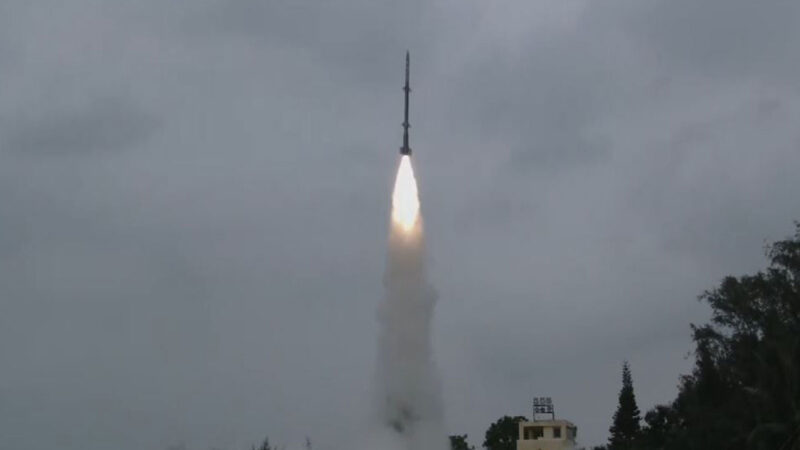
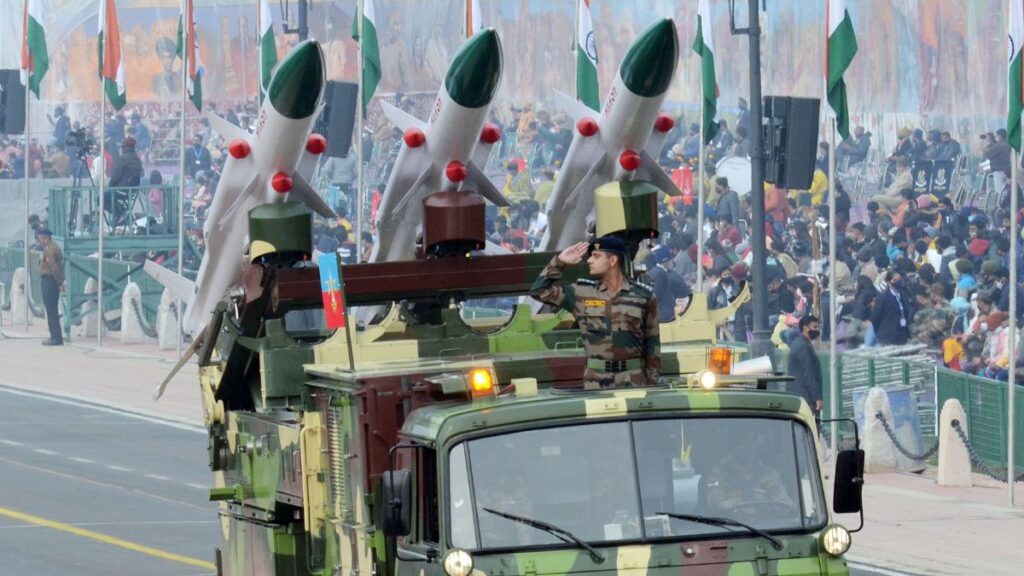
For air defence, the approvals include the medium-range surface-to-air missile system, designed to counter a range of stand-off aerial threats. They also cover the very short-range air defence system, which uses multi-spectral sensing to improve resilience against enemy countermeasures and strengthen the Army’s lower-tier cover.
The Army list further features jet-powered kamikaze drones, which India expects to deliver better electronic-warfare capability with greater lethality at a lower cost. Such loitering munitions have become a defining feature of recent drone-heavy fighting.
For the Navy, the DAC approved Multi-Influence Ground Mines to help control and deny maritime zones, alongside naval shipborne unmanned aerial systems that extend surveillance from warships at sea. It also cleared a land-based testing facility to support the development of an electric propulsion system.
The Air Force secured a fixed-wing high-altitude pseudo-satellite, a long-endurance platform that can sustain intelligence, surveillance and reconnaissance, telecommunications and remote sensing over extended periods at high altitude, giving the force a persistent and lower-cost complement to satellite coverage.
A significant share of the deals is expected to run under the Buy (Indian-IDDM) category and the Buy (Indian) route. Both channels favour domestic industry, in line with the Atmanirbhar Bharat drive to expand indigenous manufacturing and reduce India’s dependence on foreign suppliers.
The tilt is unmistakable, with anti-drone and air-defence systems accounting for much of the Army list, a pattern that reflects India’s growing focus on drone and electronic warfare in future conflicts. Roughly half of the Army approvals fall into air-defence or counter-drone roles, a category now drawing heavy investment across multiple militaries.
Spread across all three services, the tranche marks another step in India’s military modernization. It feeds a procurement agenda that already spans debates over fifth-generation fighters and layered air defence, with the pace of induction depending on how fast each proposal moves from approval to a signed contract.