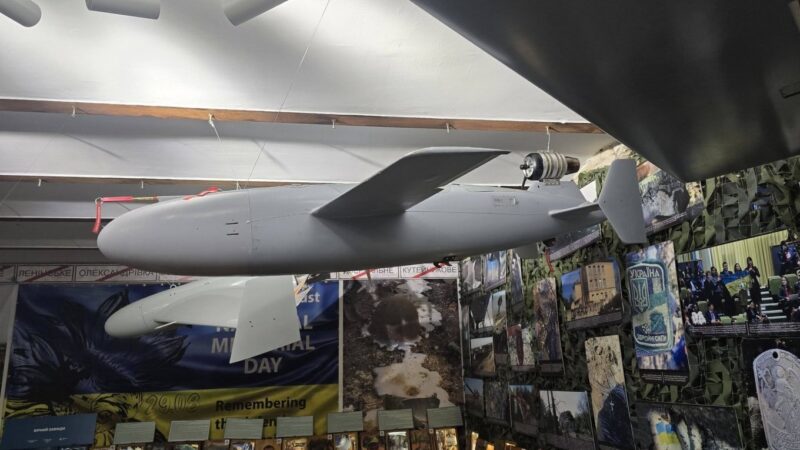

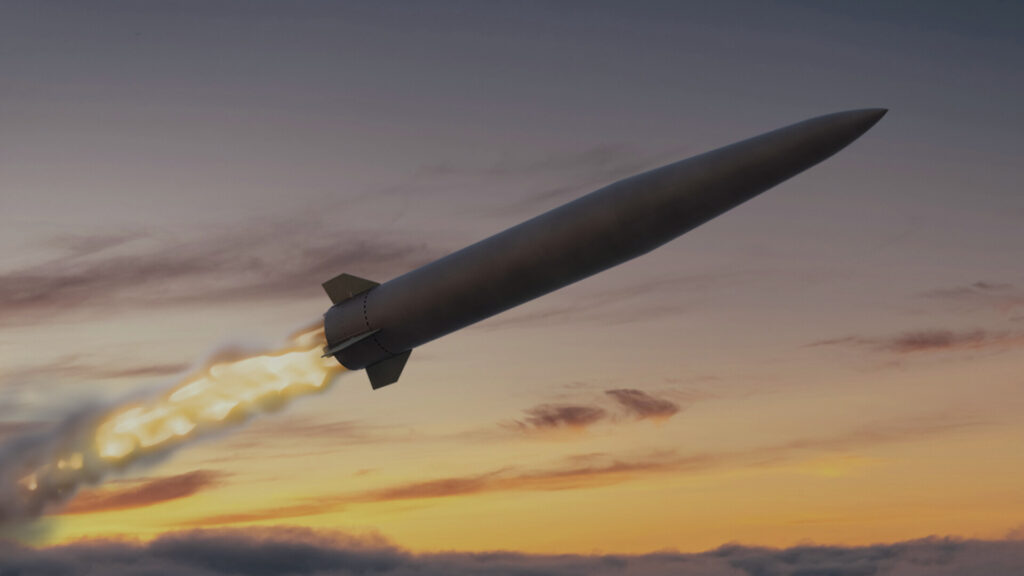
Fire Point’s chief designer and co-founder, Denys Shtilerman, said the Ukrainian company’s FP-9 ballistic missile has finished all major development work except its solid-fuel engine, telling the Ukrainian YouTube channel Pressing in a rare on-camera interview that “we have everything for the FP-9, which can reach Moscow, except the engine.”
Shtilerman said the engine will be tested this month, with flight tests expected to follow soon after a successful validation. FP-9 is Fire Point’s largest ballistic missile to date, a ground-launched weapon designed to carry an 800 kg warhead out to roughly 855 km.
Follow EMEA Security Developments With More Context
Go beyond scattered updates with in-depth reporting and analysis that helps you track defence, regional security, and policy developments with greater clarity and continuity.
A day later, Shtilerman told Reuters that Fire Point remains on track to begin flight trials over the summer, with battlefield tests for the missile expected by autumn.
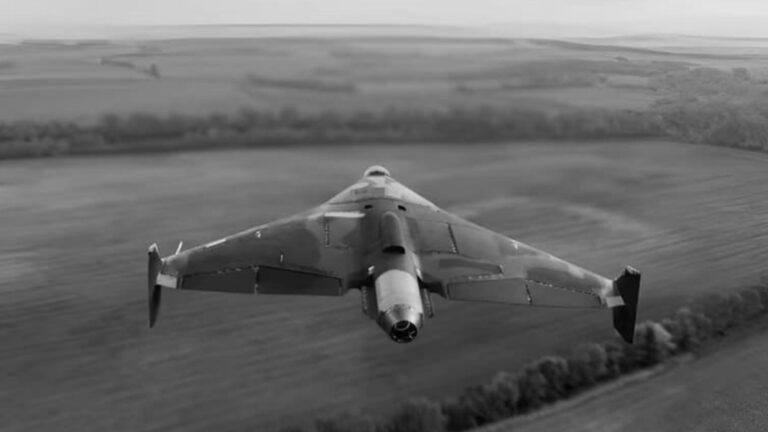
Fire Point, a Kyiv-based startup founded in 2022 by a group of engineers, architects, and game designers with no prior military industry background, has already fielded the FP-1 and FP-2 strike drones and the FP-5 Flamingo, a 6,000 kg ground-launched cruise missile with a 1,150 kg warhead and a range of up to 3,000 km.
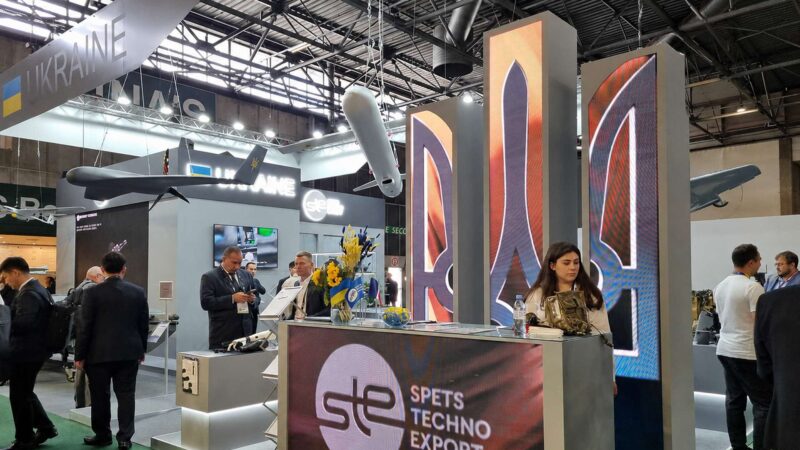
The FP-9 sits alongside the smaller FP-7 in a ballistic missile program the company first unveiled at the MSPO defence exhibition in September 2025.
The FP-7, built on the airframe of the Soviet-era 48N6 interceptor used in S-300 air defence systems, completed its first controlled test flight in February 2026, and Fire Point has positioned it as roughly half the cost of the American Army Tactical Missile System. Quwa has previously examined how Fire Point adapted that same FP-7 airframe into the FP-7.x interceptor at the heart of Project Freya.
According to specifications listed on Fire Point’s own product page, the FP-9 is designed to reach a maximum speed of 2,200 m/s and an altitude of 70 km, hitting within 20 m of its target over a maximum flight time of 520 seconds. At roughly 9.5 m long and 1.1 m in diameter, the missile is larger than Russia’s Iskander-M, which measures 7.2 m in length and 0.95 m in diameter.
Reaching those figures required Fire Point to build a solid-fuel propellant plant from scratch, a capability Ukraine’s defence industry did not previously possess. Shtilerman told Pressing the facility took more than a year to complete, during which the company developed its own propellant formulations, cure cycles, and quality verification methods without access to Soviet or Russian technical documentation, after a promised library of Soviet missile blueprints was never compiled despite commitments from two successive defence ministers.
Shtilerman has argued that ballistic missiles only make economic sense at longer ranges, citing a 300 km ballistic missile with a 200 kg warhead costing roughly $600,000 per shot against a modified FP-2 drone delivering the same warhead 380 km for about $40,000. At 855 km, he said, no cruise missile in Ukraine’s current arsenal can cover that distance while surviving the air defences ringing Moscow, leaving the FP-9’s ballistic trajectory as the only viable option against targets in that range band.
That range places both Moscow and St. Petersburg – where Vladimir Putin was born – within the FP-9’s declared operating envelope. Fire Point expects the missile to receive Ministry of Defence codification in 2026, the formal approval step that would clear it for operational use.
The ballistic missile work feeds a second program, Project Freya, an interceptor effort built around the FP-7X variant that Fire Point describes as a lower-cost alternative to the Patriot. The company signed a memorandum of understanding with Germany’s Hensoldt last week for the TRML-4D radar that would feed the interceptor’s targeting data. Shtilerman told Reuters Fire Point could deliver interceptors by the end of the year if European governments move quickly enough on the surrounding approvals.
Quwa Pro
Clearer Insight Into EMEA Defence and Security
Independent reporting and analysis designed to help you understand how military developments, policy choices, and regional tensions connect.
Featured & Trusted By