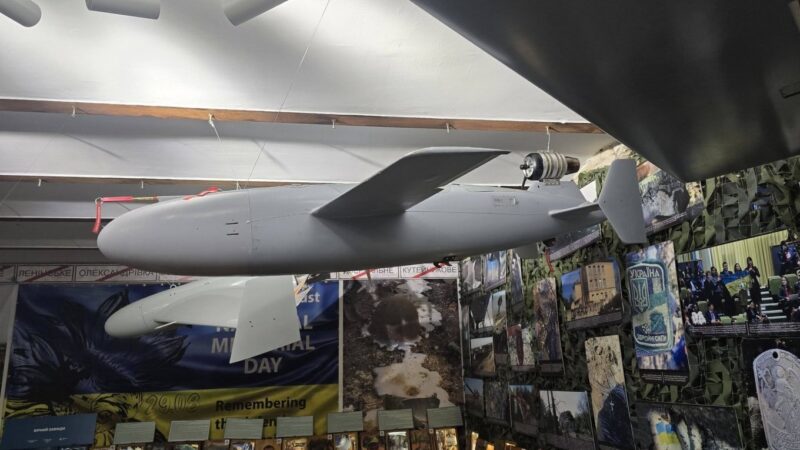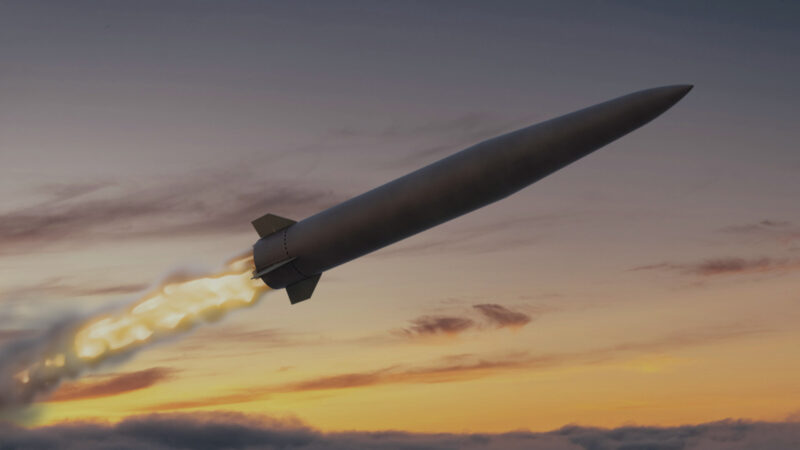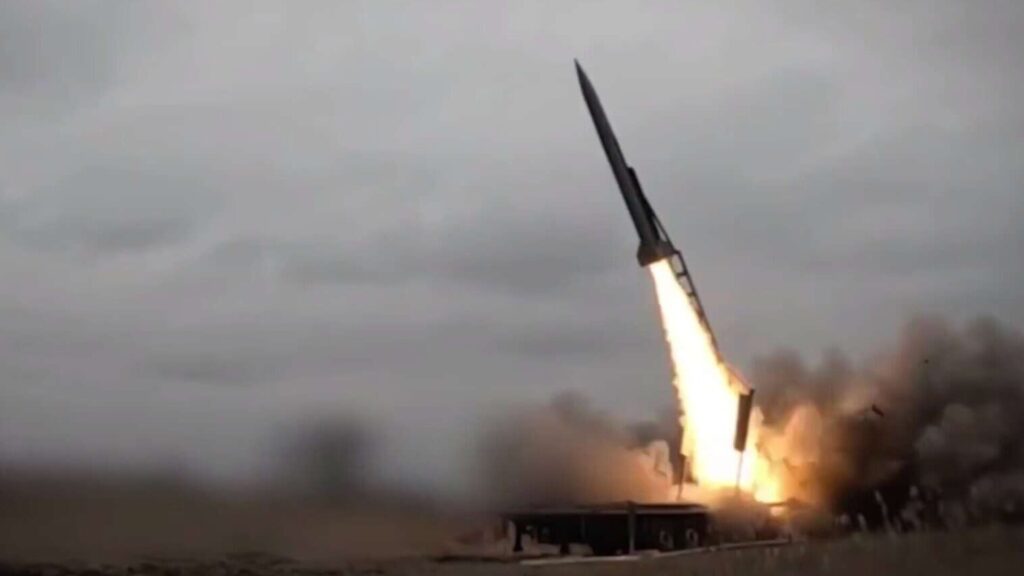
Ukrainian defence company Fire Point published the full system concept for Project Freya on May 14, according to Militarnyi and Ukrainska Pravda. Freya is a pan-European air and missile defence system designed to intercept ballistic missiles – including Russia’s Iskander-M – at what Fire Point says would be a fraction of the cost of existing Western interceptors.
Co-founder and chief designer Denys Shtilerman presented the concept publicly, describing Freya as an open-architecture network built around the FP-7.x interceptor missile and tied together with NATO-standard European radar, command, and communications components.
The FP-7.x is derived from Fire Point’s FP-7 tactical ballistic missile, which Defence Express reported is itself based on the Soviet-era 48N6 anti-aircraft missile used in the S-300 and S-400 systems. The relationship is primarily aerodynamic – Fire Point retained the 48N6’s external geometry and dimensional envelope, which is well-characterized through decades of flight data.
However, much of the internal architecture is new. The airframe is rebuilt in carbon-fibre composites rather than the 48N6’s original metallic structure – a change that, per Defence Blog, reduces both manufacturing cost and radar visibility. Fire Point also switched from the 48N6’s cold-launch method to a hot-launch system, igniting the motor at the moment of firing from a lightweight mobile launcher of the company’s own design.
Where Ukraine’s Defence Innovation Meets Global National Security Markets
Market intelligence on Ukraine’s defence sector, export ambitions, and wartime innovation ecosystem.
The guidance architecture marks the clearest departure from S-300 heritage. The original 48N6 used a semi-active radar homing (SARH) seeker dependent on continuous-wave illumination from the ground radar. The FP-7.x instead carries an Image Infra-Red (IIR) homing seeker, supplemented by semi-active seeker technology from Germany’s Diehl Defence – the manufacturer behind the IRIS-T family – following a cooperation agreement signed in April 2026.
Defence Express noted a point of ambiguity in Shtilerman’s presentation: one slide referenced infrared homing while the next referenced semi-active homing from Diehl, suggesting a possible two-phase guidance model.
According to Fire Point’s presentation, the FP-7.x is 7.25 metres long with a fuselage diameter of 0.53 metres. Defence Magazine noted the claimed speed of 1,500 to 2,000 m/s – below the Iskander-M’s reported terminal speed of approximately 2,100 m/s, but within the range required to reach the engagement envelope against tactical ballistic missiles in terminal descent.
The cost argument is central to the project. Fire Point estimates the cost per intercept at under $1 million, compared to several million dollars for a Patriot PAC-3 engagement. As Euromaidan Press reported, Shtilerman has framed the design philosophy as mirroring how Ukraine scaled its attack drone production – prioritizing affordability and scalability over technical complexity.
The FP-7 strike variant was successfully test-fired in February 2026. Fire Point plans the first ballistic missile interception by the end of 2027.
To support missile production, the company plans to build a solid rocket fuel plant in Denmark. The Defense News reported that the Danish government approved the temporary suspension of over 20 laws and regulatory procedures to accelerate construction.
Fire Point is not doing this alone. Defence Blog reported that MBDA – Europe’s largest guided missile manufacturer – is assisting with missile development. Reuters reported in April 2026 that Fire Point was in active talks with European companies to bring Freya to operational status by 2027.
Quwa Pro
Ukraine’s Defence Industry, Monitored Daily
Tracking how Ukraine’s defence advances are reshaping demand, doctrine, and procurement across emerging defence markets.
Featured & Trusted By