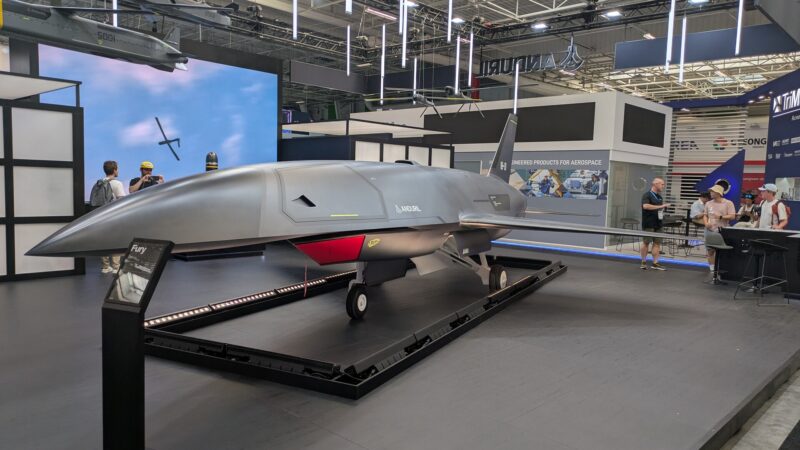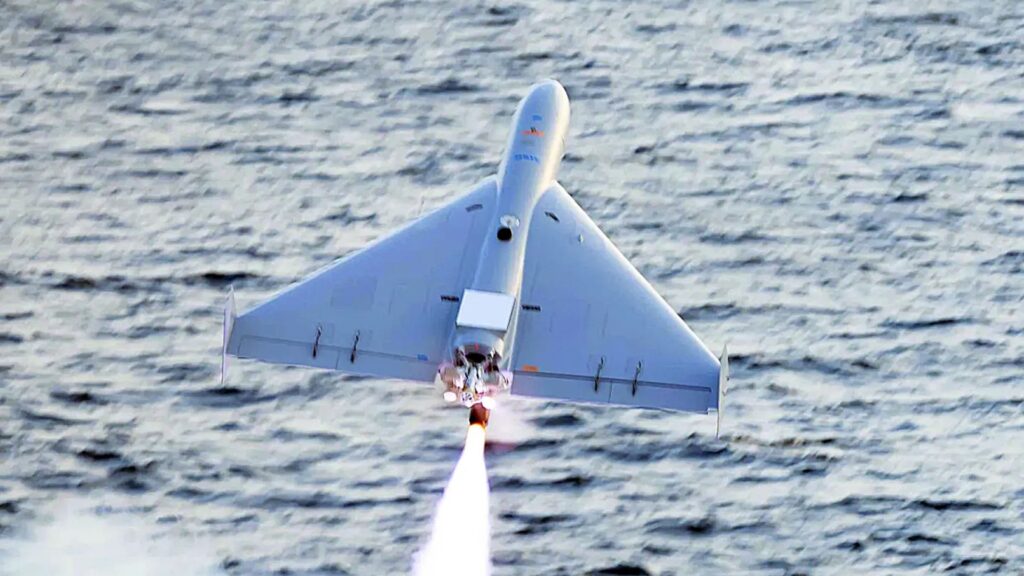
Seeing the dual-tactical and strategic impacts of one-way attack (OWA) drones in the Russia-Ukraine War and the Persian Gulf Crisis, the world’s militaries – small and large alike – are adopting OWA-centered strategies. With a USD $54.6 billion budget proposal for the Defense Autonomous Warfare Group (DAWG) in FY2027, the United States is aiming to lead the surge.[1] Army Secretary Dan Driscoll set a target of equipping every US Army squad with expendable one-way attack (OWA) drones and acquiring at least 1 million units within 2 to 3 years.[2]
Though loitering munitions, such as the Shahed and its growing list of analogues – e.g., the Russian Geran, American LUCAS, Pakistani HiMark-25, and others – are writing headlines, and understandably so as they have disrupted the cost ratios of strikes (i.e., low-cost weapons inflicting high-cost damage), the actual bulk of OWA adoption is driven by first-person view (FPV) drones.
FPV drones are small, low-cost systems that are manually controlled via a physical, microscopic fibre-optic line – i.e., hardwired, not wireless. This allows FPV drones to operate in environments with dense electronic warfare (EW) and electronic attack (EA) activity, especially targeting communications data links.
When the Department of War Secretary, Pete Hegseth, re-classified unmanned aerial systems (UAS) of less than 50 lbs as single-use ammunition rather than full aircraft systems, he was essentially referring to FPVs and other small drones.
To put the scale into perspective, in the Russia-Ukraine War, both sides have burned through an average of seven million FPV drones per year combined, with Ukraine alone using 9,000 such systems daily.[3] Moreover, according to Ukraine, FPV drones account for 60–70% of Russian equipment losses at the front.[4]
Of course, this is not to discount the impact of larger Shahed-style munitions – indeed, militaries are adopting analogous solutions for strike. However, they are also, again, looking towards drones to counter such munitions. For example, the Pentagon will deploy Ukrainian-origin Merops interceptor drones, which currently cost $14,000–$15,000 per unit [5], providing a more scalable solution against the mass salvo threats posed by Shahed-style loitering munitions.
Quwa Pro
See Where Emerging Defence Markets are Moving
Quwa Pro goes beyond tracking programs and equipment by explaining the policies, incentives, industry dynamics, and competitive pressures shaping South Asia's defence markets.