
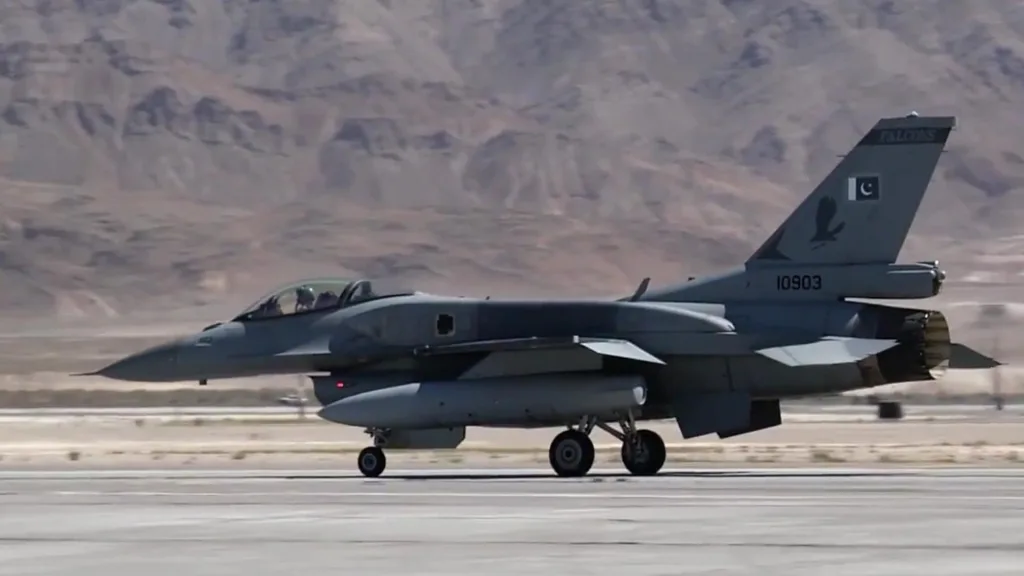
On 08 December, the U.S. Department of State cleared and submitted a proposal to Congress for the supply of defence articles valued at USD $686 million for the Pakistan Air Force’s (PAF) F-16 fleet.
The proposed package consists of 92 Link-16 tactical data-link (TDL) systems, six inert Mk82 general purpose bomb (GPB) bodies (used for training purposes), AN/APX-126 Advanced Identification Friend or Foe (AIFF) systems, KY-58M and KIV-78 cryptographic appliques, AN/APQ -10C Simple Key Loaders, ADU-891 missile adaptor units, and various other “weapons integration, test, and support equipment.”
Of the total $686 million, about $37 million will go toward the purchase of Major Defence Equipment (MDE), while the remainder, $649 million, will cover non-MDE items such as support and training.
According to the State Department’s submission to Congress, the deal will “extend the aircraft life [of the PAF’s F-16 fleet] through 2040 while addressing critical flight safety concerns.” The proposal also highlights that the update will continue enabling the PAF’s F-16s to interoperate with U.S. Air Force and other coalition fighters in combat operations, exercises, and training.
Related Reads
- Pakistan Air Force’s Shift to Satellites, Jamming, and Standoff Weapons
- How a US Mistake Handed Pakistan’s Arms Market to China.
- The Blueprint for Pakistan’s Future-Proof Air Defence System.
The proposal represents the first – albeit modest – genuine capability upgrade for the Pakistani F-16 fleet since the completion of the Peace Drive program, which saw the PAF induct 18 new-build Block-52 aircraft and upgrade its approximately 45 F-16A/B Block-15s.
The most notable element is the inclusion of 92 Link-16 TDL terminals, but with the AN/APX-126 AIFF system as well as KY-58M and KIV-78 cryptographic modules. This update likely aims to make the PAF F-16 fleet Mode 5 IFF (identification of friend-or-foe) interoperable and, as a result, bring the PAF F-16 fleet into compliance with NATO’s post-2020 IFF standards. In effect, this is the main component allowing the PAF’s F-16s to interoperate with U.S. and allied/coalition aircraft (such as the aircraft used in the Gulf or Turkey) for joint exercises or operations. At this point, the PAF’s F-16s can only operate from Mode 4 through their existing AN/APX-113s.
However, it should also be noted that the Link-16 TDL terminal with the KY-58M and KIV-78 strongly implies that the PAF is upgrading from its current MIDS-LVT to the MIDS-JTRS. The MIDS-LVT provides a data throughput of 115 kbps, while the MIDS-JTRS exceeds 1Mbps – i.e., a significant increase in bandwidth that allows for higher fidelity targeting (e.g., faster track updates), reduced latency, and greater sensor-feed sharing. That said, it is still not at the level the PAF aims to achieve for its next-generation, stealth fighter-led operations, but MIDS-JTRS will still be a significant capability upgrade. In itself, the new datalinking architecture of the F-16s will allow the fighters to support the PAF’s future air combat posture thanks to the higher throughput.
The call for 92 TDLs greatly exceeds the needs of the PAF’s F-16 fleet, which numbers around 70. This package likely covers new terminals for F-16s and other applications, such as special-mission aircraft across the PAF and the Pakistan Navy (PN).
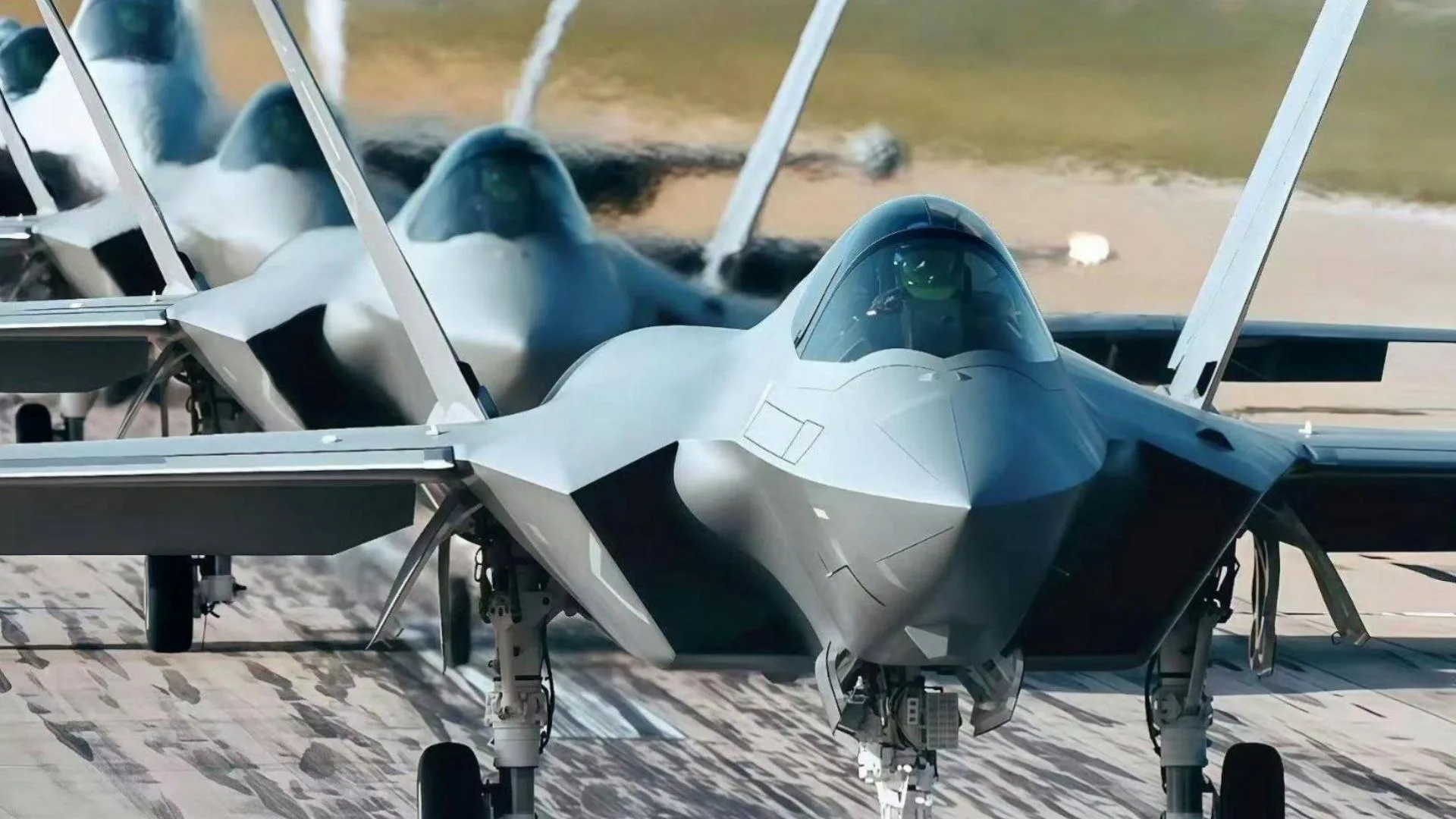
The notice also affirms a key point that past Quwa articles discussed, i.e., that the PAF’s F-16 fleet – specifically the Block-15s – will operate in the fleet until around 2040. In other words, the PAF will need to secure some type of replacement for these older F-16s (of which there are some 52-56 in service) with a new fighter aircraft. Currently, the frontrunner to replace these fighters is likely the Chinese J-35AE, which the PAF has expressed interest in procuring on multiple occasions. That said, it is notable that the notice underscores such a timeline, which could be valuable to the wider industry interested in engaging Pakistan’s otherwise tough (and obviously China-dominated) defence market. The procurement timeline will need to align with the remaining years left on the F-16A/Bs; thus, a contract must be finalized before the end of this decade, with inductions set throughout the 2030s. The leading candidate is the J-35AE, but one should not fully discount the prospect of a Western solution competing.
First, Pakistan has a top-level national security interest in maintaining its defence ties with the West, including the U.S. This fact is apparent in a number of ways, from Islamabad and Rawalpindi’s desire to engage the White House to the armed forces’ continued engagement with the U.S. and its NATO allies across exercises and coalition initiatives. Moreover, Pakistan’s greater security-related involvement in the Middle East would also necessitate technical interoperability with regional allies, all of whom operate U.S. or Western European fighter aircraft.
Don't Stop Here. Unlock the Rest of this Analysis Immediately
To read the rest of this deep dive -- including the honest assessments and comparative analyses that Quwa Plus members rely on -- you need access.