
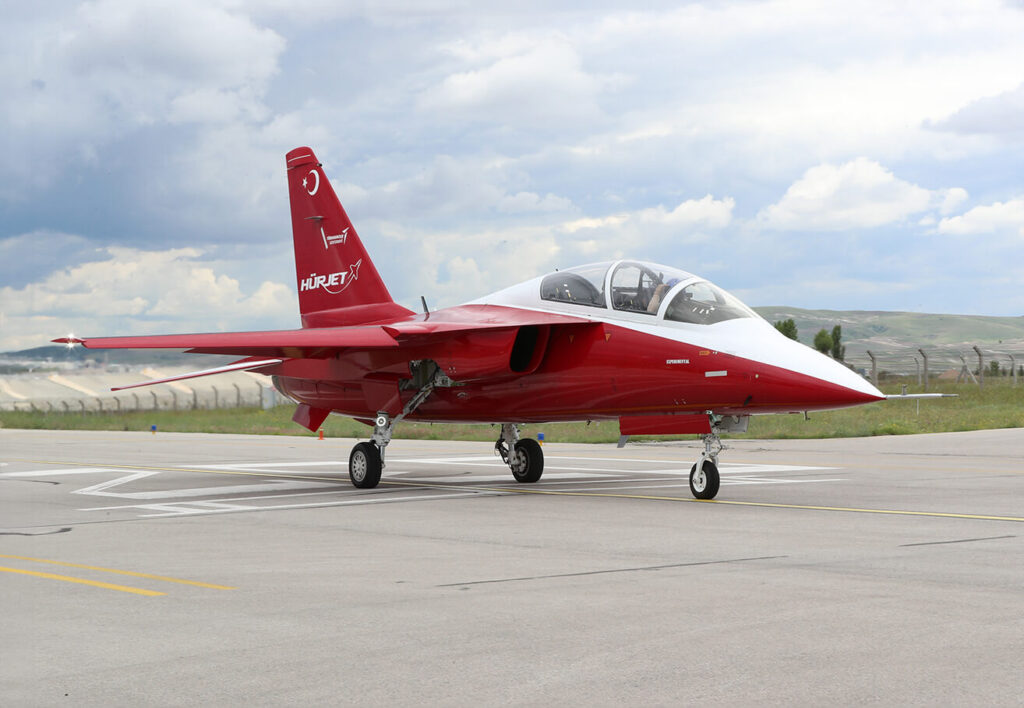
Chief executive Ali Ekşi put TOMTAŞ’s planned share of HÜRJET structural parts at about 70% in an interview published on 9 October 2026. Assemblies from Kayseri would be sent to Turkish Aerospace Industries (TUSAŞ) in Ankara to complete the aircraft.
TOMTAŞ identifies component-level assembly as its contracted HÜRJET responsibility, with the first deliveries planned for 2026. This work brings together the jet’s main structural sections, forming one part of a broader business in manufacturing and assembling aerostructures.
Ekşi described about 10,000 m² dedicated to HÜRJET component assembly, where roughly 7,000 parts would become five main components. The 70% figure concerns structures; it does not measure TOMTAŞ’s share of the aircraft’s total value or all onboard systems.
Today’s company dates to its establishment in 2023 by TUSAŞ, TOMTAŞ Yatırım, Erciyes Teknopark and the military factory and shipyard company ASFAT. Reviving an earlier Kayseri aircraft manufacturer’s name, it works in aerostructure manufacturing, production-tool design and fuselage assembly.
After investment in production facilities and quality processes, TOMTAŞ says it secured approved supplier status with TUSAŞ, Boeing and Airbus. Its aircraft production tooling includes fixtures for holding, assembly and welding, as well as moulds for composite lay-ups.
For its structural assembly work, the company brings together components made from aluminium, titanium, steel and composites to form structural subassemblies. Its published capabilities include precise positioning, drilling and riveting, together with cold-working operations and quality inspections before finished subassemblies are delivered to the customer.
Completed fuselage structures also receive hydraulic and fuel-system installations, which TOMTAŞ subjects to high-pressure testing in accordance with customer requirements. Wiring is another part of the work, with teams routing cables and fitting connectors to link avionics, actuators, sensors and communications equipment within the aircraft.
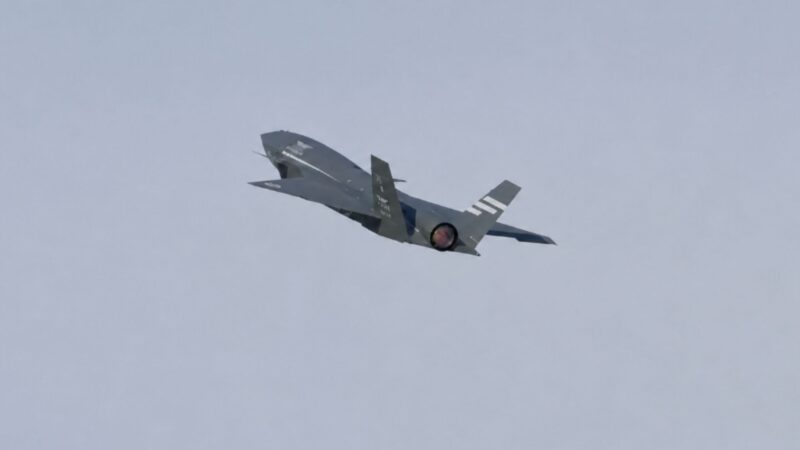
HÜRJET was designed by TUSAŞ as a tandem-seat jet trainer with a single engine for advanced jet training. Within the Turkish Air Force, it is intended to replace the T-38 training fleet and the F-5 aerobatic aircraft, with additional roles in fighter familiarization and adversary training.
Following the program’s start in 2017 and design completion in 2020, HÜRJET entered its initial flight campaign in April 2023. An F-16 accompanied the unpainted first prototype on its opening sortie, which lasted approximately 26 minutes.
A General Electric F404 powers the aircraft, for which TUSAŞ publishes a Mach 1.4 maximum speed and a service ceiling of 45,000 feet. The flight-test program gained a second prototype in November 2024, when that aircraft made its first flight.
HAVELSAN’s planned simulator and mission-planning equipment for Spain forms another part of HÜRJET’s export-support program. HAVELSAN says its simulator engineering contributed to aircraft development and that the training equipment is intended to accompany HÜRJET into service with both Turkish and Spanish users.
TUSAŞ chief executive Mehmet Demiroğlu reported the third prototype’s flight in a separate 6 October interview, adding that further prototypes were following. Deliveries to the Turkish and Spanish air forces remained a priority for the program, he said.
Ekşi’s initial delivery target is December 2026 for the five assemblies to reach TUSAŞ, followed by engine installation in Ankara. He expects the aircraft incorporating those components to fly in 2027.