

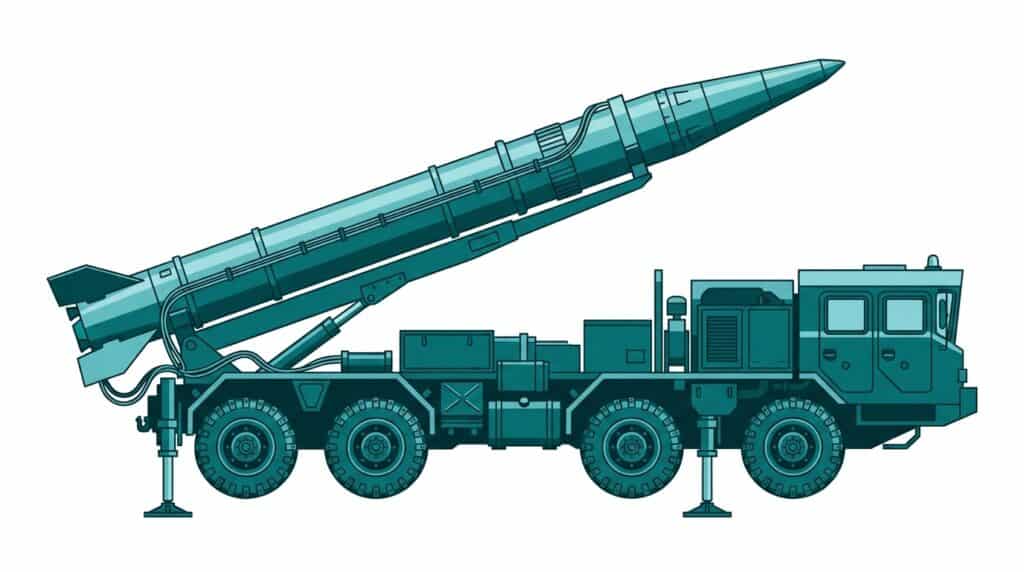
Director of National Intelligence (DNI) Tulsi Gabbard told Congress on March 19 that Pakistan’s long-range ballistic missile development “potentially could include intercontinental ballistic missiles (ICBMs) with the range capable of striking the Homeland.” The statement, delivered as part of the Intelligence Community’s (IC) 2026 Annual Threat Assessment to the House Permanent Select Committee on Intelligence (HPSCI), placed Pakistan in the same sentence as Russia, China, North Korea, and Iran – four states with either active ICBM programs or demonstrated hostile postures toward the United States. Pakistan’s longest-range tested missile, the Shaheen-III, has an estimated range of 2,750 km – less than a third of what would be needed to reach the continental United States. In other words, the gap between the stated concern and the available evidence is substantial, and the IC’s actual concern appears to lie elsewhere: in where Pakistan’s nuclear fuel cycle might go next, and who might be in the market for it.
The Testimony and Its Predicate
Gabbard’s written testimony to HPSCI – she also appeared before the Senate Select Committee on Intelligence (SSCI) on March 18 – contained two direct references to Pakistan’s missile program. The first, on page 4, stated that “the IC assesses that Russia, China, North Korea, Iran and Pakistan have been researching and developing an array of novel, advanced, or traditional missile delivery systems with nuclear and conventional payloads, that put our Homeland within range.” The second, on page 5, was more specific: “Pakistan’s long-range ballistic missile development potentially could include ICBMs with the range capable of striking the Homeland.” Gabbard opened her remarks by noting that “what I’m briefing here today does not represent my personal views or opinions. I am conveying the Intelligence Community’s assessments.”
The language of the testimony warrants closer examination. “Potentially could include” is a double hedge – the word ‘potentially’ signals possibility, and ‘could’ layers a second conditional on top of it. In intelligence drafting, every word carries calibrated weight; an assessment framed as “the IC judges” or “the IC assesses with high confidence” reflects a firm analytical conclusion backed by corroborating evidence. “Potentially could include” conveys something closer to a theoretical capability pathway – not a program under active observation, but a trajectory the IC considers plausible if present trends continue. The Congressional Research Service (CRS), in a report prepared for Congress around the same period, assessed Pakistan’s long-range missile capability as “several years to a decade away,” reinforcing the distance between what the IC flags as possible and what it can demonstrate is imminent.
Access Pakistan's Defence Market Intelligence
Get full access to Pakistan's defence procurement history, inductions, future planning, and risk assessments. Leverage the market intelligence to support business development, policy planning, and diplomatic engagement.