The world’s major air arms are now actively moving towards inducting a range of unmanned combat aerial vehicles (UCAV) across various weight, capability, and role classes. The Pakistan Air Force (PAF) is no different. Currently, it is using numerous medium-altitude long-endurance (MALE) unmanned aerial systems (UAS) to develop its long-term drone doctrine.
Drones will not replace crewed fighters, at least not in the foreseeable future; however, drones are now poised more than ever to expand the capabilities of air arms. UAS platforms offer a more cost-effective and scalable way to grow one’s strike, surveillance, and, in the near future, air-to-air coverages than the majority of crewed fighter options. In some countries, such as Turkiye, drones are even being used to help build fixed-wing naval aviation capabilities in lieu of dedicated fighters.
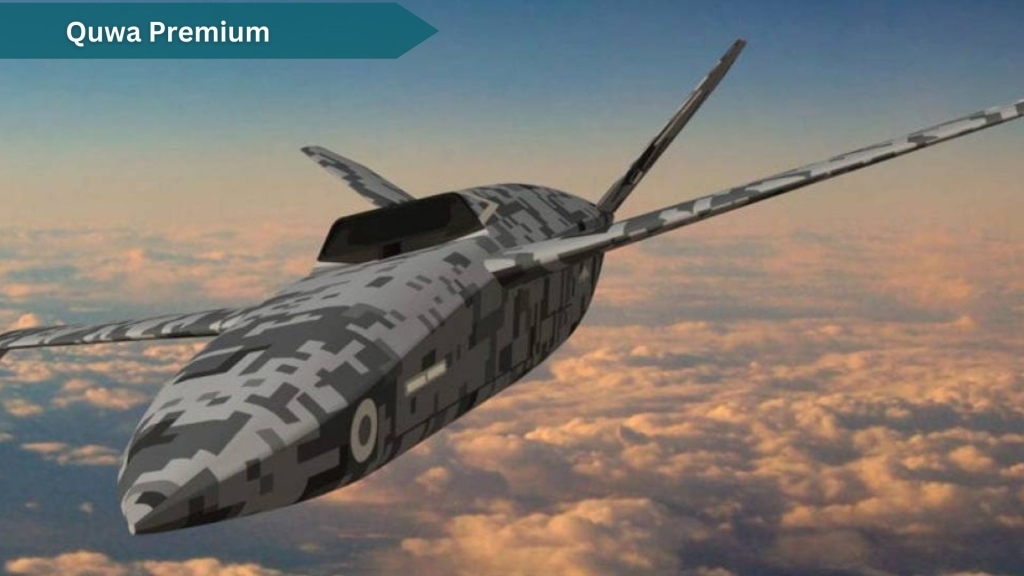
General Atomics, the OEM behind the YFQ-42A, offers an apt definition of a loyal wingman, i.e., a design that “provides fighter capacity – affordable combat mass -at a lower cost on a threat-relevant timeline.”
In addition to the YFQ-44A, the YFQ-42A is a key component of the U.S. Air Force’s (USAF) Collaborative Combat Aircraft (CCA) initiative, which will see the USAF procure 1,000 such UCAVs.
One can look at the following as apt reference designs for loyal wingman UCAVs:
- General Atomics YFQ-42A
- Anduril Industries YFQ-44A
- Hindustan Aeronautics Limited (HAL) Combat Air Teaming System (CATS) Warrior
- Korea Aerospace Industries (KAI) Low-Observable Wingman System (LOWUS)
- EDGE Group Jeniah
Of these, the HAL CATS Warrior, Anduril YFQ-44A, and (probably, but unconfirmed) KAI LOWUS and General Atomics YFQ-42A are around 2,000 kg to 2,500 kg in total weight. In fact, the CATS Warrior and YFQ-44A weigh 2,100 kg and 2,268 kg, respectively. The Jeniah is notably heavier at 4,000 kg.
Technologically speaking, while a progressive step from a decoy drone, a loyal wingman UCAV would still be a major leap in complexity compared to decoys and smart munitions. Developing a UCAV will require a stronger capacity for aircraft design, flight controls, airframe materials, and propulsion.
NESCOM is likely better equipped (from its prior drone and munition programs) to pursue a loyal wingman UCAV program. However, while it likely possesses the capacity to initiate such a program, it would still be years away from making tangible progress. Moreover, it would require major investment in raising net-new production facilities as a loyal wingman UCAV would, ultimately, be a distinct aircraft design. NESCOM will need to develop new flight control systems, materials, and other inputs as well.
Quwa Plus
Go Beyond the Headlines on Pakistan’s Defence and Security.
Quwa Plus gives you deeper reporting, briefings, and analysis on Pakistan’s defence programs, foreign policy, national security, and regional strategy. Follow the developments that matter to professionals, analysts, and serious readers tracking Pakistan’s security landscape.
Join ($29.99/Year) Already a subscriber?Sign in