
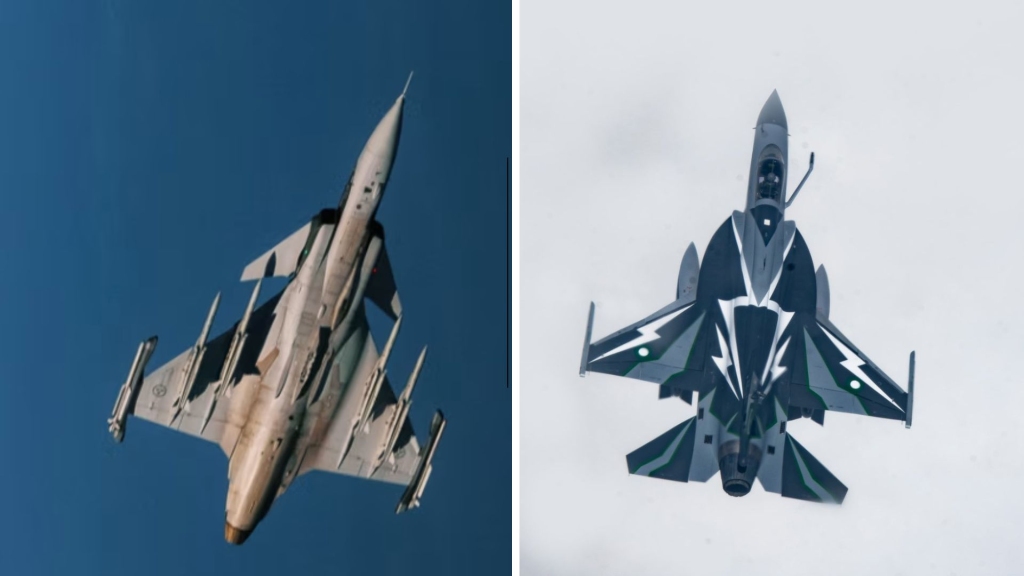
Ukraine signed a Letter of Intent (LoI) to potentially procure 100-150 Saab JAS-39E/F Gripen fighter aircraft. While not a binding sale, the LoI signals the direction of the Ukrainian Air Force’s future air warfare plans, one that envisions building a hi-and-lo combination comprising a lightweight tactical fighter as the primary workhorse, spearheaded by a twin-engine, medium-weight asset in the Dassault Rafale.
What makes this important — and what ties directly back to Pakistan — is why this category is resurging. Lightweight fighters were originally meant for air arms that assumed they would fight alone, sustain their own fleets, and generate sortie volume without external guarantees. That doctrinal logic has always underpinned Pakistan’s airpower model.
The shock is that Ukraine and others are now converging on this same idea: alliances may help, but they cannot be relied upon for real-time warfighting. In a strategic sense, much of the world is drifting toward the requirements that Pakistan adopted, even if unintentionally.
The Russia-Ukraine War has been a wellspring of lessons about the evolving nature of modern warfare, especially with the rise of drones, loitering munitions, guided rockets, and cruise missiles, among many ‘connective’ elements binding these systems together (e.g., satellite imagery, multi-modal intelligence systems, and combined arms). But despite these shifts, some fundamentals remain entrenched, and the Ukrainians – having experienced these changes first-hand – see that modern crewed fighter aircraft will be critical to both their current and future needs.
However, the story for this analysis is the renewed and growing adoption of lightweight multirole fighters such as the Gripen, among many others. Be it Ukraine committing to a large-scale Gripen order, Canada seemingly showing interest in the same platform, and yet another country signing onto the JF-17 Thunder from Pakistan Aeronautical Complex (PAC), the interest in tactical fighters, which an earlier article of ours framed as perfect solutions for (at the time) a niche problem, is surging.
Quwa Plus
Go Beyond the Headlines on Pakistan’s Defence and Security.
Quwa Plus gives you deeper reporting, briefings, and analysis on Pakistan’s defence programs, foreign policy, national security, and regional strategy. Follow the developments that matter to professionals, analysts, and serious readers tracking Pakistan’s security landscape.
Join ($29.99/Year) Already a subscriber?Sign in