
Please log in or subscribe to complete the article.
Pakistan’s public procurement information is not secret. It is spread across roughly 40 separate channels – the PPRA, provincial portals, and military procurement notices – and a firm without a dedicated procurement desk has little chance of seeing all of it.
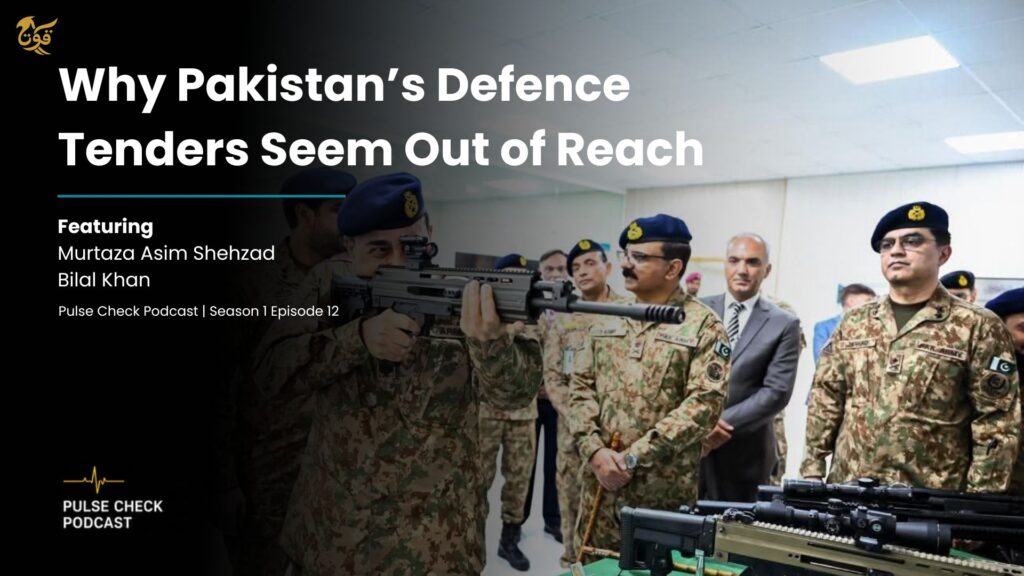
Bilal Khan is joined by Murtaza Asim Shehzad, who is building a pipeline that scrapes, cleans, and classifies that data to surface the defence contracts inside it. They cover how the classification works, why a single typo in a notice can bury a tender, and why the upstream suppliers of polymers, chemicals, and metals are the least equipped to track the market they already serve.
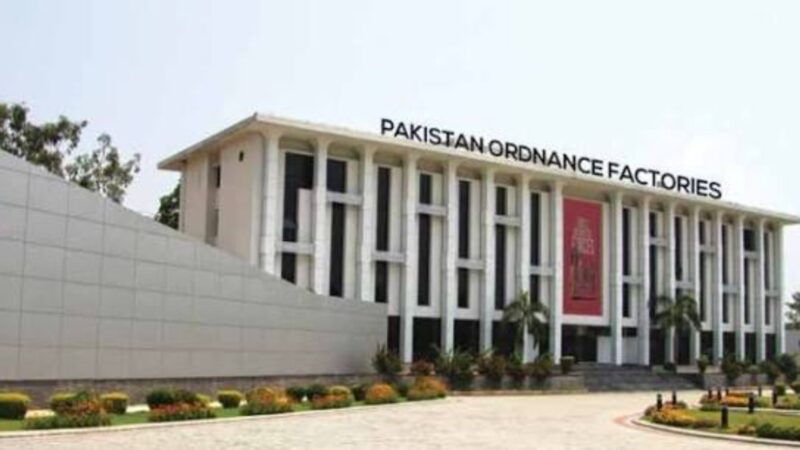
From there the conversation turns to the Defence Industrial Production and Regulatory Authority (DIPRA), the US$25 million approval threshold, and the clause that removes POF, HIT, PAC, and the other state subsidiaries from PPRA rules entirely. It closes on POF’s pivot into polymers, the 2016 assault rifle competition, and what the Türkiye comparison actually shows about how state enterprises should be owned and run.
Murtaza Asim Shehzad is the chief executive of Star Strategic Systems, an Islamabad-based venture building a procurement intelligence pipeline for Pakistan’s defence market.