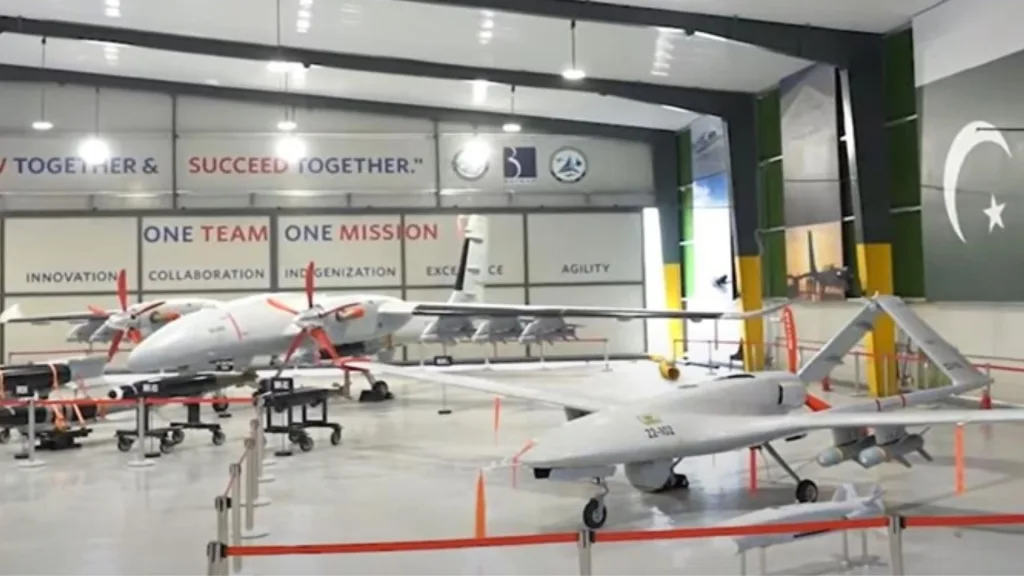
On 05 December, Bloomberg reported that Turkey is in talks with Pakistan to establish an assembly plant for drones, citing several unnamed Turkish officials.
According to Bloomberg, the project would “see Turkey export stealth and long-endurance drones to be put together in Pakistan,” with talks ongoing since October, but have since “advanced significantly.”
The original equipment manufacturer (OEM) at the center of these talks is likely Baykar, which has not only exported small numbers of several unmanned aerial vehicle (UAV) systems – notably the Bayraktar TB2 and Bayraktar Akıncı – to the Pakistan Air Force (PAF), but had also invested in the PAF’s in-house R&D centre, the National Aerospace Science & Technology Park (NASTP).
While the Baykar-NASTP partnership led to the development of the KaGeM V3 miniature air-launched cruise missile (ALCM) or loitering munition, Quwa was told that Baykar has since wrapped up its ties with NASTP and moved to establish Baykar Technologies Pakistan so as to directly engage with Air Headquarters (AHQ) and the wider Pakistani drone and loitering munitions market.
Thus, it appears that discussions to establish a drone assembly plant in Pakistan may be tied to Baykar’s domestic subsidiary. Moreover, these discussions indicate that the PAF – and potentially the Pakistan Army (PA) and/or Pakistan Navy (PN) – may be interested in ordering large numbers of Bayraktar drones, making local assembly feasible.
Related Reads
- Pakistan Revealed New Naval Drones. Does It Signal a New Shift?
- Pakistan’s GIDS Eyes Munitions & Drones Sales in Latin America
- India’s MQ-9B Purchase Adds to South Asia’s Drone-Heavy Environment
Though inducted in 2022, the PAF does not operate large numbers of either the Bayraktar Akıncı or the Bayraktar TB2. Instead, the bulk of the PAF’s drone operations are managed through either domestic or Chinese-built solutions. That said, it is rare for the PAF to engage in small-scale orders; it generally inducts new aircraft with the intent to procure them in larger numbers over the long term.
In fact, platforms like the Bayraktar Akıncı essentially require the logistics, ground support, and maintenance overhead of a crewed aircraft. In other words, the overhead of inducting these aircraft is relatively high and would not justify flying fewer than 12 units (in Quwa’s estimation, the PAF currently operates two to four Akıncı drones. Overall, the PAF will likely use the Akıncı as its primary peacetime intelligence, surveillance, and reconnaissance (ISR) platform, especially for peacetime operations, thanks to both its significant endurance (of up to 24 hours) and payload capacity (capable of handling a mix of sensors, from optronics to passive electronic warfare arrays to radars).
In tandem, the Bayraktar TB2, a medium-altitude long-endurance (MALE) platform, would likely emerge as one of the PAF’s primary options for carrying out timed strikes in low-intensity or asymmetrical operations, which have (up to this point) been managed through the use of NESCOM Burraq drones. In tandem, the PAF has also used NESCOM Shahpar and Leonardo Falco UAVs for ISR. With new TB2 (or possibly TB3) drones on the roadmap, it will be worth assessing whether these new Turkish drones supplant the PAF’s older UAV systems or instead drive net-new capability growth. In the long term, one could see a scenario in which the PAF’s primary fighter fleet shifts to fewer, higher-performance platforms, resulting in most of its future ‘aircrews’ focusing on drone-based operations of various types.
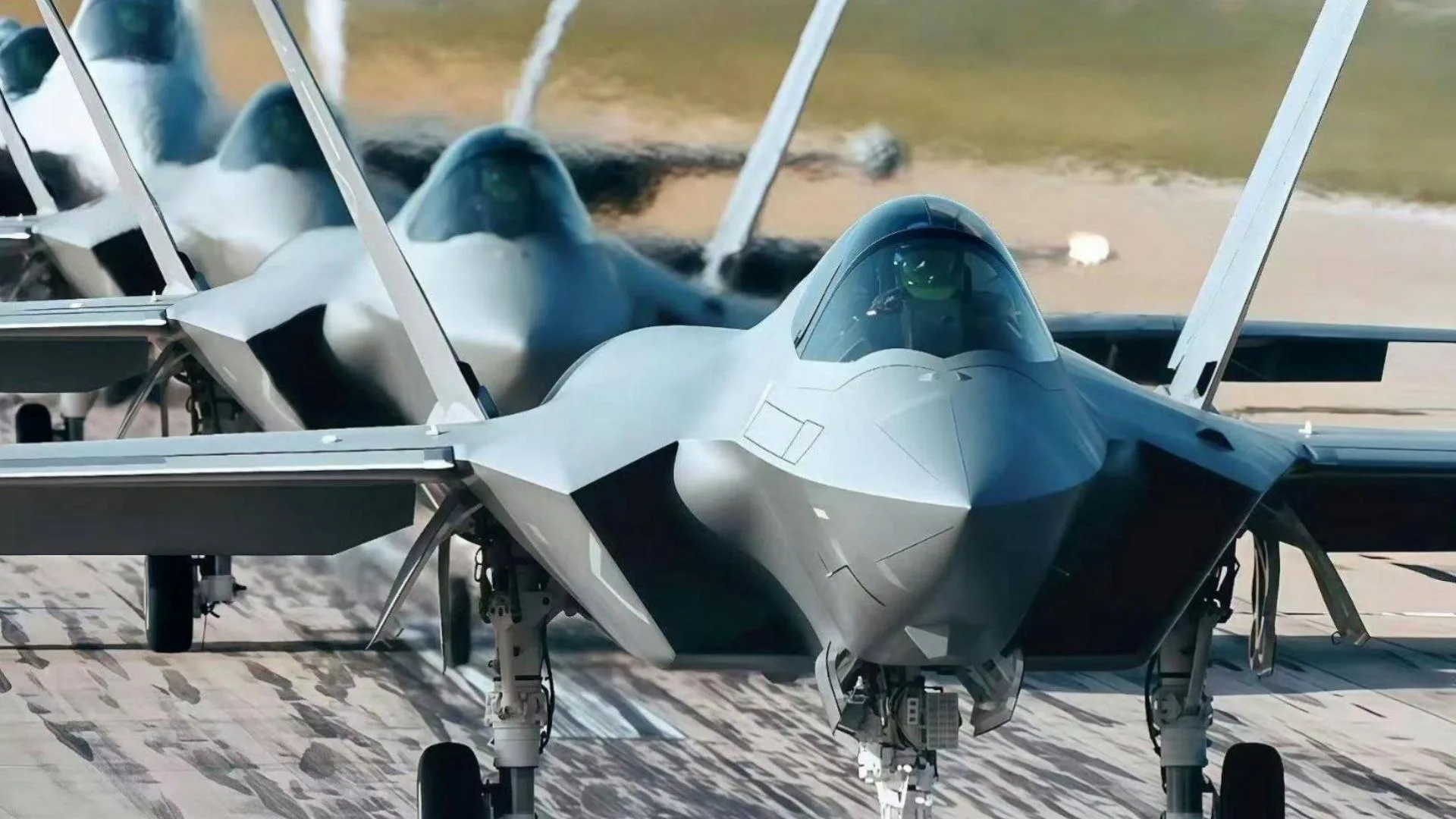
Finally, the Bloomberg piece mentioned the possibility of also building “stealth” drones in Pakistan. This would indicate a potential push to sell Bayraktar Kızılelma unmanned combat aerial vehicle (UCAV) systems to the PAF. It is likely that the PAF is interested in at least studying the platform and, potentially, incorporating it as part of its future fleet aims, especially as it also looks towards next-generation fighter aircraft (like the J-35AE). As discussed in an earlier article, the Kızılelma delivers each of the key requirements Air Headquarters (AHQ) typically places upon combat aircraft purchases – i.e., a turnkey solution comprising of the core platform, maintenance system, sensor/electronics suite, and a ready air-to-air and air-to-surface munitions package.
That said, the risk of a Baykar assembly plant is that it assembles imported inputs without increasing Pakistan’s value-added share. In other words, an assembly-only arrangement would, at best, marginally reduce the foreign exchange or hard-currency cost of procuring these drones. For Pakistan, the optimal long-term scenario would be to tie large-scale Bayraktar drone procurement with strong offset packages that directly feed (as a stimulus) into the Pakistani private sector and, in turn, nurture Pakistan’s capacity to domestically manufacture the inputs that would feed into this assembly plant. Granted, Pakistan’s recurring need for loans to finance big-ticket acquisitions cedes its leverage on the matter, but it can ‘sweeten the pot’, so to speak, by allowing Turkish companies to invest in the Pakistani companies that emerge from any offset deal. In other words, Turkish companies can both leverage the lower labour and production costs within Pakistan and profit from them through exports to third parties. This approach would better align the incentives for the Turks to engage the Pakistani market on one end and to grow the Pakistani economy through industrial output.
Don't Stop Here. Unlock the Rest of this Analysis Immediately
To read the rest of this deep dive -- including the honest assessments and comparative analyses that Quwa Plus members rely on -- you need access.